In an overgrown ‘swamp’ in Rookwood cemetery, Jayne asks: ‘Where are the graves? She’s told: ‘You’re standing on them’
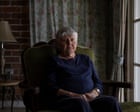
Jayne Kinsolving remembers wading through knee-high shrubs to find her family’s grave.
The feeling of vines and thorns tearing at her legs. The squelch of her footsteps across water-logged soil.
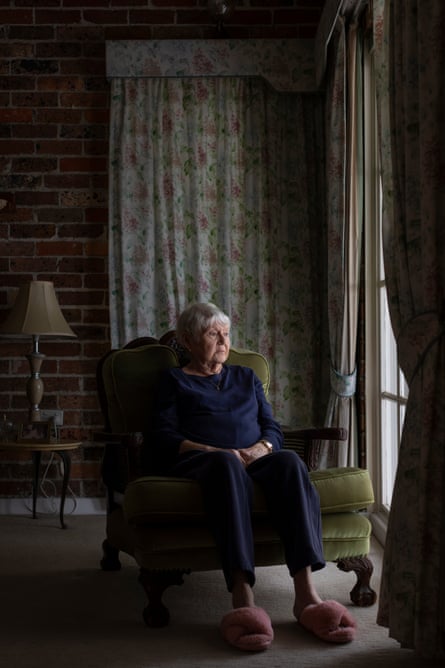
Jayne and her foster mother, Barbara Davis, had arrived at this strange corner of Sydney’s Rookwood cemetery 16 years ago to see the place where Jayne’s biological mother, Christine Halpin, her sister Jessica and grandmother Patricia were buried.
The cemetery had assigned a staff member to guide them to the spot.
A piece of paper with a handwritten guide to the grave’s location described it as being in section “NNNN”. The plot number was left blank.
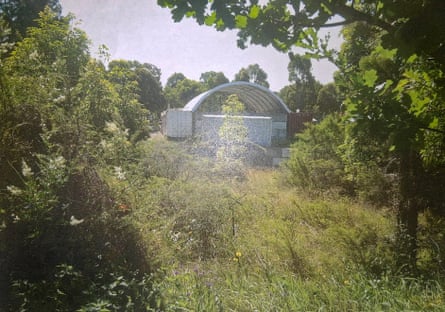
Jayne and Barbara remember stopping at a large depression in the earth. Metal stakes had been driven into the ground, just visible above the overgrown grass.
Jayne describes it as a swamp. “It was disgusting,” she says.
She remembers turning to their guide. “I was like, ‘Where are the graves?’ And he looked at me and he said, ‘You’re standing on them.’
“We had been walking on grave after grave after grave. And Mum and I started to cry and we stepped to the side.”
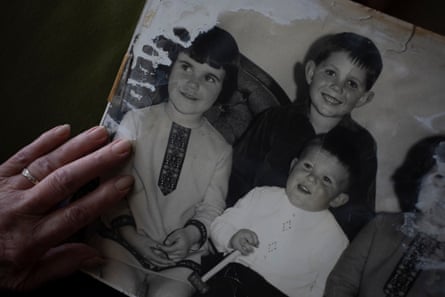
Jayne had been searching for her family for years. Christine was 18 when Jayne was born. Unable to look after her baby, Christine had turned to Barbara – her own beloved foster mother – to care for the newborn.
Jayne’s search ended when researchers at the Salvation Army told her that Christine had died in a house fire in 1989, a month before her eighth birthday.
The state government had deemed the family too poor to afford their own funeral. They were buried in an unmarked communal grave at Rookwood.
The visit sparked in Barbara fury and a steely determination.
She had cared deeply for Christine, having acted as her foster carer for four years. No one told her that Christine would be placed in a grave of this kind, or asked whether she would fund a proper burial.
The plain-talking shop owner from Lake Macquarie, a stalwart of the local business sector and a former member of the Newcastle Knights board, got to work.
She lobbied the government, wrote submissions to parliament and went to the press, eventually securing a commitment in 2013 from the then Liberal government that all graves would be marked.
“I did kick up about that because I thought they deserved to have a better resting place than that,” Barbara says.
“We’re not that poor a nation, we can throw our money overseas and give it away … but we can’t look after our own.
“How much would it have cost to put a cross with their names on it? Why couldn’t that have gone up?”
A Guardian Australia investigation has revealed that, despite the pledge to Barbara, the use of unmarked communal graves has continued in large numbers, albeit in different sections of Rookwood.
Using evidence from friends and family, analysis of cemetery registries and satellite imagery, the investigation has identified hundreds of unmarked graves, often containing the remains of four to six people. The burials are taking place in stretches of the cemetery that are better cared for than the “swamp” Jayne and Barbara visited.
But the vast majority are completely unmarked. Only about a dozen have markings of any kind. A 17-metre stretch of graves dug for burials conducted in 2026, estimated to contain the remains of more than 40 people, does not have a single marker.
after newsletter promotion
“It is a disgrace,” Barbara says. “Whether you’re a prince or a pauper, you deserve a decent burial site, even just with a wooden cross with your name on it.”
Asked about the state government’s 2013 promise to begin marking graves, the operator of Rookwood said: “Metropolitan Memorial Parks has not identified a legislative or regulatory requirement giving effect to that statement.”
The operator said the government had not funded it to provide grave markings.
The Guardian’s investigation prompted an apology from NSW Health, which has flagged changes to improve the process.
The NSW health minister, Ryan Park, described the failings as “unacceptable”, and on Tuesday said his department would explore reforms, including emulating the Victorian model, where individuals are buried with their own plot and marking.
“I think it’s something that we need to do better,” Park said. “Quite clearly, the dignity of those who have … passed, as well as for their families, is something that we need to take into consideration, and we need to do this better.”
The Guardian has also found multiple cases in which the state government has not properly notified friends, family or those associated with the deceased, to give them the chance to intervene and pay for a proper funeral.
“That’s all anyone really asks for,” Jayne says. “If we had had that opportunity, then they wouldn’t be in a pauper’s grave that was left in that condition.
“That’s all any family or any of their loved ones wants a chance to do.”
Homelessness support services also say they are not being notified before their clients are put into the graves, despite the NSW health department’s own policy document suggesting authorities check with organisations associated with the deceased while they were alive.
In place of the site visited by Jayne and Barbara, the cemetery operator has placed a path of remembrance, opened in 2017. It is used to offer members of the public the chance to pay $880 for a plaque on a rock to commemorate people in unmarked graves.
There are only about a few dozen plaques for deaths after 2020. There have been hundreds of burials and ash internments in that period.
Many of the other plaques honour babies who were stillborn or commemorate historic deaths in the mid- to late-1900s.
There is no plaque for the Halpins, despite Barbara’s campaigning.
“It’s almost just like they did enough to shut people up,” Jayne says. “That’s honestly how it feels.
“They would not want that for themselves or those in their families. But it’s looking and sounding like they did the bare minimum – or just enough to get Mum off their case.”
KioskNews shows a cleaned-up reading view extracted from the publisher’s page — the original always lives on their site, not ours.