Lucy Letby inquiry: Lady Justice Thirlwall closing remarks in full

The Thirlwall Inquiry report, which looked at events at the Countess of Chester Hospital which led to former nurse Lucy Letby’s convictions for the murder of seven babies, has made a total of 14 recommendations.
Fitting baby monitors in all cots and incubators in neonatal units, and having CCTV cameras on insulin storage fridges, are among the new proposals.
They come after the conclusions made by inquiry chair Lady Justice Thirlwall on Tuesday.
She said that the collapse and deaths of some babies could have been avoided if safeguarding practices had been followed.
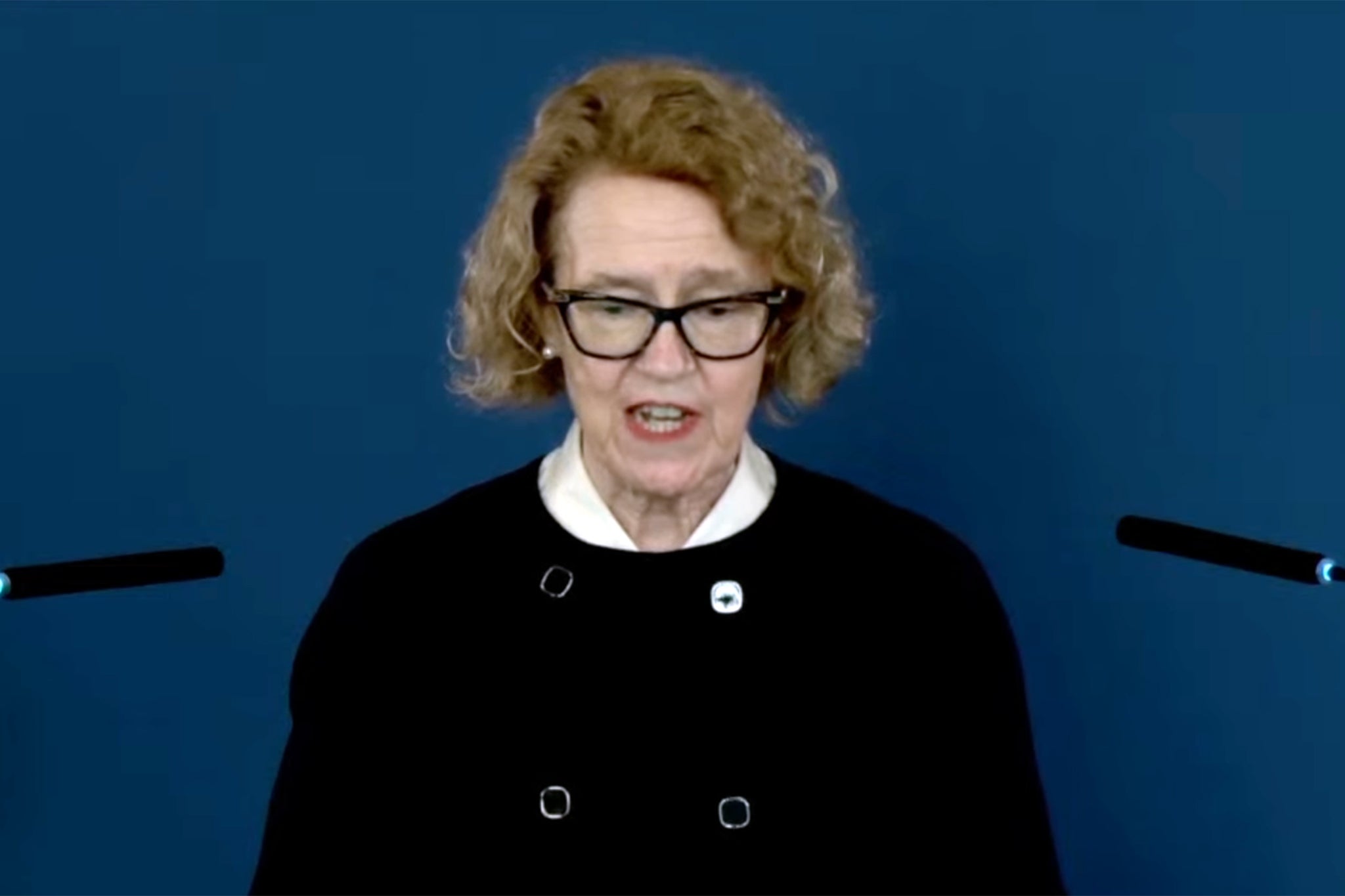
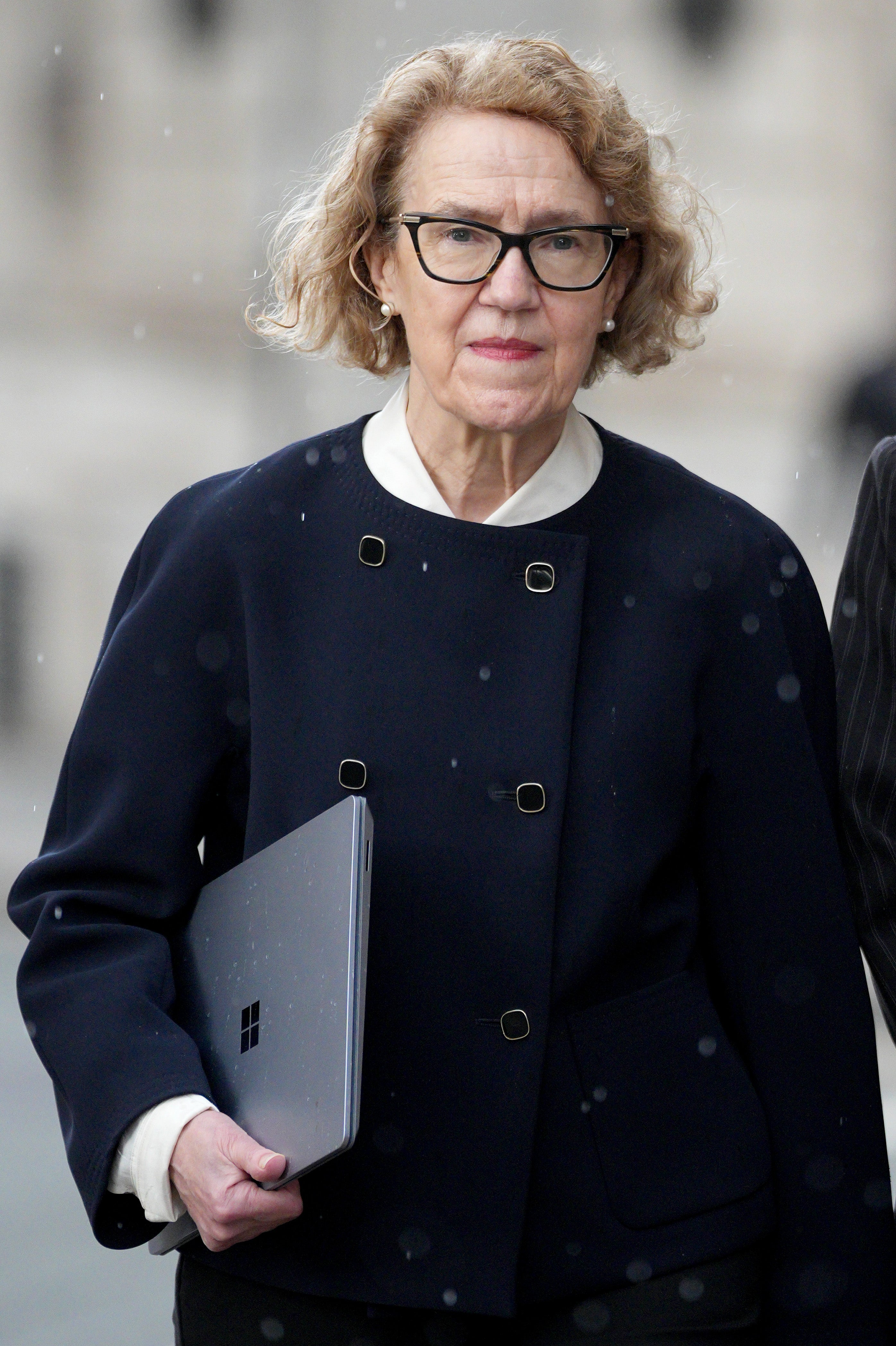
Here are Lady Justice Thirlwall’s closing remarks in full...
“This Inquiry was set up on 19 October 2023 after the convictions of Lucy Letby for the murder and attempted murder of new-born babies in the neonatal unit at the Countess of Chester Hospital.
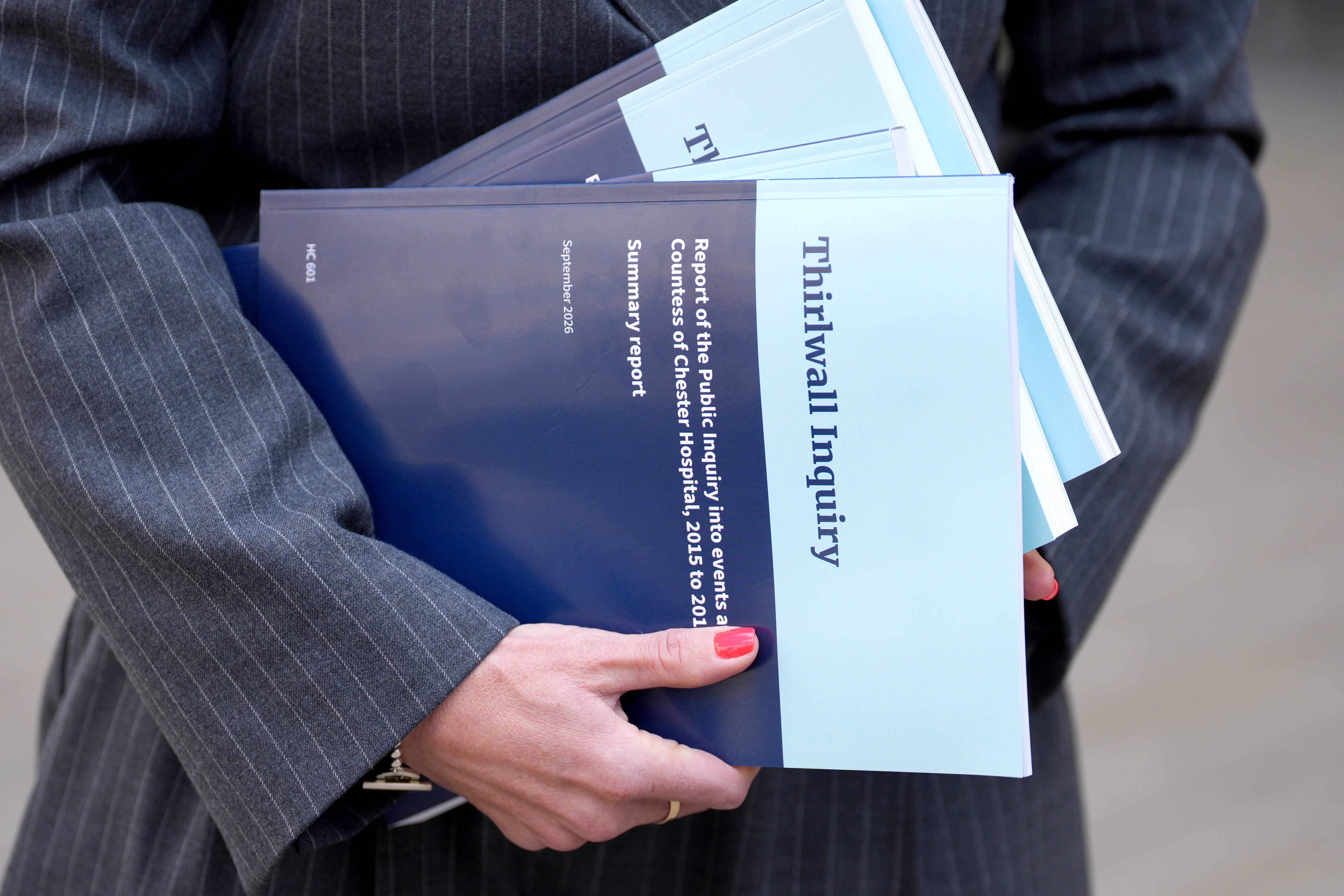
“My report has been delivered to the Secretary of State for Health and Social Care and it has been laid before Parliament today.
“The report describes dysfunctional management and governance; a gulf between hospital leadership and clinicians and failure to understand the fundamentals of safeguarding.
“Errors were made by nurses, doctors and managers at the time of these events.
“I have set this out in the report and will return to it later in these remarks.
“There was complete failure at all levels to invoke safeguarding procedures at any point.
“Looking for clinical or other explanations for deaths and collapses was not wrong, but once there was suspicion that Letby may be causing harm deliberately safeguarding steps should have been taken.
“She should have been removed from the ward as a neutral act and matters could have been investigated without risk to babies.
“No one seems to have thought that safeguarding action is required when a member of staff is suspected of causing deliberate harm.
“It isn’t necessary to be sure, suspicion is enough.
Failures at the Countess of Chester Hospital
“At the Countess doctors and nurses failed to bring concerns to the safeguarding leads in late 2015.
“When concerns were raised with senior managers including the lead for safeguarding in May 2016 no safeguarding action was taken.
“Senior nurses never accepted that the consultants’ concerns were or even might be justified – neither did senior managers.
“From the death of Baby P in late June 2016 and despite the fact that Letby had been moved from the NNU there was a prolonged delay by senior managers in calling the police.
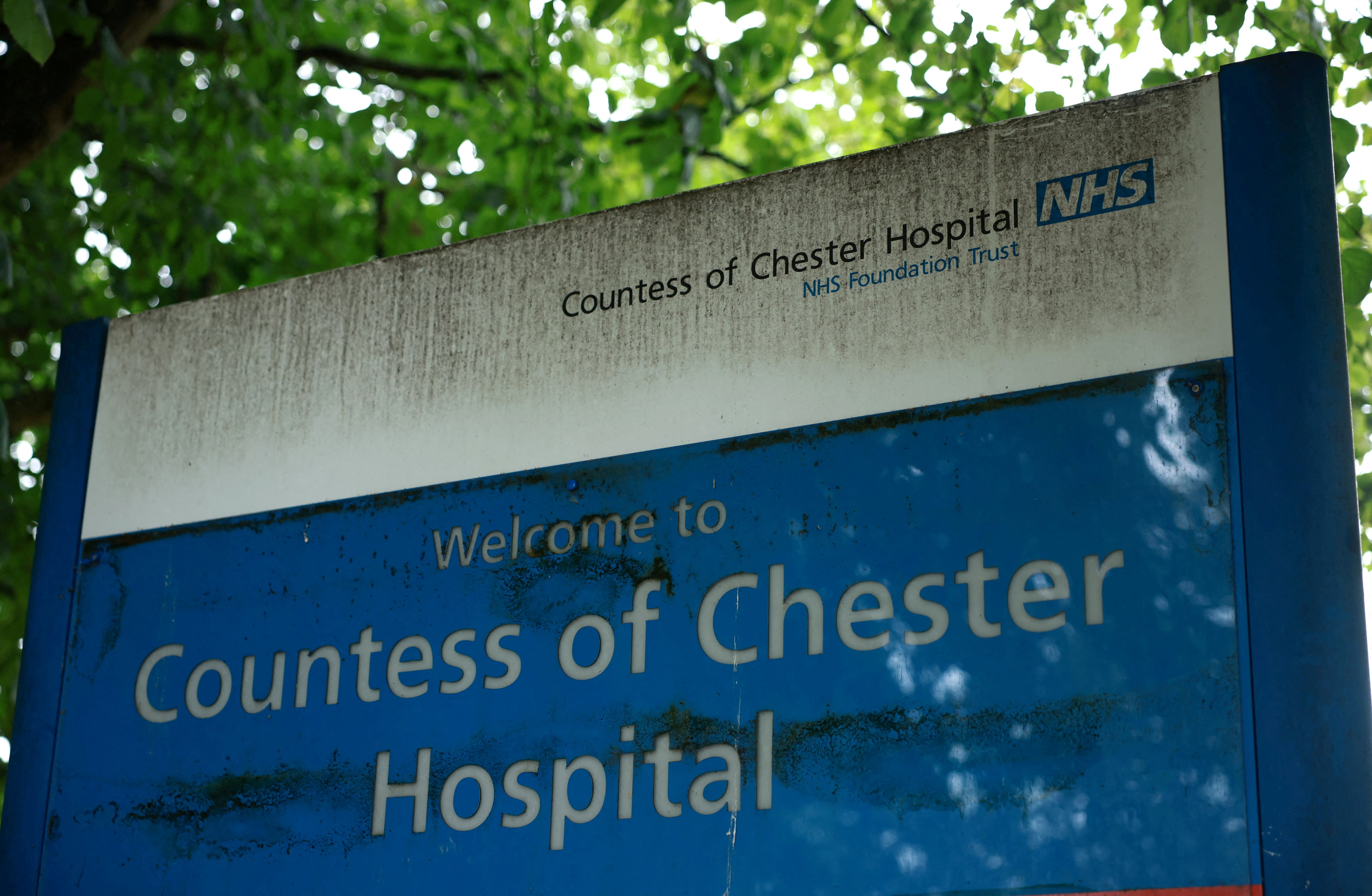
“Alternative explanations for the deaths and collapses were sought via internal and external reviews.
“The reviews did not address the issue of whether deliberate harm had been caused or not.
“As the RCPCH accepted, the service review it undertook could not address the doctors’ concerns and should not have been undertaken.
“The police were eventually contacted in May 2017, almost a year after the last death.
“Relationships between consultant paediatricians and senior managers and senior nurses disintegrated during 2016 and 2017.
“The way Letby’s grievance and its consequences were handled was deplorable.
“Ultimately some consultants were told to apologise to her and to enter mediation.
“Plans were being made to return her to the neonatal unit.
“By the beginning of 2017 the hospital was far adrift from the correct course of a responsible and prompt response to serious concerns raised by consultants about the safety of babies.
“A summary report of 70 pages has been prepared to provide an overview of my findings.
“But, if you want to understand what happened and to understand the reasons for the recommendations, it really is necessary to read the whole report.
“I make it plain what this report is not.
“It is not an investigation into the criminal convictions or the guilt of Letby. The Court of Appeal has dismissed two applications for leave to appeal.
“It is not for me to second guess or to cut across the work of the Criminal Cases Review Commission which is working on Letby’s application for her case to be referred back to the Court of Appeal.
“I should add that the avenues for criminal appeal are well known.
“Those avenues do not and have not included this public inquiry.
“In respect of each sudden and unexpected death and collapse I record the jury’s verdicts which came in August 2023 at the end of a 10-month trial and a retrial on one count in 2024.
“But my focus has been on the evidence I heard about what was happening at the time of the collapses deaths and injuries and what happened afterwards.
“I have not examined the detailed evidence, expert or otherwise, called in the crown court.
“The terms of reference of this inquiry are set out in the report and online.
“My principal focus has been on three broad topics:
“First, what was known by whom at the time about the collapses and/or deaths of babies on the neonatal unit?
“When was it known and what was done about it?
“What should have been done about it by doctors, nurses and managers from ward level to the board?
“Why did it take nearly a year from the death of Baby P before the police were contacted?
“In the course of my report I ask the question why was action not taken sooner?
“My discussion and conclusions appear at Chapter 13.
“The second broad topic is What was the role of the external organisations: CQC, The RCPCH, NHS England and others, and of real importance: what needs to be done now to keep babies safe from deliberate harm on our neonatal units?
“In addition, I was asked to consider the wider NHS including how the accountability of managers should be improved.
‘Real people have suffered grievously and continue to suffer’
“I want to say two things about the families:
“First, the identities of babies whose names were on the indictment are protected by orders of the Crown Court and so they and their families may not be named.
“Everyone commenting on the events at the Countess should remind themselves that these are all real people who have suffered grievously and continue to suffer as a result of the unexpected collapses and /or deaths of their babies and all that has followed in the 10 or 11 years since then.
“Their dignity and courage should be respected by everyone.
“Almost all of the parents gave evidence to the inquiry.
“That evidence is set out in full on the inquiry website.
“I urge all commentators, whatever their views, to keep their evidence in mind.
“They must not become collateral damage in the public argument about whether or not Letby is guilty.
“Second, I have endeavoured to reflect accurately what was known at the time about what was happening to their babies and to them in the Countess of Chester.
“I know that no one can ever truly convey the joy of the birth of their baby, followed by the shock of their sudden collapse or death, then grief, and enduring sadness.
“The anger some parents feel at the way they were treated by the Countess was palpable.
“They were kept in the dark for years about what was happening, about the fact that there were concerns that their babies may have been deliberately harmed.
“Their consent was not obtained for sharing their babies’ medical records with external experts and other organisations, they were not informed about reviews and only in 2018 learned that the collapses and deaths may have been the result of the actions of a nurse whom they had trusted.
“Many parents take the view that protecting the reputation of the hospital was more important to senior managers than keeping them informed about what was happening.
“The lack of consideration shown to the parents at that time was reprehensible.
“Before moving to the detail of my recommendations I would like to say this.
“I have considered within my report whether any of the collapses and deaths should have been prevented.
“Mother E had important information to give about Letby.
“Had she been asked about her experience she would have described it as she did in evidence.
“She had heard her baby screaming and saw that he had blood on his mouth, Letby was with him.
“His twin, baby F, was poisoned by insulin.
“If the insulin results had been acted upon at the time, contacting the police would have been unavoidable.
“After the death of Baby I suspicions became clearer.
“If safeguarding action had been taken, Letby should have been moved from the neonatal unit at this point.
“This did not happen.
“The collapses and deaths continued.
“At an important meeting in May 2016 safeguarding was not considered, and Letby remained on the ward.
“This should not have happened, and babies O and P should not have died.
Recommendations and when new guidelines should be ready
“I turn now to my recommendations.
“These are designed to prevent babies from being harmed on a neonatal unit.
“I look forward to discussing them with the Secretary of State later this week.
“My first recommendation is that all cots and incubators in all neonatal units should be fitted with video baby monitors so that parents can observe their baby remotely at any time.
“This will deter someone who wants to harm a baby and, irrespective of harm, parents will be reassured and may be delighted to see their babies when they cannot be with them.
“This should happen within 12 months.
“Had neonatal cot video monitors been in place as I now recommend, the attacks on babies A, B, C and D would probably have been detected.
“There was no such monitoring at that time, at the Countess or elsewhere.
“Babies F and L were poisoned with insulin.
“I’ve recommended that by 31 March 2027, all neonatal units must meet the expected requirements for access control and storage of insulin set out in the recent guidance issued by NHS England, which I welcome.
“Until access to insulin storage is controlled by biometric data, each trust should install CCTV cameras directed to fridges or other units storing insulin.
“The recent NHS England guidance on the testing and reporting of insulin and C-peptide results, must be made mandatory and applied nationally so that the importance of the results is well understood and acted upon in all cases.
“By 31 March 2027, the Department for Health and Social Care (DHSC)and NHS England must produce and distribute a one-page protocol setting out the steps to be taken by managers when concerns or suspicions are raised that a healthcare professional may have deliberately harmed a patient.
“The Suspicion of Deliberate Harm Protocol must make explicit that:
“It is irrelevant whether the person to whom the concerns have been expressed does or does not believe they are true, as is the fact that the person raising the concern is not sure.
“Where concerns or suspicions of deliberate harm are being raised in good faith, they must be acted upon immediately.
“Pending investigation of a member of staff, action to protect patients by moving the person suspected of causing harm is likely to be the first step.
“Safeguarding steps must be followed, including reference to the LADO. In many cases the police will become involved.
“I want to make this absolutely clear: never again should any manager assert that they did not know what to do.
“If this has not happened already, I recommend compulsory training on safeguarding for all staff, and for board members.
“The training should include how to deal with concerns and suspicions about deliberate harm caused by staff.
“By March 2027, every existing contract of employment for work in an NHS hospital must be amended to include an obligation on the employee to follow all relevant safeguarding guidance, including the new Suspicion of Deliberate Harm Protocol and all new contracts must include the same obligation.
“I make clear that this is not an additional obligation on employees of the NHS.
“The obligation has been there for decades but is not well understood and including it as a contractual terms makes it plain.
“It will require employees to raise concerns and achieve a cultural shift, and will reduce the burden on Freedom to Speak Up Guardians.
“Serious consideration should be given by DHSC to the setting up of a panel of independent experts from all specialties to be called upon in situations where there are emerging concerns about an individual and harm to a patient or patients.
“The precise make-up of the panel should be determined by DHSC and I have suggested who might be included, however this is a matter for the DHSC.
“Where required, a small team (always including clinicians from the relevant specialty/specialties) would be drawn from the panel to carry out an independent investigation into clinical concerns.
“This may most often be necessary and useful where there are concerns that harm is being or has been caused inadvertently but where children or vulnerable adults are concerned, such investigations should always include safeguarding considerations (including contacting the police).
“In addition to reporting their findings to the Trust and DHSC/NHS England, the experts would be available to be called as witnesses in any proceedings that may follow.
“This recommendation aligns with the recent report of Baroness Amos.
“I have made recommendations to assist medical examiners when they are dealing with the death of a neonate.
“I have also recommended that there should be a pool of neonatologists who can assist medical examiners with their work until such time as it is possible to appoint the appropriate number of regional neonatologist medical examiners.
“Ring-fenced funding should be made available for this purpose.
“Sudden Unexpected Death in Infancy and Childhood (SUDIC).
“There has been widespread ignorance and misunderstanding about whether this applies to babies who have never left hospital.
“It does.
“All trusts must be informed that the process does apply.
“The DHSC are reviewing and revising the SUDIC guidelines with appropriate experts.
“This review is long overdue because of a lack of funding.
“This has recently been remedied.
“The new guidelines should be ready and distributed no later than 31 March 2027.
“SUDIC forms must be redesigned and shortened.
“The focus should be on what it is essential for the recipient to know.
“Bereaved parents should never again be given a leaflet with no support, or, worse, ignored completely.
“The National Bereavement Care Pathway for neonatal death should be implemented nationally and in all trusts by 31 August 2027.
NHS IT systems
“The problems with IT in the NHS are many. One particular problem has been known about for decades and yet it persists.
“Professor Sir David Spiegelhalter referred to it.
“He described the lack of interoperability of medical systems as a disaster for this country.
“That one of the biggest employers on earth has not achieved data systems that speak to each other within a hospital, still less across hospitals is, to the outside observer, extraordinary.
“The time has come to put it right, I’ve set out a timetable which I urge the government to adopt and follow.
“I have recommended board level monitoring of the deaths of all children and babies with a clear route to the board for the escalation of concerning data trends or patterns.
“Deaths of babies should never again go unnoticed by the board of a hospital.
“I recommend the naming of a lead reporter with responsibility for the regular input of data and for reviewing real time data viewers on neonatal and maternity units in the MBRRACE system.
“They must be trained to understand and interpret the available data and able to explain and discuss it with clinicians.
“The shortage of paediatric and perinatal pathologists is serious, longstanding and highly regrettable.
“It leads to very long delays in the conducting and reporting of post mortems at a time of great distress for families.
“Action has been taken about this.
“The DHSC and NHS England must ensure that, by June 2033, there are 37 doctors in training posts as paediatric and perinatal pathologists.
“Until that has been achieved the incentive scheme should remain in place and fully funded.
Accountability and regulation of managers
“I turn to the accountability and regulation of managers.
“The NHS Leadership and Management Framework Code must be amended urgently to set out, at the beginning, what surely is the uncontroversial duty of every manager to make the care and safety of patients their first concern.
“Doctors and nurses in management roles are already subject to this requirement. It is time it applied to non-clinical managers also.
“Consistency on this issue should be non-negotiable.
“Managers should owe an individual duty of candour to all patients and colleagues as well as external agencies.
“This should be included in the code of conduct and in the contract of employment for all managers.
“This duty already exists for every nurse and doctor.
“I have set out recommendations to prevent the revolving door in the NHS – that is the movement of senior managers between trusts without accountability.
“The DHSC and NHS England intend to develop and put in place a barring system for all managers (clinical and non-clinical).
“This should be achieved by September 2027.
“It should be reviewed in 2030 with a view to moving to a full statutory regulation system by September 2032.
CQC performance
“I have made a number of recommendations on how to improve the quality of CQC inspections of neonatal units so that they are not box ticking exercises but an effective way to determine that babies in hospital are safe
“There must be a rigorous and consistent review and assessment of the performance of CQC.
“I suggest this should be done by the Health and Social Care Committee, initially once a year and, once the committee is satisfied, once every three years, or such other frequency to be determined by the select committee.
“I recommend that the functions of the National Guardian’s Office should be taken over by the Parliamentary and Health Service Ombudsman in England with recommendations for increasing the ombudsman’s powers.
“This should be cost neutral and improve the service to Freedom to Speak Up Guardians.
“When government accepts recommendations, they should be implemented.
“The very significant piece of work done at the beginning of the Inquiry shows that there is already a very high number of recommendations that have been accepted but not yet implemented.
“If my recommendations are going to be implemented in a timely fashion so that the safety of babies and other patients in hospital is secured there must be an energetic and determined approach to implementation.
“It is for that reason that I make the recommendation that Responsibility for auditing the implementation of the recommendations of statutory inquiries into NHS bodies should be given to the National Audit Office, accompanied by an appropriate level of additional funding.
“The NAO has huge experience of auditing services in the public sector.
“Most importantly they are independent of government and independent of the Civil Service.
“What is more, the Public Accounts Committee through which it reports to Parliament has real clout.
“In my view Audit by the NAO will undoubtedly focus minds on implementing the recommendations of inquiries into the NHS.
“Thank all who have contributed to the work of the Inquiry by the provision of documents and by giving evidence during the hearings.
“I’d like to thank the Inquiry team – the Secretariat led by Lorna Yates, the counsel team lead by Counsel to the Inquiry Rachel Langdale KC and the solicitors’ team led by Solicitor to the Inquiry, Tim Suter.
“Once again I thank the city of Liverpool for all that they have done since they first allowed us to use Liverpool Town Hall for this inquiry.
“The support of all who worked here during the inquiry has been unstinting and warm.
“Finally I thank the witnesses for attending to give evidence, whatever the inconvenience to them.
“And once again I thank the parents for contributing so generously and thoughtfully to the work of the inquiry.
“They have borne this exercise with dignity and fortitude.
“It is my hope that their work, their evidence, the recommendations of the inquiry which draw on the evidence of many contributors will mean that others do not have to live through experiences like theirs.”
KioskNews shows a cleaned-up reading view extracted from the publisher’s page — the original always lives on their site, not ours.