Trump restored the Department of War. Now it’s up to Congress to finish the job
Hudson Institute senior fellow Rebeccah Heinrichs discusses Iran's threat to attack U.S. military bases and plans between Israel and the U.S. to launch strikes against Iran after the midterms on 'America Reports.'
NEWYou can now listen to Fox News articles!
I led a platoon of infantrymen in the 10th Mountain Division in Bermel, a rugged district in Afghanistan’s Paktika province on the Pakistan border. Our mission was the one American infantry carried for generations: close with and destroy the enemy.
We protected the Afghan people by doing exactly that: waging war against the enemy who would have harmed them. Their safety was the result. War was the job.
Every soldier in my platoon knew it. In combat, the fog of war settles over everything. Plans break. Radios fail. Young leaders make life-or-death decisions with no time to ask for guidance. What carries them through is a mission so clear that no one has to wonder what it is.
That is why the name matters. "Department of War" states the mission from the very top: our military exists to fight and win the nation’s wars.
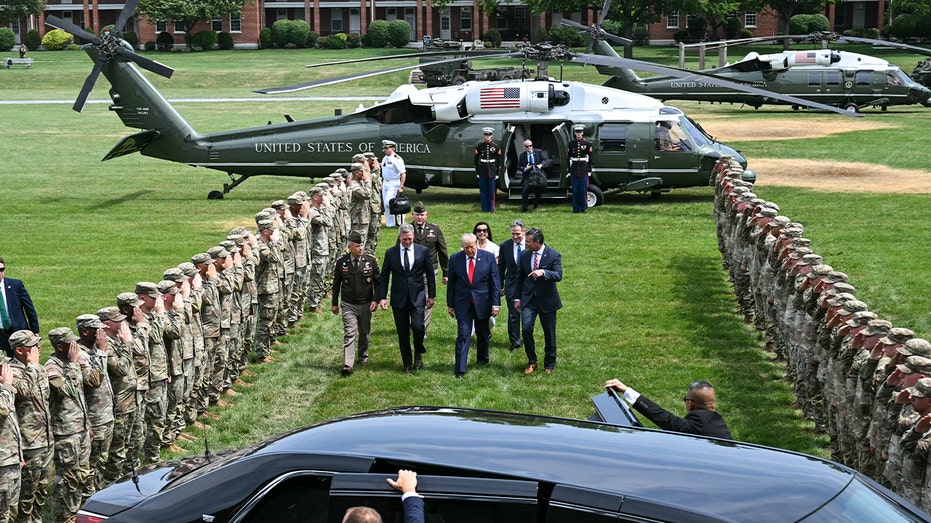
President Donald Trump speaks with Secretary of War Pete Hegseth upon arrival at the US Army War College Field Landing Zone, on his way to the Pennsylvania Defense and Innovation Summit at the US Army War College in Carlisle, Penn., on July 15, 2026. (SAUL LOEB / AFP via Getty Images)
President Donald Trump and Secretary of War Pete Hegseth had the conviction to say so plainly. Many in Washington would have left the name alone. The president chose clarity over convenience when he signed the executive order authorizing the Department of War name. Hegseth has made that mission the standard for everything the department does, from restoring the warrior ethos to ensuring our warfighters remain the most lethal fighting force in the world.
This is a restoration, not an invention. The War Department was established in 1789 under President George Washington. For more than 150 years, it carried America’s military through its most consequential conflicts, from Union victory in the Civil War to Allied victory in two world wars. The National Security Act of 1947 reorganized the military, and in 1949, the military leadership became the Department of Defense.
The world has changed since then. The mission has not. When the nation calls, our warfighters must be ready to fight, win and come home.
Washington understood this. In his first annual address to Congress in 1790, he declared, "To be prepared for war is one of the most effectual means of preserving peace."
Critics call the change symbolic, even unnecessary. They have it backward. Words define the mission, and the mission drives everything else. As for our allies, we owe them a clear statement of our core mission: to fight and win wars. Full stop. Clarity strengthens alliances. Ambiguity invites adversaries to test them.
The president has acted. Now Congress must finish the job. The House and the Senate Armed Services Committee have both backed restoring the Department of War name in this year’s defense bill. Lawmakers should keep it in the final version and send it to the president’s desk. The name of the institution that sends Americans to fight belongs in law, not just in an executive order.
Of course, a name alone does not make a military stronger. The name is a commitment, and the department must earn it every day. Every acquisition decision, training exercise and strategic investment should answer one question: Does it make our warfighters more capable of defeating any threat? From superintelligence and autonomous systems to advanced weapons and a revitalized defense industrial base, the United States must keep building the advantages to deter its adversaries and, if necessary, defeat them.
HEGSETH UNLEASHES TRUMP'S 'ARSENAL OF FREEDOM' WITH WARNING TO DEFENSE GIANTS
Fortress America, inspired by Trump’s historic and unconventional view of the world and his approach to national security, challenges traditional thinking and reimagines how America must defend itself in an increasingly dangerous world. The initiative aims to make our military bases able to function independently. They will have their own power sources, secure communications and critical supplies available even if civilian infrastructure breaks down. Under Fortress, we will boost manufacturing, create important reserves and ensure that all of our bases remain completely operational even during an attack.
"Department of War" states the mission from the very top: our military exists to fight and win the nation’s wars.
None of this diminishes the military’s other responsibilities. Our forces will still respond to disasters, support allies and carry out every lawful mission. And the name changes nothing about the constitutional roles of Congress or the president.
But the possibility of war remains the defining reason America maintains a military. For the soldiers, sailors, airmen, Marines, Guardians and civilians who dedicate their lives to this mission, that distinction is not symbolic. They volunteer to stand between this country and its enemies. When called, they risk everything.
CLICK HERE FOR MORE FOX NEWS OPINION
The men I led in Bermel did exactly that. They deserved leaders, from the platoon to the Pentagon, who told them plainly what their mission was and made sure they were ready to accomplish it. Every warfighter serving today deserves the same.
CLICK HERE TO DOWNLOAD THE FOX NEWS APP
The goal of American military strength has never been perpetual war. It is lasting peace, secured by a force whose ability to prevail is beyond question. We prepare for war so that our adversaries never doubt the cost of starting one.
Sean Parnell is a combat veteran of the U.S. Army’s 10th Mountain Division, New York Times bestselling author and assistant to the Secretary of War for Public Affairs and senior advisor to Secretary Pete Hegseth.
KioskNews shows a cleaned-up reading view extracted from the publisher’s page — the original always lives on their site, not ours.