The Pak Samad we knew and the stories we may have missed
Long before Malaysians knew him as Pak Samad, A Samad Said was a young clerk at Singapore General Hospital whose duties were anything but ordinary.
Malaysia’s fourth national laureate, who died on Nov 24 at 91, left behind literary works that generations of Malaysians grew up reading.
Here, FMT Lifestyle looks back at seven stories from his own life, from how he came to keep that famous beard to the wartime memories that shaped his work.
1. His trademark beard came about by chance
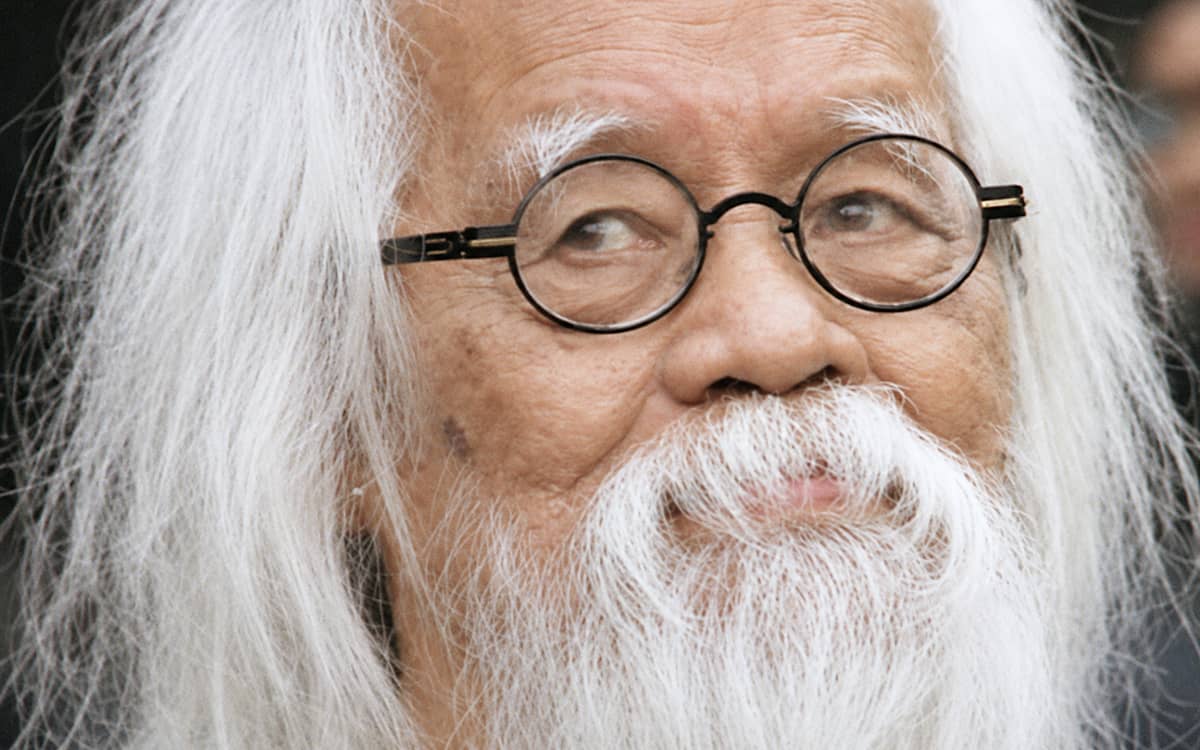
Pak Samad’s famous beard was the unexpected result of a hospital stay in the 1980s, during which his doctor had told him to do nothing but rest.
After two or three weeks, he looked in the mirror and observed, as he later put it, “a different me”. He liked what he saw and decided to keep the beard and moustache.
By 2013, his appearance was so familiar that people would stop him around Bangsar to shake his hand or ask for a photo.
In the same interview, Samad laughed as he revealed how he looked after his beard: a weekly shampoo did the trick!
More recently, veteran playwright Kee Thuan Chye shared on Facebook that Samad had once been asked to cut his hair for a documentary. Samad apparently replied, “Do you want my hair or do you want my mind?”
He was allowed to keep his hair.
2. His first job was not for the faint-hearted
Before embarking on his career in journalism, Samad worked as a clerk at Singapore General Hospital, where he was entrusted with a rather unusual responsibility.
In an interview with The Edge Malaysia, he recalled with a grin what the job entailed: he’d been tasked with looking after the mortuary!
He only held the job for a few months before moving to Kuala Lumpur, where he joined Fikiran Rakyat as a journalist.
3. His wartime childhood inspired a novel
Samad was still a boy when the Japanese occupied Singapore. The hardships he experienced stayed with him, and those memories found their way into “Sungai Mengalir Lesu”, published in 1967.
In a 2014 interview, he explained how the novel captured a time when people of different races came together in the face of adversity.
For him, writing the book was also a way of documenting a difficult period in history that he had experienced first-hand.

4. Women he met in Singapore helped shape ‘Salina’
In the 1950s, low rents drew Samad to Singapore’s Lorong Lalat and later to Rangoon Road. He recalled that both streets and the surrounding areas were known as red-light districts.
Among the people he got to know were waitresses and sex workers. When asked years later about the woman at the centre of his novel “Salina”, he said he had based the character on several of these women.
The novel follows Salina and her neighbours as they struggle to get by in Kampung Kambing, a fictional settlement in post-war Singapore.
Interestingly, the novel originally had a different name: Samad entered it in Dewan Bahasa dan Pustaka’s (DBP) 1958 novel-writing competition as “Gerhana” (“eclipse”), where it received a commendation.
While discussing revisions with fellow writer Keris Mas, Samad agreed to rename the book after its central character. It was published as “Salina” in 1961.
5. He sketched on café napkins
Whenever inspiration struck, the nearest napkin would do. Sketching was part of Pak Samad’s creative process, and he often used serviettes or tissues to capture the images that came to mind as he wrote.
He did, however, have his favourites: he joked that Dôme Café, Starbucks and Coffee Bean & Tea Leaf had better-quality serviettes!
In 2007, Pak Samad held his first solo art exhibition, “Daerah Samad”, at Galeri Petronas. He paired each artwork with a poem – and every piece sold.

6. He loved Elvis and wanted to know what Bieber was up to
Samad counted Doris Day, Andy Williams and Elvis Presley among the singers he enjoyed, but he was also curious about contemporary popular culture.
In a 2019 interview, his son Az recalled his father asking him what Justin Bieber was up to, who Selena Gomez was, and what a new movie was about.
To Az, such questions were typical of his father, who never stopped wanting to learn about the world. It was a trait Az himself had picked up from him.
7. He asked his son why joy had to wait until the weekend
“What do people do on weekends?” Samad used to ask his son. They did what they liked, Az would tell him.
His father would follow up with a question that stayed with Az long after childhood: why work from Monday to Friday and wait until Saturday or Sunday to do what you enjoy?
Pak Samad, who loved music himself, encouraged Az to study it in the United States. Az went on to become a guitarist, composer and educator.
Looking back, he summed up his father’s advice simply: “Do what makes you happy.”
KioskNews shows a cleaned-up reading view extracted from the publisher’s page — the original always lives on their site, not ours.