Hong Kong partners with Qingdao port as think tank urges maritime resilience
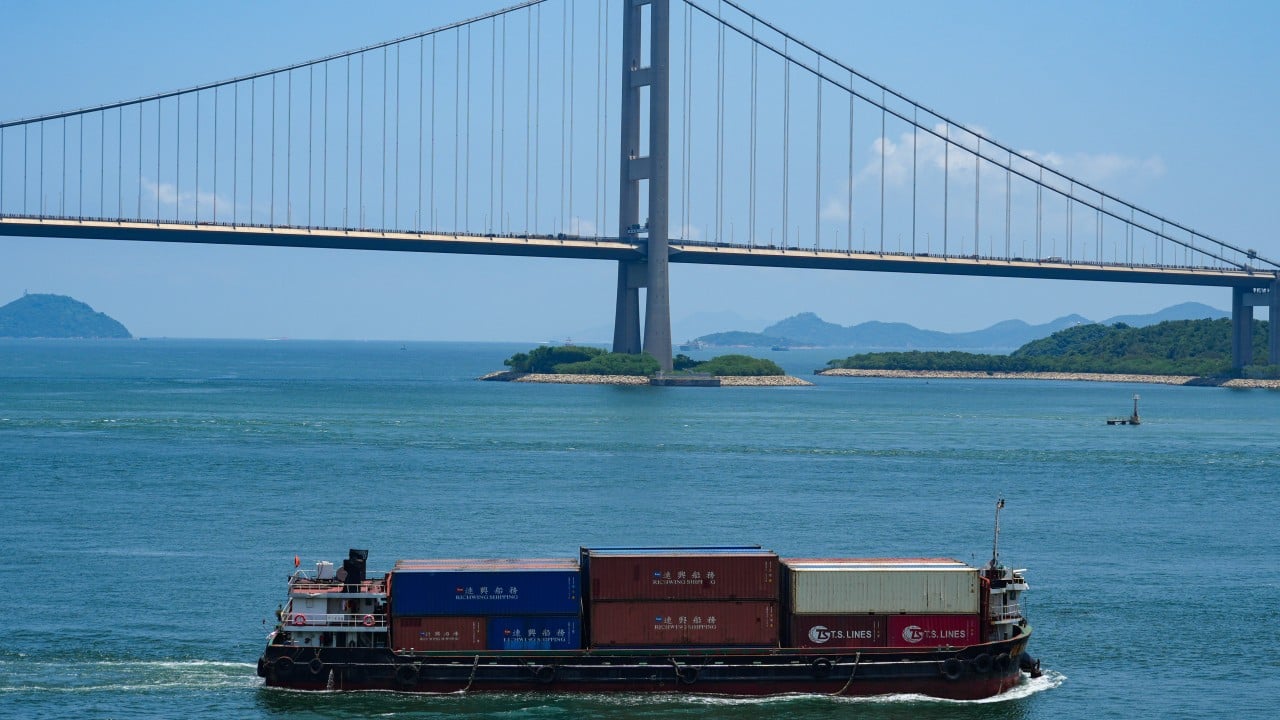
Hong Kong has established a port partnership with Qingdao in mainland China as part of efforts to broaden international collaboration on shipping logistics, smart ports and green corridors.
The news of the partnership came as local think tank Our Hong Kong Foundation said that the city should prepare the sector to withstand geopolitical shocks by developing marine insurance and maritime arbitration.
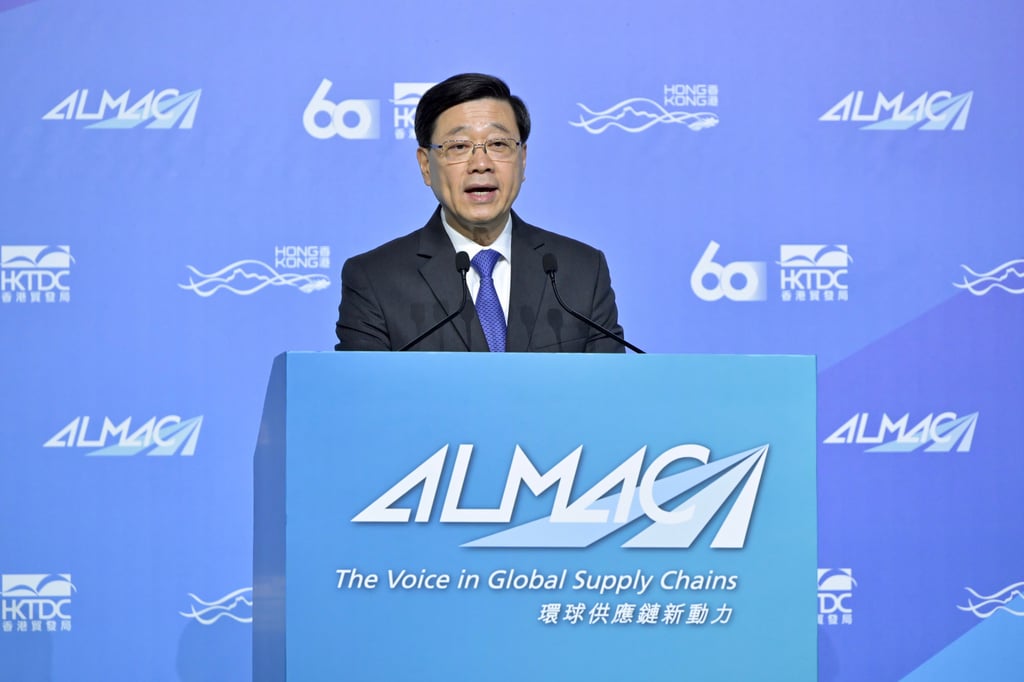
Announcing the new port tie-up at the Asian Logistics, Maritime and Aviation Conference on Tuesday, Chief Executive John Lee Ka-chiu said the city was pursuing cargo growth alongside services ranging from ship finance and insurance to management and legal support.
“This year, we are forging ties with the port in Shanghai, Piraeus port in Greece, Yangpu port in Hainan and, as we will witness today, the port of Qingdao in Shandong,” he said, adding that Hong Kong had established partnerships with Guangxi and Dalian on the mainland and San Antonio in Chile last year.
Hours after the event, the Transport and Logistics Bureau formally detailed the agreement, highlighting that the framework aimed to drive joint initiatives in logistics, green shipping and smart ports, while exploring green logistics corridors.
Launched by the Hong Kong government last year, the network initially comprised Guangxi, Dalian and San Antonio, with each partnership targeting different business opportunities, according to the Hong Kong Maritime and Port Development Board.
Guangxi provides access to inland mainland markets through the New International Land-Sea Trade Corridor, while cooperation with San Antonio builds on Hong Kong’s capacity to handle high-value cold-chain cargo, such as Chilean cherries. The Dalian partnership aims to secure marine fuel supplies and attract more bunkering and trading business to the city.
Qingdao serves an extensive cargo hinterland across northern, northwestern and central China, according to the port operator, giving the expanded network a connection to those markets.
In green shipping, Lee said at the event that Hong Kong had completed about 220 green fuel operations totalling 380,000 tonnes since last year. It had also conducted its first green methanol bunkering operation, while liquefied natural gas bunkering volume had risen 80 per cent year on year.
A green energy corridor established with Zhanjiang in Guangdong was connecting mainland production with international fleets, he added.
Lee said an agreement would also be signed with the Ministry of Transport’s Global Sustainable Transport Innovation and Knowledge Centre to promote the mainland’s green transport certification system internationally, providing another way to verify green fuel credentials.
Separately, Our Hong Kong Foundation released a research report on Tuesday, proposing measures to help the maritime sector become more robust and better equipped to handle geopolitical shocks.
It said the city’s Marine Speciality Risks Insurance Pool, established in November last year, was unable to meet dramatically increased demand.
The report stated that since the US-Iran war broke out, industry estimates put London war-risk premiums at between 3 and 8 per cent of a vessel’s hull value – more than a 10-fold jump – while Hong Kong saw a “relatively moderate” rate increase of five to 10 times.
“Currently, this pool is serving about 800 vessels, but there are about 17,000 in mainland China, so there’s a lot of room [for growth],” said Kenny Shui Chi-wai, vice-president of the foundation.
“One of our recommendations is whether the Hong Kong government would take reference from the US or India in providing a partial government guarantee that provides a last resort safety net in an extreme, black swan event.”
“Black swan” events refer to rare, unforeseen shocks with severe consequences.
Other suggestions included strengthening the pool’s underwriting capacity through reinsurance by having Hong Kong’s Insurance Authority facilitate engagement with the parent companies of the pool insurers from mainland China.
The report also encouraged Hong Kong to attract more international arbitration by positioning the city as the default jurisdiction through working with international drafting committees and industry associations such as the Baltic and International Maritime Council.
KioskNews shows a cleaned-up reading view extracted from the publisher’s page — the original always lives on their site, not ours.