Amid ‘sharp rise’ in US expansion, will mainland Chinese brands ditch Hong Kong?
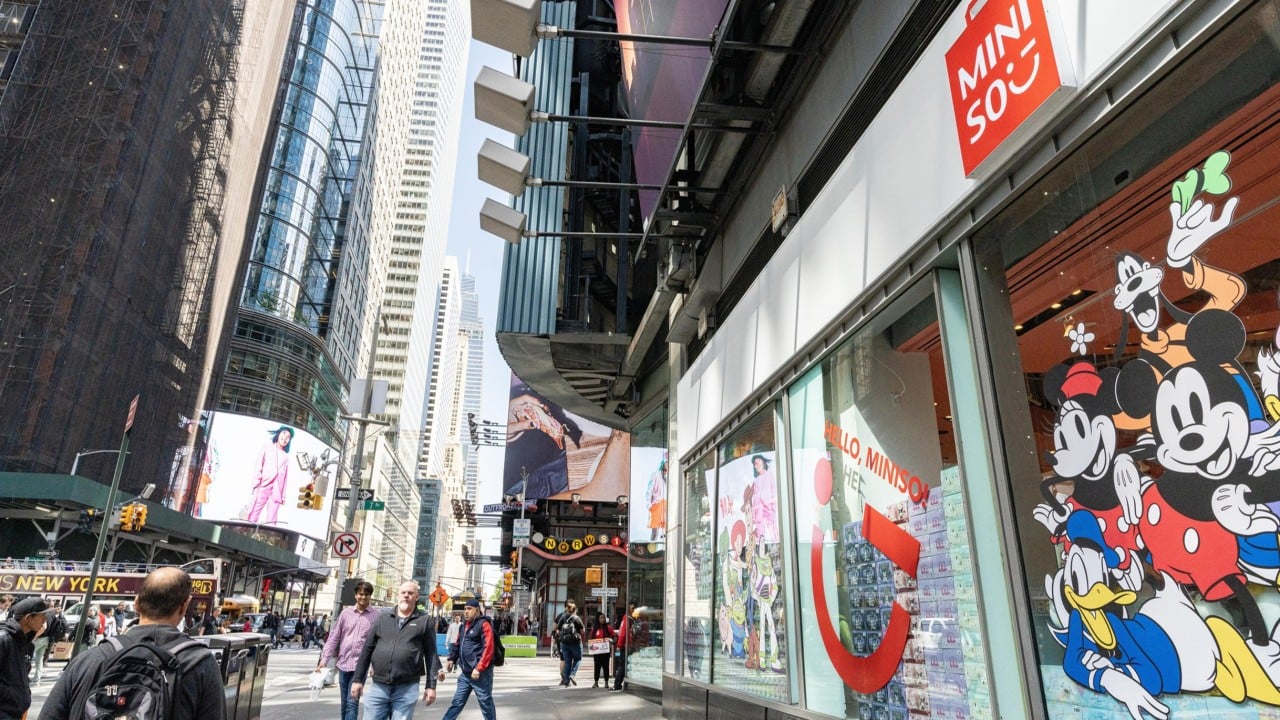
Chinese consumer brands are increasingly looking to the United States as a key expansion market, choosing retail spaces in gateway cities in the world’s largest economy, according to property consultancy Cushman & Wakefield.
There was no official count for how many Chinese brands had established their presence in the US, but locations such as New York City, Los Angeles, San Francisco and Miami are their priorities for their first ventures into the American market, said Duke Zhen, managing director and head of retail services in China at the consultancy.
“We have seen a sharp rise in appetite among mainland brands to enter the US retail market,” Zhen said. “The key drivers are revenue diversification, building global brand credentials, proven product competitiveness and access to a well-established retail ecosystem.”
Among those venturing into the US is Top Toy. The designer toy brand of the Guangzhou-based Miniso Group opened an outlet in New York City’s Times Square in June.
“Having previously focused its international expansion in the Asia-Pacific region, the brand very boldly targeted New York as the launch location for its entry into the US market,” Zhen said.
Mainland hotpot chain Haidilao has been perhaps the most aggressive in trying to establish itself in the US, Zhen said.
“Haidilao is a stand-out case,” he said, adding that it had become one of the best-known Chinese food and beverage brands in the US.
We have seen a sharp rise in appetite among mainland brands to enter the US retail market
“Its overseas business has built a carefully managed store network across US gateway cities, from the East Coast to the West Coast,” he said. “It has localised its service model for US consumers, dialling back its very proactive service while keeping its signature experiential elements. It has also adjusted spice levels and menus to suit local tastes and aligned with US practices on tipping, food safety and labour rules.”
As of the second quarter of the year, US retail vacancy rates remained at around 6 per cent, while annual rents grew by more than 2 per cent.
The increased focus on US expansion by mainland Chinese brands comes as domestic retail sales remain sluggish, with a mere 0.4 per cent increase on an annual basis in October, according to data released by the National Bureau of Statistics last week. The growth rate slowed from 1.1 per cent rate a month earlier.
Amid the tough conditions, a number of foreign brands have been pulling back in the mainland market. Swedish furniture retailer Ikea closed seven stores in February, while American fashion brand Guess exited the market the following month.
Despite the attractiveness of the US to mainland brands, Zhen said Hong Kong still provided a “low-risk testing ground with familiar language and consumer behaviour, flexible capital structures, attractive business and tax regimes, and excellent connectivity for regional expansion”.
In the first nine months of the year, mainland Chinese brands made up 36 per cent of newcomers to Hong Kong, down from 38 per cent in 2025, according to data tracked by Cushman.
KioskNews shows a cleaned-up reading view extracted from the publisher’s page — the original always lives on their site, not ours.