5 steps China, US and Russia could take at Apec to defuse nuclear risk
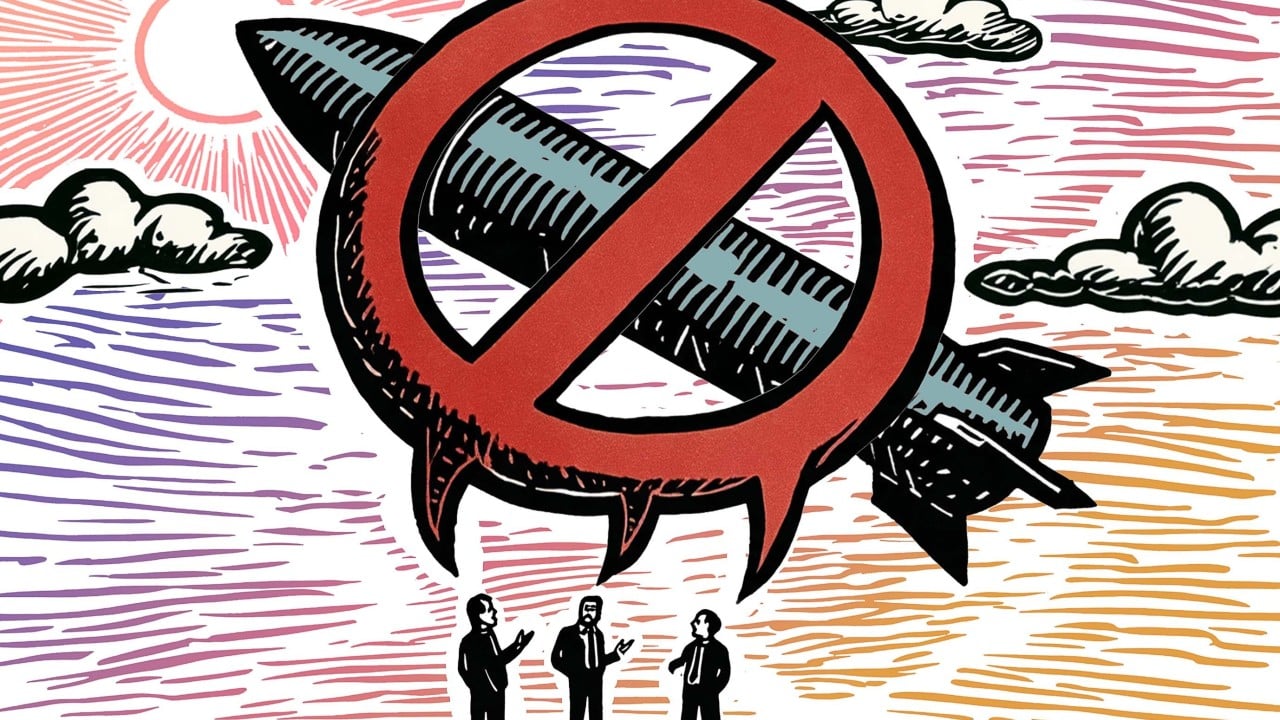
Is a trilateral summit between China, Russia and the United States possible during the Asia-Pacific Economic Cooperation forum in Shenzhen? If so, it is striking that US President Donald Trump sees such a meeting focusing less on Ukraine, saying: “we would have it to talk about nuclear weapons and denuclearisation.”
How might this start? The US says China is the fastest-growing nuclear power in recent years. But even if Beijing’s warhead stockpile reached 600 by the end of 2025, as estimated by the Stockholm International Peace Research Institute, those of the US and Russia still account for almost 90 per cent of the world’s nuclear warheads. This is why Beijing insists Washington and Moscow should carry out substantive cuts before talking about nuclear disarmament.
Waiting for the US under President Donald Trump to lead nuclear disarmament is like waiting for Godot. The US has announced that it possesses on-orbit space control weapons and is building a “Golden Dome” system as a shield against missile attacks. Since the Biden administration, Washington has lumped Chinese and Russian missile capabilities together, arguing it faces a nuclear threat on two fronts. That raises a bizarre question: how is a coordinated nuclear strike by Beijing and Moscow against Washington possible?
Russia, which holds the world’s largest nuclear arsenal, has even less incentive to make nuclear cuts. Since 2025, Russian forces in eastern Donbas have advanced very little in many contested areas amid stiff Ukrainian resistance. History offers a clear pattern here: when a nuclear power enjoys conventional military superiority, it rarely resorts to nuclear sabre-rattling.
This is why, during the Cold War, Nato rejected proposals for a “no first use” nuclear policy, fearing that without nuclear deterrence, Soviet armour could surge across the North German Plain and pour into western Europe. This is also why, after the Soviet Union collapsed, Russia abandoned its own no-first-use commitment.
Trump open to nuclear talks with Xi and Putin
Should the three parties decide to have a nuclear dialogue, the easiest thing to do is reaffirm the joint statement issued by the five nuclear-weapon states in January 2022: a nuclear war cannot be won and must never be fought. If nuclear war is indeed unwinnable, what is the rationale for striking first?
This is in line with China’s long-standing no-first-use policy. It also helps improve Russia’s image. Although there is consistent speculation that Russia might use nuclear weapons at critical junctures, as some have suggested, President Vladimir Putin has never stated this overtly.
Another piece of low-hanging fruit would be for the three sides to pledge not to strike civilian nuclear power plants and exchange lists of nuclear facilities shielded from conventional attack. India and Pakistan have followed this model for decades under their Agreement on the Prohibition of Attack against Nuclear Installations and Facilities, swapping such lists every January. There is no clear reason why the same risk-reduction formula could not be adapted here.
A third agreement could be a joint announcement of a ban on anti-satellite weapons tests. China, the US, Russia and India have all demonstrated anti-satellite attack capabilities through live tests. Meanwhile, the world operates tens of thousands of satellites in crowded low Earth orbit, and the figure keeps climbing.
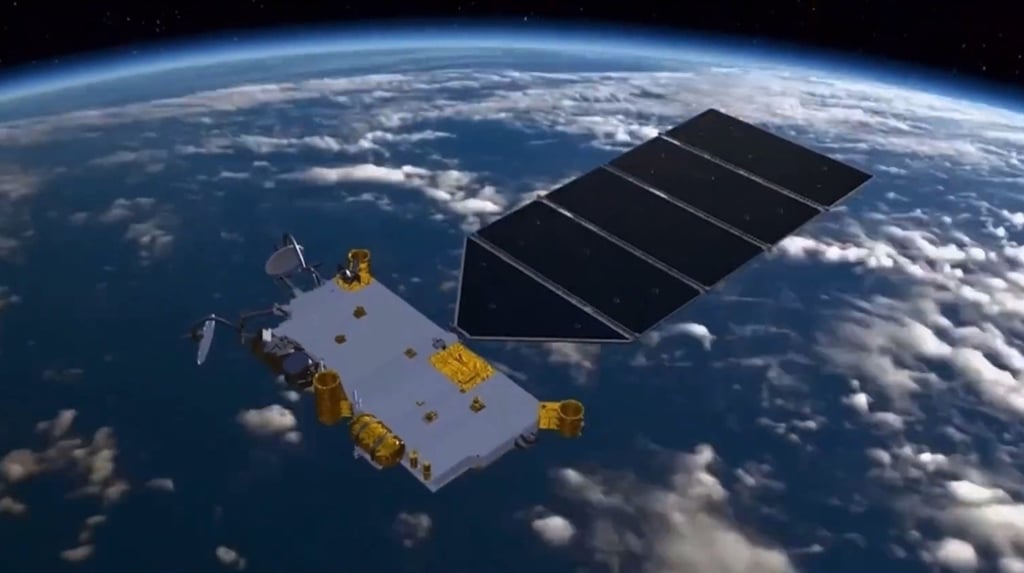
No nation can yet fully disable another’s satellite network, but destroying only a few satellites would produce debris dangerous to all orbital assets. In this regard, an attack on one is an attack on all. The three nations should also put in place early-warning notification rules for high-risk incidents such as close satellite encounters, collision threats from debris and in-orbit directed-energy weapons testing.
A fourth step could be notification of missile launches. Washington and Moscow already operate such arrangements, as do Beijing and Moscow. A US-China deal would pave the way for a unified trilateral notification regime. In September and November 2024, China and the US exchanged advance warnings for their respective intercontinental ballistic missile tests. This was a rare, and positive, confidence-building milestone.
SCMP Plus is a new premium news platform that gives you an
all-inclusive edge to stay ahead on China news.
To access our exclusive content you’ll need to subscribe.
Already a subscriber?
LOG IN
Such notifications only work when the advance notice is meant to prevent accidental scares, not to give an adversary the information needed to shoot down the missile. If Washington does build the Golden Dome with weapons in orbit, that understanding would break down. Trump’s Golden Dome is built around his delusion that the US can dominate outer space, yet US and Israeli missile defences have repeatedly proven far from invulnerable against Iranian missile and drone strikes.
The final issue is how artificial intelligence (AI) might be unnecessarily involved in the nuclear domain. It makes one’s blood run cold to think that agentic AI might one day manipulate nuclear command-and-control systems. This is why President Xi Jinping and then US president Joe Biden agreed in 2024 to keep a human-in-the-loop requirement for nuclear command-and-control systems. China and the US have also agreed on regular talks on AI risks.
It would be desirable if Moscow could join this framework, and I see no reason why it would be reluctant to do so. Dialogue should build a consensus on three core rules: banning fully autonomous AI algorithms that trigger nuclear strikes; limiting AI to supporting threat assessment functions; and drawing up shared standards to guard against cyberattacks targeting nuclear command, control and communications infrastructure.
The three powers can also set a global example on instant hotline communications to defuse AI-induced nuclear false alarms and exchanges on the boundaries of military AI in nuclear operations. Nuclear disarmament is still far away, yet the Shenzhen summit could kick-start efforts to contain the nuclear risk before it contains us.
KioskNews shows a cleaned-up reading view extracted from the publisher’s page — the original always lives on their site, not ours.