Scott Stinson: Olivia Chow cruised to a mayoral victory by promising not to break stuff — or fix it
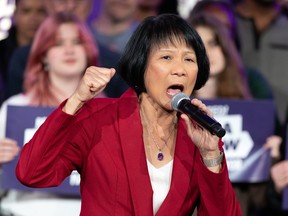
Olivia Chow ran a re-election campaign that in many ways was about what she wouldn’t do. Unlike her main challenger, Brad Bradford, she wouldn’t freeze property taxes. She wouldn’t undergo an aggressive spending review, and she wouldn’t introduce a public water utility.
Sign In or Create an Account
The incumbent Toronto mayor would, instead, keep on doing what she has been doing, “moving forward” after what she admits were a tough first couple of years in the top job at City Hall. At a time when many residents had concerns over everything from affordability to crime to traffic to antisemitism, she offered incremental improvements. Vote for the status quo, basically.
That pitch, modest as it was, proved to be enough for a surprisingly easy win. The 69-year-old former city councillor and former federal NDP MP cruised to a comfortable victory in which she had support in all areas of the city.

Columnist Jesse Kline keeps you up to date with what’s happening in Israel and the effects of antisemitism on life here in Canada. Friday mornings.
By signing up you consent to receive the above newsletter from Postmedia Network Inc.
A welcome email is on its way. If you don't see it, please check your junk folder.
The next issue of Channel Israel will soon be in your inbox.
We encountered an issue signing you up. Please try again
The power of incumbency is significant in municipal politics, and coupled with the organizational strength of the NDP electoral machine, Chow had 54 per cent support with most polls reporting Monday night. Bradford was back at 41 per cent. The incumbent led start to finish in the campaign, holding off a late surge from her closest competitor.
Coming on a night where incumbent mayors were ousted in a number of Ontario municipalities, including neighbouring Mississauga, with Carolyn Parrish (and former mayor Bonnie Crombie) losing to Councillor Alvin Tedjo, Chow’s resilience was politically impressive.
“The city of Toronto has spoken,” Chow said at an election night party. “Now that the election is over, the work of coming together begins.”
Bradford, 40, thanked his supporters at a downtown Toronto hotel, and said he wished the best for Chow, whom he congratulated over the phone.
The campaign became increasingly heated in the closing days, as polls suggested that Bradford had closed the gap with Chow to within the margin of error for those surveys.
In the months that preceded it — or years, according to critics of Bradford who say he has been angling for the top job for that long — there were few surprises.
Chow, who brought in steep property-tax hikes in each of her first two years, increasing the rate by close to 20 per cent over that period, eased off in her third budget as a re-election bid loomed. She insisted that those major hikes were necessary to deal with a budget shortfall left by three-term mayor John Tory, who resigned after revelations of an inappropriate relationship with a much younger staffer, and she touted small wins like a cap on TTC fares and a school-snack program.
She also boasted about her relationship with Ontario Premier Doug Ford, who gushed about the job she was doing at City Hall at a news conference last month, but then insisted that the praise did not amount to an official endorsement.
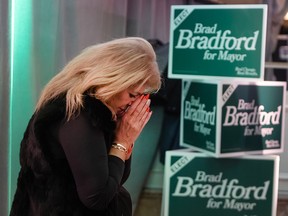
Bradford, councillor for Beaches-East York since 2018, and who ran for the mayoralty after Tory’s resignation but finished in eighth place behind Chow in the 2023 byelection, emerged as the most likely candidate on Chow’s right flank, especially after Tory announced that he would not seek his old job.
Bradford eschewed some of his former policies, including bike lanes that he supported, and promised to hire more police officers and take a harder line on public disorder — on encampments in parks and drug use on the TTC, to pick two examples — than the city has managed under Chow.
Bradford’s position as the anti-Chow standard-bearer came under threat with the late entry of former Conservative cabinet minister Chris Alexander. A former diplomat who said he only entered the race because he didn’t think Bradford could beat Chow, Alexander had no connection to City Hall and represented a suburb east of Toronto in the House of Commons. He resigned from the race with about three weeks to go, saying he didn’t see a path to victory.
That left Chow and Bradford to battle it out, and over the final stretch they sharpened their attacks. The incumbent mayor accused Bradford of planning significant services cuts to pay for his promise of a one-year tax freeze, and she argued that his proposal to create a public water utility to save money was essentially a plan to give control of the city’s water supply to the province.
Bradford dismissed all such criticisms as “scare tactics” from an increasingly desperate mayor. He was certainly correct that Chow revved up the attacks as the polls tightened, a stark change from the message of positivity that she preached in the early days of her re-election bid.
In the end, that worked. Did she rescue the campaign in the home stretch? Did she just do what all incumbent mayors do in the city of Toronto?
Whatever the reason, it was enough. The status quo may not be a compelling narrative, but it won the day.
Join the Conversation
This website uses cookies to personalize your content (including ads), and allows us to analyze our traffic. Read more about cookies here. By continuing to use our site, you agree to our Terms of Use and Privacy Policy.
KioskNews shows a cleaned-up reading view extracted from the publisher’s page — the original always lives on their site, not ours.