Will South China Sea’s code of conduct remain elusive as deadline looms?
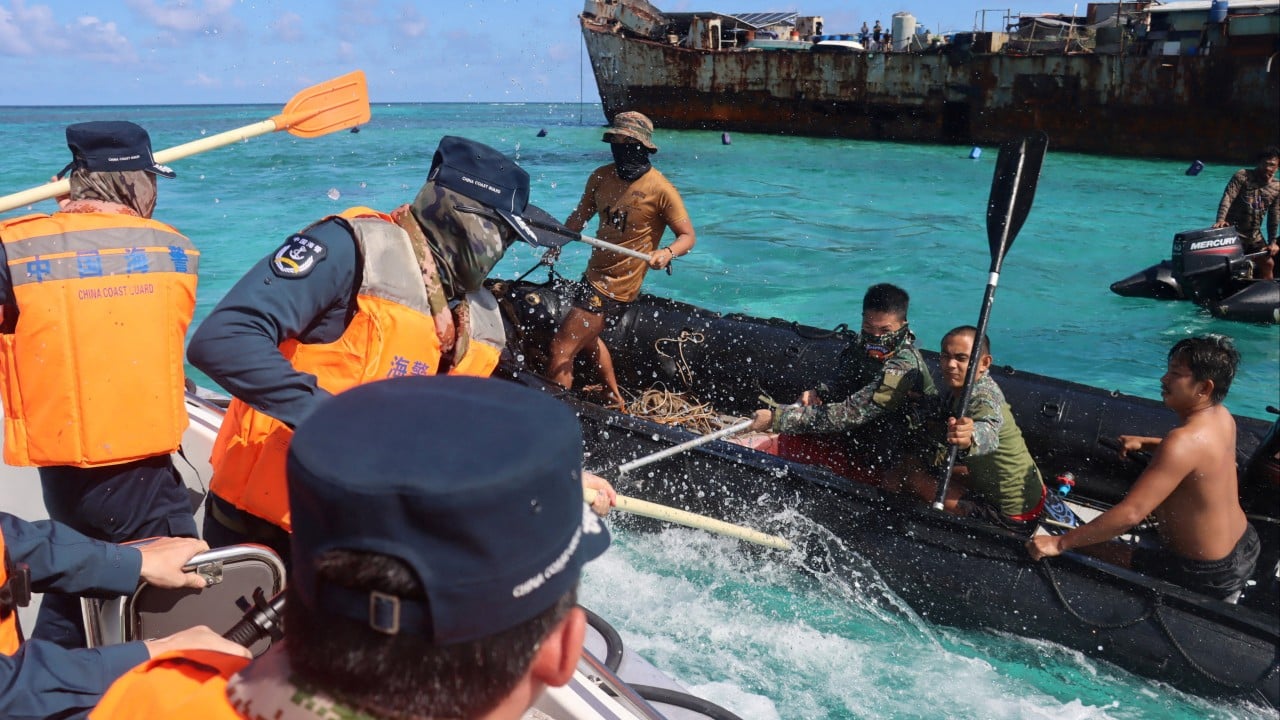
Ding said the biggest obstacle was the COC’s scope, arguing that it should focus on maritime states managing their activities and preventing confrontations rather than settling territorial differences.
Claimant states held differing positions on which activities should be permitted or restricted under the agreement, including operations involving external powers, he added.
“Such differences should be settled within the COC platform,” he said, adding that disputes should not be resolved elsewhere.
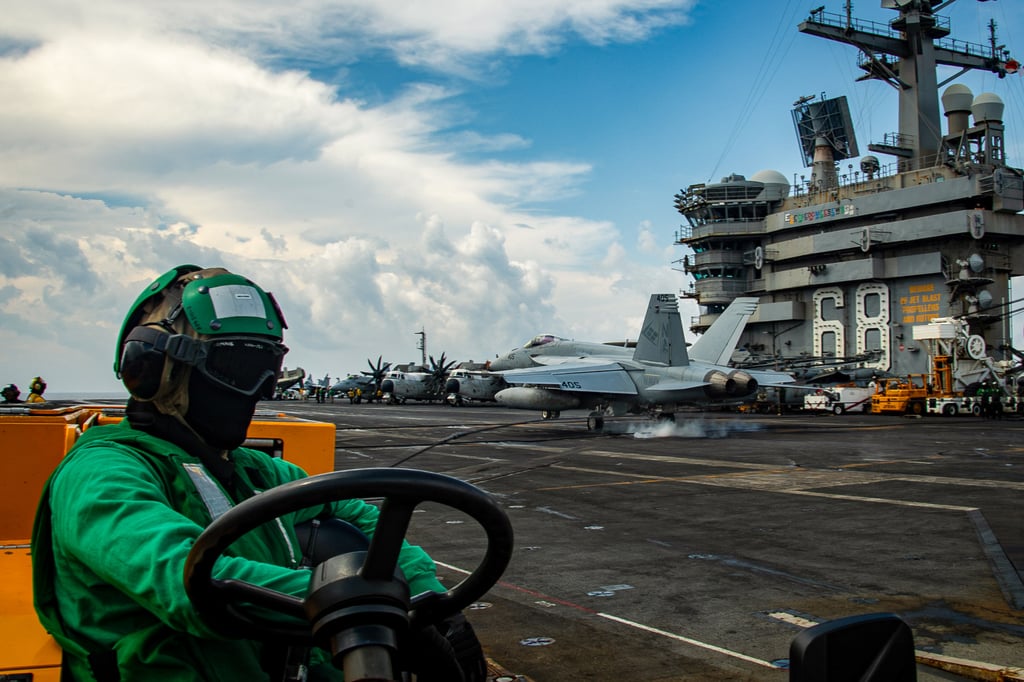
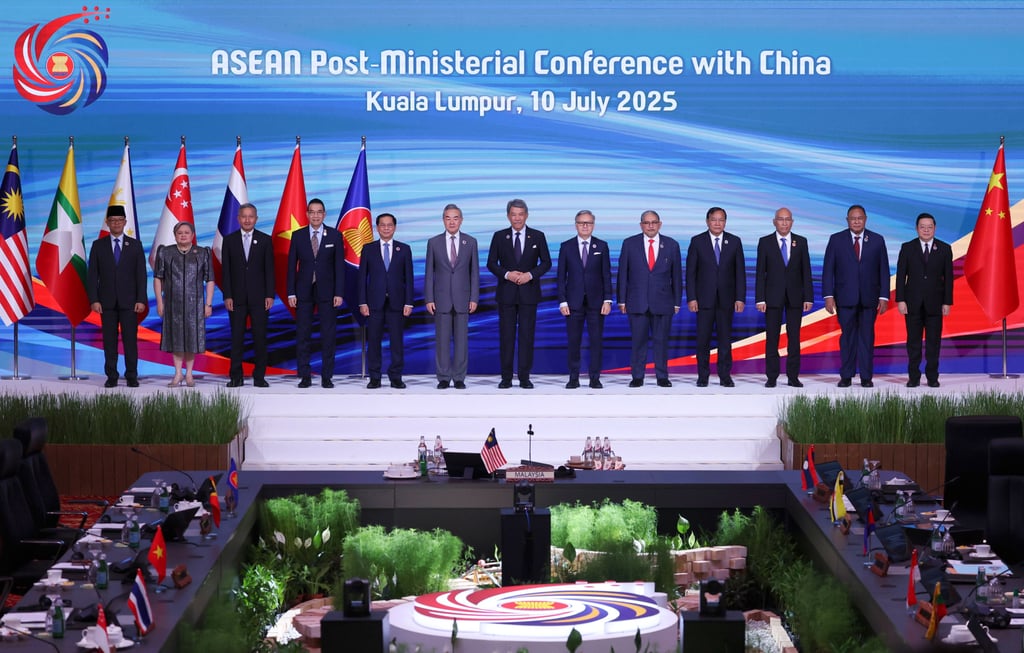
Asean has repeatedly called for restraint and clear rules under the COC, which was first proposed in 1992, to manage disputes in the contested waterway.
The Association of Southeast Asian Nations and China exchanged draft proposals in 2000 but failed to reach an agreement on such a code. Instead, they signed a non-binding Declaration on the Conduct of Parties (DOC) in 2002.
Consultations on the code resumed in 2013, and negotiators began working on its draft text in 2018.
The code was intended to set operational rules for parties in the disputed waterway to ensure that incidents at sea would not escalate into conflict, said Sumathy Perumal, acting director of research and senior fellow at the Maritime Institute of Malaysia.
“I don’t think [the] COC will impact maritime rights or maritime claims,” Sumathy said.
However, continued confrontations in the South China Sea had complicated negotiations and made it harder for parties to reach consensus on the code, she noted.
“The incidents on the ground [are] probably delaying [negotiations], and a lot more details [need] to be agreed upon by those intending to sign the COC,” she said, explaining that a mutually accepted framework was important to help China and Asean preserve peace in the waterway.
Questions persisted over whether the claimant states would accept legally binding rules that could restrict their activities in the waters.
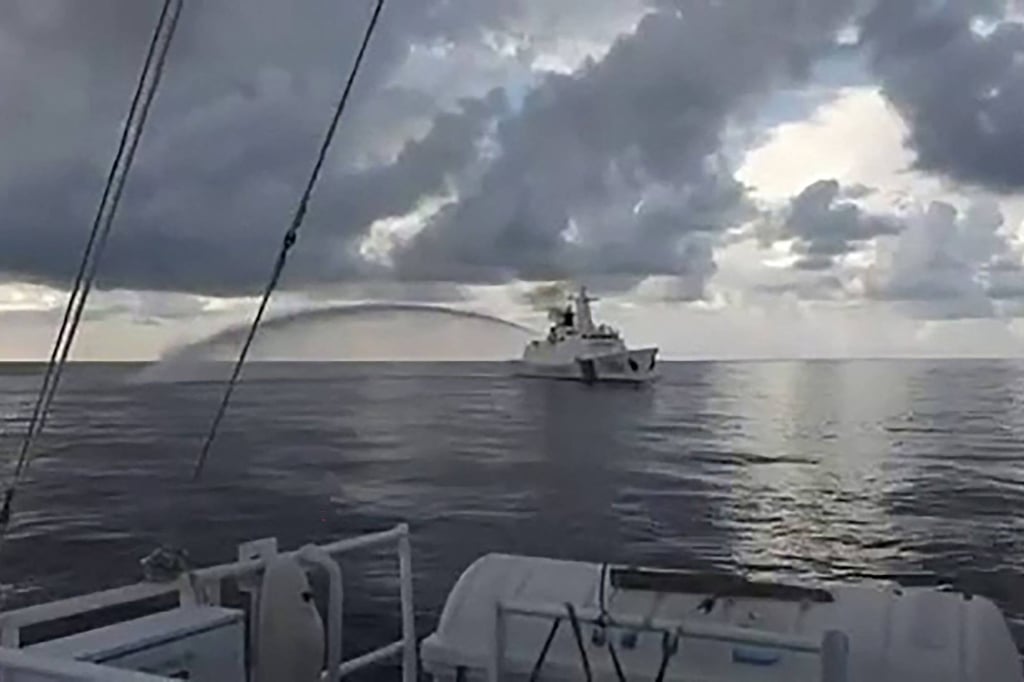
“The fact a COC has not been realised until today is reflective of the fact that nobody seems to really want it. If they had wanted it, they would have really made it happen,” said Nazery Khalid, a maritime security expert and senior fellow at the Maritime Institute of Malaysia.
He said claimant states were reluctant to surrender their freedom to pursue competing maritime claims because binding rules could restrict activities currently permitted under the 2002 declaration.
“With a legally binding Code of Conduct, there are certain things that you cannot do any more, which you can do under the DOC,” Nazery said.
Reality at sea
On the water, maritime tensions – between several Asean claimant states and China, and among the Southeast Asian neighbours – have continued to flare over fishing grounds, offshore energy resources and disputed maritime zones.
Disputes between Malaysia and the Philippines have persisted over their overlapping claims in the waters off Sabah.
In June 2024, the Philippines submitted a claim to the United Nations to extend its continental shelf 350 nautical miles from Palawan, prompting Malaysia to file an objection over Manila’s move.
Tensions grew after Philippine President Ferdinand Marcos Jnr signed two maritime laws in November 2024 that Malaysia said infringed on its territory.
Malaysia also lodged two separate diplomatic protests in February and July ahead of Manila’s presentation of its continental shelf submission to a UN commission in July.
Malaysia and Vietnam also hold overlapping continental shelf claims in the South China Sea, despite having jointly submitted a claim to the UN in 2006.

In December 2019, Malaysia separately filed a submission to extend its continental shelf northwards into the waters around the Spratly Islands, prompting Vietnam to lodge its objections that the submission overlapped with its maritime entitlements.
Confrontations involving China have also been frequent across the region.
In January, a Chinese coastguard vessel entered Malaysia’s exclusive economic zone (EEZ) – the 200-nautical-mile band in which a coastal state holds special rights to marine resources – near the South Luconia Shoals off Sarawak on Borneo. The Royal Malaysian Navy’s offshore patrol vessel KD Kelantan had shadowed the Chinese ship since December 2025.
According to local media reports, Chinese vessels have maintained a near-continuous presence north and south of the shoals since 2014.
In October 2021, Malaysia’s Foreign Ministry summoned the Chinese ambassador to protest the presence and activities of Chinese ships, including survey vessels, in Malaysia’s EEZ.
While Beijing did not respond to the protest then, it claims the shoals as part of its Nansha Islands – known internationally as the Spratlys – and maintains that its coastguard patrols in the area are lawful operations within waters under Chinese jurisdiction, even as it prefers dialogue with Putrajaya to manage differences.
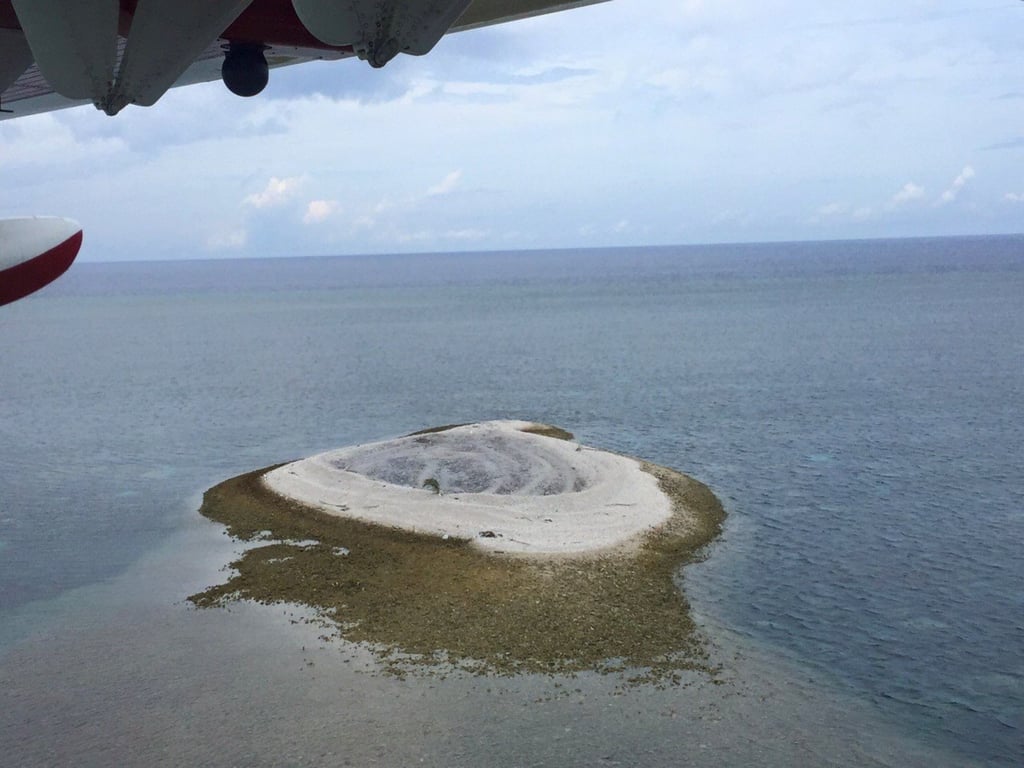
Philippine and Chinese vessels have also clashed in the disputed waters, with tensions rising in recent weeks despite a 2024 provisional bilateral arrangement meant to calm waters around the Second Thomas Shoal.
Last week, Manila accused a Chinese coastguard vessel of firing a water cannon and carrying out dangerous manoeuvres to delay the medical evacuation of an ailing Philippine Navy sailor from its grounded warship at the shoal by nearly 10 hours.
Beijing countered that it had allowed the evacuation on humanitarian grounds after prior notification, accusing Philippine vessels of using the mission to cause “infringements and provocations”.
That stand-off followed an incident in September in which Manila accused Chinese warships and coastguard cutters of blocking a Philippine resupply run to the same outpost – the first reported interception there since the 2024 arrangement was reached.
Chinese coastguard spokesman Jiang Lue accused Manila of breaking its commitments by conducting an unapproved mission. Philippine officials, however, maintained that the bilateral provisional understanding did not require Beijing’s prior consent.
In October 2024, Hanoi accused Chinese law enforcement personnel of assaulting Vietnamese fishers near the archipelago. China disputed the account and maintained that its authorities had taken lawful steps to stop Vietnamese boats from fishing illegally in waters claimed by Beijing.
China asserts sweeping claims across the South China Sea based on an 11-dash line drawn on a Chinese map in 1947, which it later reduced to a nine-dash line in the early 1950s.
In 2016, an arbitral tribunal in The Hague ruled that Beijing had no legal basis to claim historic rights over resources within the nine-dash line, which exceeded its maritime entitlements under the United Nations Convention on the Law of the Sea (Unclos).
Beijing rejected the ruling, maintaining that the tribunal lacked jurisdiction over the dispute.
In July, China’s Foreign Ministry reiterated its opposition, insisting that the decision would not affect its territorial sovereignty or maritime rights in the South China Sea.
“The so-called ‘award’ is nothing but a worthless piece of paper that is illegal, null and void, and has no binding force,” China’s Foreign Ministry said in a statement in response to the 10th anniversary of the ruling.
Nazery said the stakes in the South China Sea were high because it sat astride one of the world’s busiest shipping lanes and had become a focal point of great-power rivalry between Washington and Beijing.
“The last thing we need in Asean is to be adversely affected by the so-called great-power rivalry,” he said, warning that Malaysia must navigate differences carefully while maintaining its long-standing policy of neutrality and non-alignment.
While the fundamental question for Putrajaya was whether parties would respect existing international law, particularly Unclos, it must also maintain sufficient naval and surveillance capabilities at sea to protect its EEZ, Nazery said.
“You can talk all you want about safeguarding your maritime sovereignty, but typically you need the assets to back it up.”
KioskNews shows a cleaned-up reading view extracted from the publisher’s page — the original always lives on their site, not ours.