In Marawi, therapy helps mothers find new ways to connect with their children
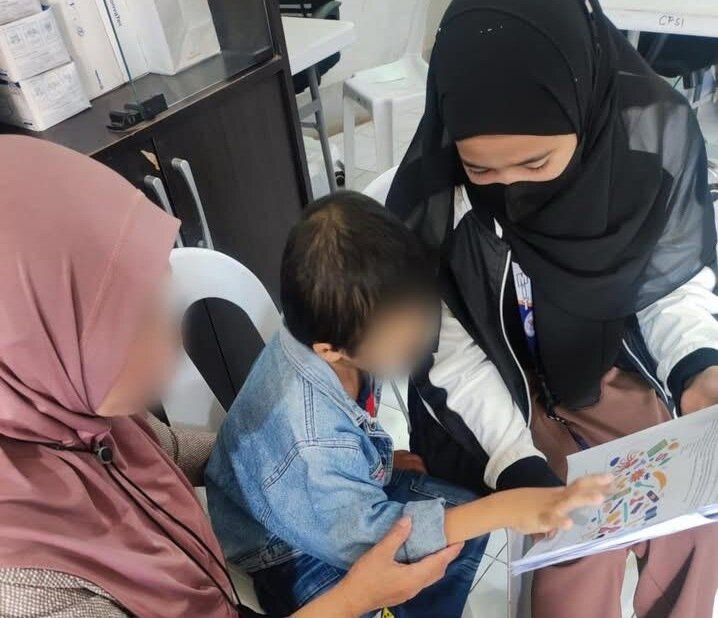
October 27 is marked as World Occupational Therapy Day to raise awareness about how therapists help people of all ages gain or regain everyday life and working skills
When Sania Naga calls her son, Amal, for help, he answers, “Yes, Mama.”
It is an ordinary exchange, but one Naga could not always have with her firstborn. For many years, Amal was non-verbal. At three, Amal was not saying “Mama” or “Papa.” When he wanted milk, he handed Naga his bottle. When the television would turn off in a power outage, he pointed to it and cried.
Naga noticed that other children Amal’s age were already discovering words and sounds and becoming talkative. They could follow simple instructions from their parents. Others assured Naga that some children develop later than others, but she still worried.
Neither she nor her husband knew what to do.
“What will happen to my child when he gets older? What will happen to him when his father and I are no longer around?” Naga recalled thinking.
An opportunity to seek help came when Amal fell ill. During a visit to a pediatrician, Naga raised her concerns about his development. The doctor referred them to a specialist in Cagayan de Oro, roughly three hours from their home in Marawi City.
Distance, time, and then the pandemic became hurdles to getting treatment. When they tried to set an appointment, a year had passed before Amal was seen by a doctor.
Amal was initially diagnosed with cognitive development delay, a condition where there is a lag in thinking, learning, and reasoning skills. Naga asked whether medicine could help. The recommendation was therapy.
Getting it meant traveling to the nearest therapy center in Iligan, about 45 minutes away, every week. Amal had an hour of occupational therapy and another of speech therapy.
Naga arranged Saturday appointments around her job, her husband’s work, and caring for their two other children.
“During the first six months, I felt like giving up,” she said.
Then the therapist began noticing Amal’s progress. His behavior, once marked by hyperactivity, became more manageable. He became calmer as he learned to express himself more. At home, Amal began making eye contact and responding when she greeted him good morning.
Gaps at every stage of care
Naga’s experience underscores the care and treatment gaps facing children with disabilities. The gaps span all touch points that starts from having their needs recognized, reaching someone who can assess them and link them to care, and sustaining treatment and support.
Data from the government’s January 2026 National Education Plan estimates that there are about 4.7 million to 5.1 million children with disabilities. Statistics from the previous year indicate that there are about 391,000 identified learners with disabilities in public schools during the 2024-2025 school year. Roughly 6 in 10 lacked a formal diagnosis.
In addition, a shortage of specialists and therapists complicates getting therapy and care even when assessed.
In Naga’s case, occupational therapy was one of the interventions recommended for Amal to help him develop skills for everyday activities such as eating, dressing and participating in school.
The World Health Organization listed fewer than 6,000 registered occupational therapists nationwide in 2025, with services concentrated in urban areas.
In Marawi, where Naga and her family live, accessibility is also a geographic problem.
In 2024, there were reportedly only two developmental pediatricians in Northern Mindanao. Families from Marawi seek care in Iligan and Cagayan de Oro. Appointment waits can reportedly reach three and a half years.
Jalil Usman, a social worker for Community and Family Services International (CSFI) in Marawi, said that intensified mental health outreach around 2019 as part of the recovery efforts after the Marawi siege brought them to parents needing support for their children with intellectual and developmental delays.
“There were gaps in understanding and, in some families, shame about showing others that a child had a disability. As families learned about available help and shared their experiences, others approached us,” said Usman.
“Some parents had assumed their children could never learn certain everyday skills, but it turned out they could,” Usman added.
CFSI secured funding to partner with the Medbay Therapy and Learning Center in Iligan to provide 21 children through 10 sessions each of occupational therapy.
Getting children to therapy became somewhat of a field trip. CFSI staff picked up some families from their homes and drove them to Iligan in an office vehicle. In the clinic, the parents would wait for their turn for their therapy session.
However, funding was not enough to cover the recommended 72 sessions. When the CFSI funded sessions ended in 2023, Naga paid for the treatment costs out of pocket.
“Sometimes, when we did not have enough money, we would miss sessions,” she said.
Teletherapy to bridge access
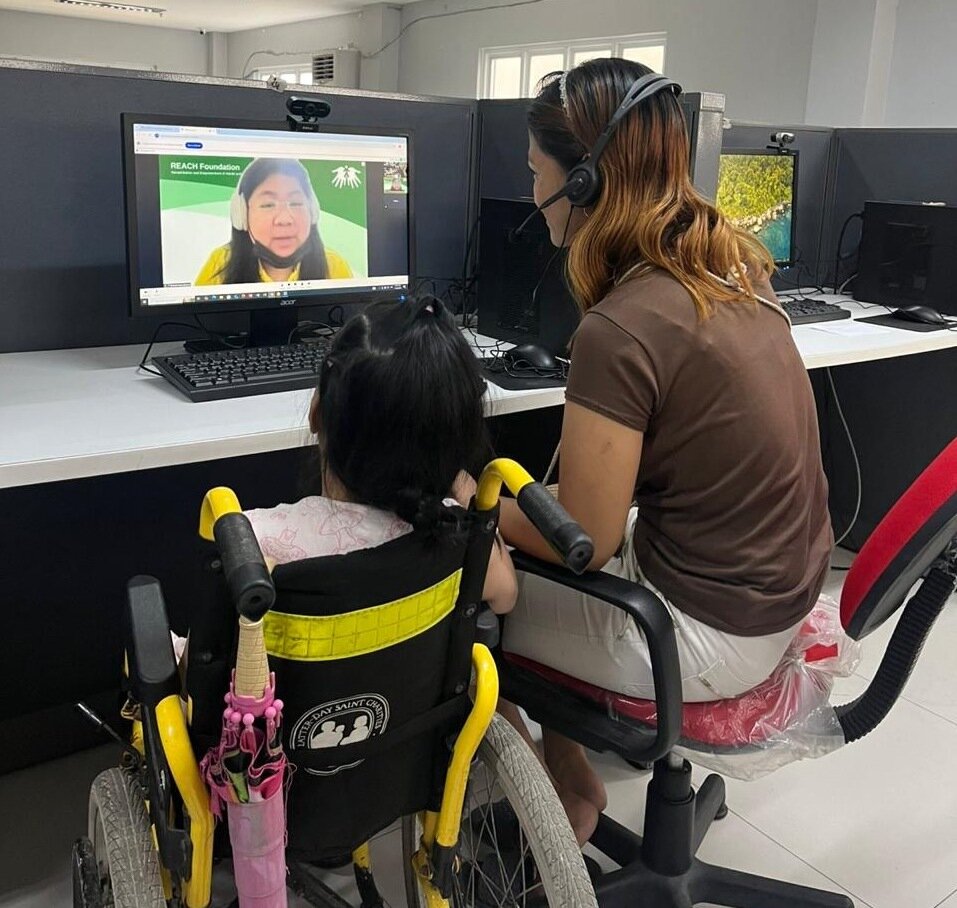
CFSI partnered with the Rehabilitation and Empowerment of Adults and Children with Handicap Foundation (REACH), a non-profit organization in Manila that provides free occupational and speech therapy to undersupported children and adults with disabilities. Together, they developed and conducted teletherapy sessions adapted to the children’s needs.
Through sessions conducted online or by phone or through other messaging platforms, therapists work with family members to develop home-based interventions using everyday or improvised materials.
“We often use toys, books, school materials, kitchen items, and other familiar household objects to make learning part of the child’s daily life,” said Archie David, founder and president of REACH Foundation.
A simple clothespin, for example, can help strengthen fine motor skills, while everyday activities such as preparing meals, sorting laundry, or playing games can become opportunities for learning and development.
Amal’s occupational therapy program focused on visual perceptual skills, which are important for handwriting, copying from the board, organizing written work, and other classroom tasks.
Another child, Shoraim, had a hearing impairment that made spoken conversations difficult to follow in school. His mother, Sohairah Batabor, used gestures and written words to communicate with him.
Through occupational therapy and guidance at home, Shoraim developed everyday skills, including dressing, bathing, and preparing simple meals like his favorite noodles and fried egg. His daily morning routine is comprised of reading the Quran and praying.
“The most meaningful changes are not always reflected in assessments. Sometimes it is a parent noticing that their child is joining family activities more often, participating in class, communicating a need, or trying something independently for the first time. These moments may seem ordinary to others, but for families, they can be life-changing,” said David.
“As a child’s confidence grows, so do his opportunities to build relationships, independence, and a stronger sense of belonging at home, in school, and in the community,” David added.
Amal, who is now 12 years old, is attending a mainstream school as a Grade 3 student. He can eat, manage his hygiene on his own, and communicate with his parents.
Naga recalled the advice of the therapist to call Amal even when she needed nothing from him.
“Amal, come here. Mama wants to talk to you,” she would say.
Before, Amal could not answer. Now he does by saying, “Yes, Mama.” – Rappler.com
Disclosure: The writer and Abelardo David Jr. are both Senior Fellows of the Equity Initiative–CMB Foundation.
KioskNews shows a cleaned-up reading view extracted from the publisher’s page — the original always lives on their site, not ours.