Chinese students stand by France study plans despite widespread civil unrest
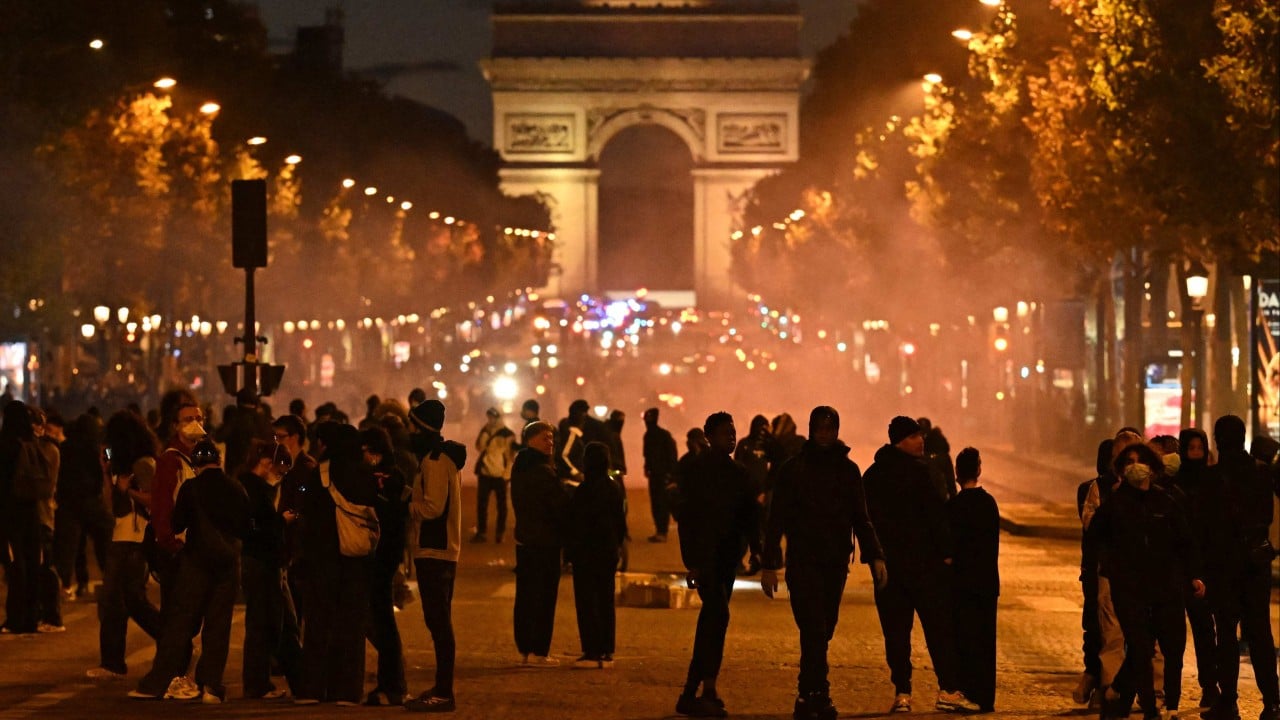
Social unrest in France is not deterring some Chinese students from pursuing studies there – at least for now.
Despite nationwide demonstrations over the rising cost of living and declining public services escalating into violence over the weekend, prospective applicants said they remained committed to their academic plans.
A 30-year-old woman from Guangdong province who gave only her family name as Wang said she had obtained a student visa and planned to proceed with a language programme in Montpellier, starting in January.

The language school is away from the areas most affected by the unrest.
“Even in Paris, I think you can avoid joining the protests,” she said. “The main inconvenience is school strikes and closures.”
However, she was concerned that a prolonged crisis could disrupt her studies and daily life, complicate visa and residence procedures, or push up living costs ahead of next year’s presidential election.
An advertising agency employee in Beijing who called herself Zhouzi is preparing for admission in autumn next year. She viewed the current crisis as temporary and said the unrest was unlikely to affect her application, although she was keeping her options open.
“It doesn’t make much difference to me. I don’t think this will persist long term,” she said, adding that she did not want news about the protests to dim her view of studying in France.
“Since I have made up my mind [to apply], I can decide whether to go, or [I can] defer enrolment after I am admitted.”
France is a significant destination for Chinese students. According to data released by Campus France, the country’s official agency for international student mobility, 26,327 Chinese students enrolled in French higher education in the 2024-25 academic year.
That figure is down 3 per cent from the previous year but still makes China the country’s third-largest source of international students.
The recent wave of demonstrations, which began with students protesting education conditions before drawing in rioters who looted shops and attacked public buildings in cities such as Limoges and Paris, prompted police to ban gatherings near key landmarks.
The unrest comes less than a year before France’s presidential election. Far-right leader Marine Le Pen is leading polls, while incumbent President Emmanuel Macron cannot seek a third term because of term limits.
Macron has called for a clear distinction between peaceful demonstrators and those destroying property.
On Monday, China’s foreign ministry and its diplomatic missions in France renewed safety warnings, advising citizens to avoid demonstration zones.
Among the prospective students in China exercising caution in light of the protests, 23-year-old Momo said she was considering postponing her plans or choosing another country because of the protests – even though her proposed study in France is not imminent.
Momo, who is planning her master’s studies for autumn 2028, said her main concerns were “personal safety, France’s political situation and the budget”.
For those already on the ground, the impact appears to be immediate, yet tolerable.
A 20-year-old exchange student at Paris Nanterre University who called himself Muye said his campus had not held in-person classes since October 2.
“From October 2 to 15, we received daily emails telling us whether there would be class that day,” he said.
01:41
Facing Maga anger, Trump defends move to admit thousands of Chinese students
He said Chinese students around him were mainly discussing safety and the disruption to their studies. Some worried about living in areas affected by the violence, while others expressed sympathy over shops that were damaged, according to Muye.
“Nobody wants to suspend their studies or return home early,” he said. “But one classmate said that, had they known this would happen, they might have flown home for a month-long holiday.”
While he had prepared for studying abroad by speaking to his teachers in China who had studied in France, he said the unrest had not changed his own view of France as a study destination.
“France continued to attract international students with its relatively low education costs compared with Britain and the United States, as well as close cooperation among universities,” he said.
KioskNews shows a cleaned-up reading view extracted from the publisher’s page — the original always lives on their site, not ours.