One Million Coders programme shifts focus to third- and final-year university students
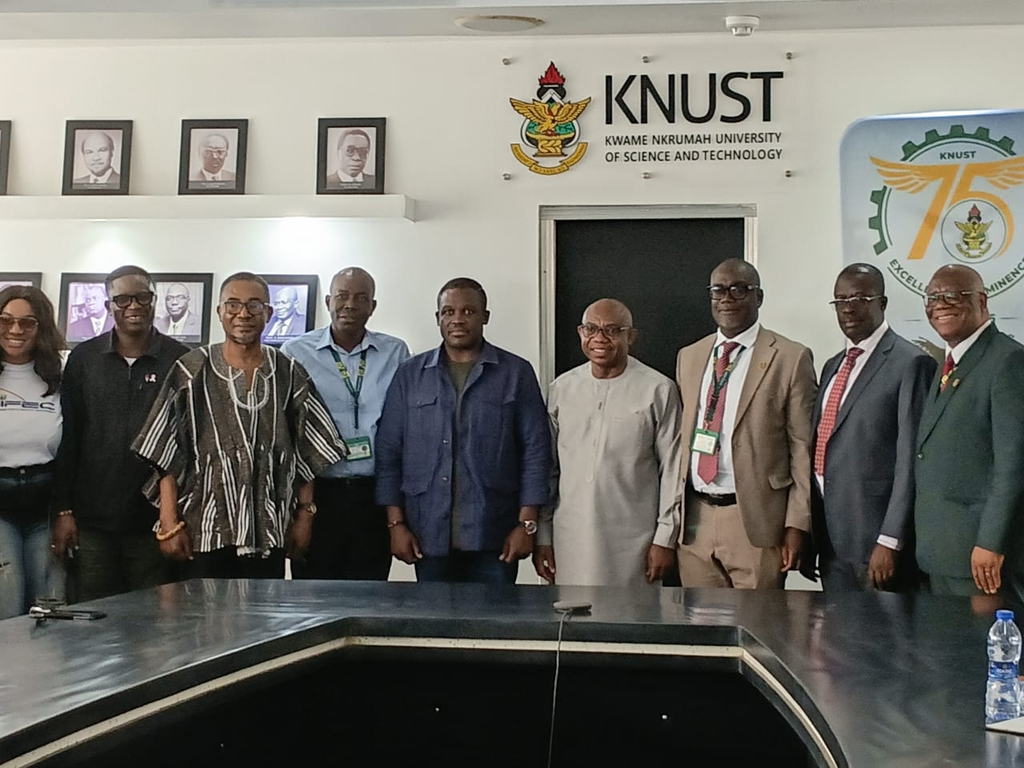
The government is restructuring its flagship One Million Coders programme to focus on third- and final-year students instead of first-year students to better prepare them for the world of work.
According to the Minister for Communications, Digital Technology and Innovations, Sam Nartey George, the shift in implementation at the universities has become necessary to bridge the gap between training and employment.
Speaking during a tour of the One Million Coders labs at the Kwame Nkrumah University of Science and Technology (KNUST), Mr. George said training first-year students leaves a long gap before graduation, during which skills acquired may not be applied.
"The current engagement is to have our level 100s enroll in the program. But from the engagement we've done, we're restructuring it to now become more focused on level 400 and level 300.
“If a level 100 completes the program today and decides not to do anything between level 2, 3, and 400, by the time they're leaving the university, there is a gap between the training and then the implementation. But if we focus the training on our level 400s and 300s, then we're beginning to prepare them for the world of work as they graduate,” said the Minister.
Mr. George explained that the redesign followed a review of the programme in line with the government's job creation initiatives.
He disclosed that the government is working towards ensuring training is tailored to industry demands.
"The programs we'll be offering on campus will be tailored to what skills gaps exist in the world of work. So that as they graduate, they actually have the skill set that the world of work is looking for," he added.
On infrastructure support, Mr. George announced an additional 2,000 laptops for KNUST to expand the programme.
According to him, the Ministry had earlier provided 500 laptops to set up 10 training centres, and the additional 2,000 will bring the total to 2,500 laptops, enabling the establishment of 15 learning centres across campus.

"We give 500 laptops, which is basically our model: 10 training centers. We're happy to announce that we'll be providing an additional 2000 laptops to KNUST. That would be a total of 2500. That would be 15 learning centers across the campus so that we can actually have a lot more students, since we're now focusing on level 400 and 300s," the Minister stated.
Vice-Chancellor of KNUST, Prof. Christian Agyare, has welcomed the shift, describing it as an excellent idea to target final-year students.
He said the university is ready for the implementation of the restructured programme and will deploy the additional 2,000 laptops to its various centres and leverage experts to support the training.
Prof. Agyare added that connecting beneficiaries to jobs after training will be the ultimate measure of success.
Meanwhile, the Minister has stressed that universities like KNUST will play a central role in implementing the AI strategy, particularly in building national language models and deploying AI solutions in agriculture, health and other sectors.
DISCLAIMER: The Views, Comments, Opinions, Contributions and Statements made by Readers and Contributors on this platform do not necessarily represent the views or policy of Multimedia Group Limited.
Tags:
DISCLAIMER: The Views, Comments, Opinions, Contributions and Statements made by Readers and Contributors on this platform do not necessarily represent the views or policy of Multimedia Group Limited.
KioskNews shows a cleaned-up reading view extracted from the publisher’s page — the original always lives on their site, not ours.