Bridging Kathak and grief, borne by children in war zones, with the music of SOI
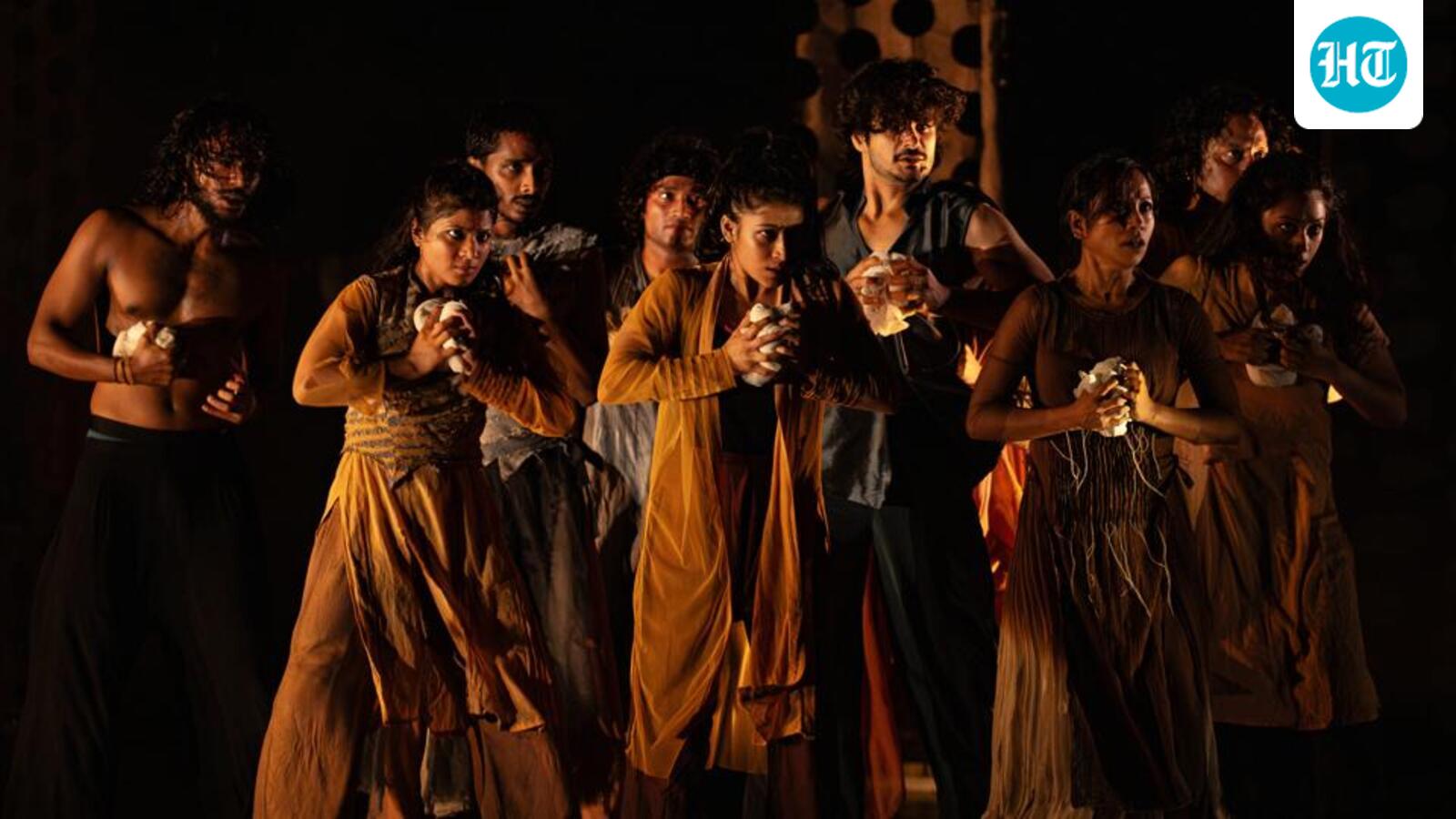
MUMBAI: Can grief be danced? Can an orchestra make absence audible? Kathak exponent and choreographer Aditi Mangaldas is attempting both, taking off from the silence left by children caught in war. The Symphony Orchestra of India (SOI) begins somewhere else entirely, with strings, woodwind, brass and percussion – and in its midst will come Kathak, contemporary movement, poetry, sculpture and light.
The collaborative presentation – ‘The Absence of PRESENCE (TAOP)’ – with Mangaldas and the SOI, and commissioned by the NCPA, will be staged in the city next month.
Blending in
Over two decades of efforts by the SOI to prove a professional symphony orchestra can thrive in India, it has built a strong record of collaborations with Indian classical musicians. This, however, is its first with an Indian classical dancer, and Mangaldas brings precisely the kind of vocabulary that could make the encounter intriguing. Trained by Kumudini Lakhia and Pandit Birju Maharaj, she remains deeply rooted in Kathak while pushing at its boundaries.
Although a physical language will share stage with an orchestra rooted in the western classical tradition, Mangaldas is not comfortable being boxed in the category of “fusion”. “The emotions behind ‘TAOP’ are universal,” she says. “We need to build bridges and widen circles that connect cultures and art forms to be able to dive deep into human emotions.”
The bridge for the presentation is Rushil Ranjan, the British composer and multidisciplinary artiste who has created the original score, constructing a musical architecture where two very different traditions can coexist without either losing its identity. The SOI has experience of such crossings – its most recent consequential collaboration being with the late tabla maestro Ustad Zakir Hussain. In 2016, it commissioned Hussain’s ‘Peshkar’, a concerto for tabla and orchestra, for its Switzerland tour and later took it to the UK. In 2023, it premiered Hussain’s Triple Concerto for tabla, sitar, bansuri and orchestra, commissioned by the SOI and NCPA. There have also been collaborations with Niladri Kumar, Rakesh Chaurasia, Hariharan and Shankar Mahadevan.
Dance, however, changes the equation, where rhythm is no longer merely heard but embodied. NCPA chairman Khushroo N Suntook says this makes the project particularly significant as the SOI marks its 20th year. “The SOI has a fairly substantial history of collaborating with Indian classical musicians, but there is no precedent for collaboration with an Indian classical dancer,” he says. “The forthcoming Aditi Mangaldas project is therefore significant.”
Absence as a theme
Based on the concept of “absence”, it delves into the “heart-wrenching reality” unfolding across the world, says Mangaldas. “Children in war zones. Children driven from their homes. Children whose laughter has disappeared. It is a void, like a black hole, sucking in all humanity, leaving only unimaginable grief,” she says.
And yet there is something that remains. “A child’s hope, a child’s dream.”
As the production is dedicated to children caught in conflict zones, it also raises the uncomfortable question – what does it mean to make art about people who are suffering elsewhere while the artistes and audience sit inside the relative safety of a concert hall?
Mangaldas does not look away. “It is not just the audience but also us on stage, living this reality in every rehearsal and then walking back to relatively safe lives,” she says. “My art is not going to change their reality. But hopefully it will encourage, embolden and give the rest of us courage to raise our voice against the most heinous atrocities that often don’t find enough voices.”
The politics of the work lies, therefore, not in slogans but in the attempt to make distant suffering impossible to treat as another statistic. “My concern is what happens when statistics become too familiar to provoke a response. Numbers need to transform into lived experiences through the arts,” she says.
Alongside the performance will be a voice-over artiste reciting protest poetry by Delhi-based poet Sudeep Sen and Palestinian poet Refaat Alareer. Sen says as his work always responds to “the landscape around me”, its beauty and horror, politics and aesthetics, “how can one not respond to an awful man-made situation such as Gaza?”
“My poetry emerges in a visceral fashion from deep within my tissues and later, over time, is carefully and intensely crafted to shape,” he says.
For Sen, content and cadence matter equally. His poem was written before the production existed. Mangaldas later found it relevant to the work and brought it into conversation with Alareer’s poetry.
Alongside the dancers, poets and orchestra are musicians Faraz Ahmed and Ashish Gangani, sculptor Manish Kansara and the work of Alareer, whose poetry carries the weight of a people living through devastation. The result is intended less as a conventional dance performance than a landscape of sound, movement, poetry and image.
And there is a cruel irony at its heart. Theatre is an art of presence. A dancer walks on stage. A musician raises an instrument. A voice speaks. A body occupies space. The children at the centre of Mangaldas’s work cannot. Some are dead. Some are displaced. Some have been separated from their families. Others are growing up with memories no child should have to carry.
“Creating this work has been heart-breaking,” she says. “At times we have to rely on our craft, holding onto the faith that somewhere it will reach across to the viewer.”
(The production will be staged at the NCPA on October 31 and November 1.)
KioskNews shows a cleaned-up reading view extracted from the publisher’s page — the original always lives on their site, not ours.