‘He was like 10 men after taking cocaine‘: how Britain’s drug habit is fuelling domestic abuse

During lockdown, Charlotte and her ex-partner would spend evenings cooped up in their flat, listening to music, watching YouTube videos and chatting until the small hours. Those nights would be fuelled by alcohol and lines of cocaine.
“I wanted to be loved, and when he told me he loved me like nobody ever would and nobody ever will, I drank the Kool-Aid,” Charlotte says. “I wanted to believe that. And there’s a point when you’re with somebody and you’re drinking, you’re doing coke, where you think you have this bond, you think it’s just you two in the world.”
But that emotional high would be fleeting. “Without a doubt, without any exception, it would never end peacefully. My ex-partner would get so ridiculously paranoid once he was using cocaine. It was just crazy,” she says. Charlotte’s partner would accuse her of taking more than him, messaging men and hiding things from him. When she denied it, he would subject her to brutal physical assaults.
“And then the next day it was all apologies and it’ll all be fine, it’ll all be different.”
Data suggests it is a common scenario. Home Office figures sent to the Guardian show nearly six in 10 police drug tests carried out on people arrested on suspicion of domestic abuse were positive for cocaine between July 2025 and June this year.
It is not possible to see the whole picture, as some of the tests were carried out after the police suspected drug-taking, but it tallies with a 2023 pilot study that found 59% of domestic abuse suspects tested positive for cocaine or opiates.
A wider Guardian investigation has found that Britain’s record-breaking cocaine habit is also driving crimes from assault to dangerous driving. The stimulant is increasingly ubiquitous, fuelling situations ranging from fights on nights out to violence at football matches.
Cocaine has featured in a number of domestic murder cases in recent years. Victoria Thomas, a 45-year-old mother-of-two from Cardiff, was strangled to death by her husband, Alcwyn Thomas, who was “argumentative and moody”, having been filmed on CCTV taking cocaine shortly before he killed her on 19 August 2024.
On 13 June last year, 32-year-old Izzy Knight was murdered by her husband, Paul Knight, in the house they shared in Northamptonshire while their two daughters slept upstairs. In a note, he blamed “having an addiction to cocaine and spending money I don’t have”.
Both men were sentenced to life in prison.
Cat Chappell, a BACP-registered therapist specialising in domestic abuse who previously volunteered on the National Domestic Violence Helpline, says cocaine boosts confidence but increases paranoia, “and so much of abuse is around paranoia”. “It’s taking what’s already there, making it like 10 times worse,” she says.
It can also make it more difficult to leave, she says, because perpetrators will often offer to get help with their cocaine problem. “And [for victims], that’s what you want to hear in those moments.”
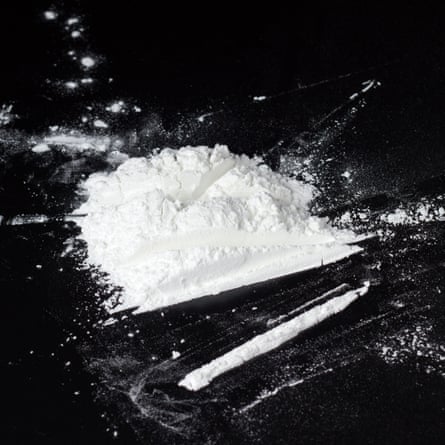
Charlotte and her ex-partner got together just before the pandemic and, though it was not the first time she had taken cocaine, it was not something she had done regularly. Her ex, on the other hand, was a habitual user.
“My ex was a really small man, and after cocaine use he’d be like 10 men. He was like the Incredible Hulk, it was like there was this beast in him and he would get this strength. And I can’t tell you where it was from. Then he would come at me and he would absolutely beat me to a pulp. It was absolutely terrifying,” she says.
He would routinely trap her in the bedroom. “I remember one night he got really paranoid that somebody was in the house and he brought knives upstairs. He would pace about all night. It was really, really horrific.
“For somebody who’s already [controlling and abusive] it’s like adding fuel to the fire, it really is, with coke.”
He often stole from her to fund his habit, using her phone to take money from her bank account, including times when he had knocked her unconscious.
Charlotte remembers police visited their flat about 19 times, as a result of her own calls and those made by neighbours, but she would always cover up her ex’s cocaine use.
“I would deny a lot of it because I didn’t want to say, ‘Yes, I’ve been doing it as well’, so you’re in this absolute no-win situation because you’re then sticking up for them all the time.”
She began to abuse alcohol to cope with the situation she was in. “I didn’t want to be there,” Charlotte says. “I was just drinking because I didn’t want to feel anything. I’d wake up, drink all day. I just wanted to feel numb, numb, numb, numb, numb.”
She was finally able to leave on Boxing Day in 2021 when her ex went out to score drugs and she wrote an email to her father asking him to pick her up. She has been free of alcohol and cocaine since.
After initially attempting to pursue her ex for knocking her teeth out, police later decided to take no action against Charlotte’s abuser. She fears he will go on to abuse someone else.
It was Women’s Aid that helped her get her life back on track and she is now an advocate for the charity in her home city of Leeds. She also works for another charity, Smart Works, which helps women get into employment.
Nik Peasgood, the chief executive of Leeds Women’s Aid, says Charlotte’s story is increasingly common. She thinks cocaine is having an effect on the levels of violence perpetrated by abusers and she is calling for more research to help understand the relationship between cocaine, domestic abuse and mental health.

“If they’re already abusive and the relationship’s abusive, [cocaine] might lower their inhibitions, it might make the frequency worse, it might make the severity worse, it might mean that they can’t control how they normally control the relationship and the situation. But it doesn’t make somebody abusive or violent if they’re not already. It’s not an excuse for that violence.”
Peasgood says that cocaine, unlike a lot of other drugs, is used by a broad range of people, including middle- and upper-class people and those who are well-respected within society and do not fit the stereotype of what people think domestic abusers looks like.
The drug can be a barrier to people seeking help, particularly for victims in professional jobs who feel they have a lot to lose if they are caught using illegal substances.
“[Contacting the police] has ramifications away from just the perpetrator when there are drugs involved, and [there is] fear around that,” says Peasgood. “Especially if people have got children, it’s something they wouldn’t necessarily want others to know about.”
Through her work, Charlotte has now met many others who faced similar situations. “I’m in recovery now and it’s alarming how many people tell the same tale of drinking, doing coke, and it just becoming an absolute explosion of rows and just horrific violence,” she says.
“I think it’s not a problem that’s actually going away. If anything, it’s getting worse. You only have to speak to people in the rehab or recovery world and they’ll tell you this is going nowhere. It’s really scary.”
She believes the figures don’t show the true scale of the issue. “I think this is much wider reaching than we realise, due to the stigma of reporting it and the shame of the victim using the drug.”
For many people, she says, cocaine use is “very much seen as our weekend thing”. “It’s very much behind closed doors and not spoken about. People would be gobsmacked at how many people actually do it. It’s so widespread, it’s unbelievable.”
-
In the UK, call the national domestic abuse helpline on 0808 2000 247, or visit Women’s Aid. In the US, the domestic violence hotline is 1-800-799-SAFE (7233). In Australia, the national family violence counselling service is on 1800 737 732. Other international helplines may be found via www.befrienders.org.
KioskNews shows a cleaned-up reading view extracted from the publisher’s page — the original always lives on their site, not ours.