Colombia’s new Israel alliance is a strategic blow to Iran and its proxies - opinion
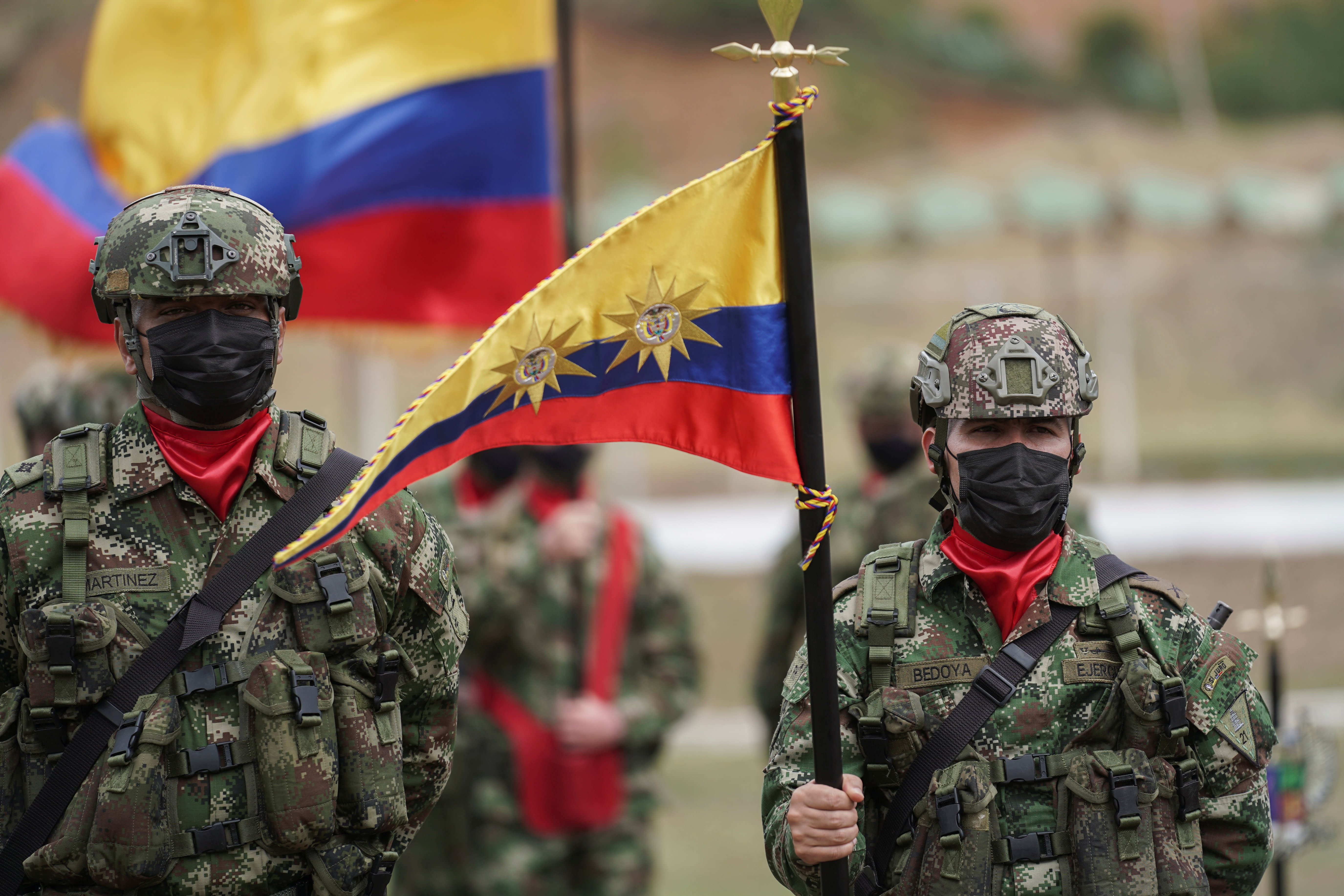
On August 7, 2026, Colombia’s patriotic new president, Abelardo de la Espriella, was officially inaugurated, marking a monumental turning point in South American geopolitics. His rise to power represents a decisive rejection of the Left-Islamist alliance that has increasingly threatened the region. For nations fighting these same dark forces globally, including the Iranian people fighting for their freedom, de la Espriella’s victory is seen as a shared triumph against a common adversary.
To understand the current stakes, one must look back to 2002. When Álvaro Uribe became president, Colombia was on the brink of collapse. Except for a few major cities, the vast areas of the country were controlled by Marxist narco-terrorists, most notably the Revolutionary Armed Forces of Colombia (FARC). The country was plagued by rampant violence, mass kidnappings, and economic paralysis.
Recognizing the scale of the threat, Uribe sought strategic assistance from Israel to modernize the Colombian military, intelligence apparatus, and counterterrorism capabilities. Armed with Israeli technology, training, and tactical intelligence, the Colombian armed forces launched an aggressive campaign that crushed the armed Marxists within eight years. Uribe’s iron-fist approach restored the rule of law, made Colombia dramatically safer, and laid the foundation for robust economic growth.

The Petro interregnum: The rise of the Left-Islamist alliance
In 2022, this progress was severely disrupted when Gustavo Petro, a former Marxist M-19 guerrilla, assumed the presidency. Petro replaced the rule of law with a policy of appeasement, pushing for continuous negotiations with armed narco-terrorists rather than enforcing state authority. Predictably, this approach backfired, and the country rapidly became unsafe again as criminal cartels and ideological militants reclaimed lost territory.
Beyond domestic security failures, Petro’s administration embodied the typical Marxist-Islamist alliance. His foreign policy was defined by fierce anti-Israel rhetoric, explicit support for radical Islamist groups, and a heavy reliance on the so-called Palestinian cause as an ideological cover.
Following the election of right-wing governments in Ecuador and Bolivia, and the arrest of Nicolás Maduro in Venezuela, Petro’s Colombia stood as one of the last major footholds for the Islamic Republic of Iran and the Hezbollah network in South America.
The strategic value of Israeli military and counterterrorism technology
With de la Espriella now in office, the Colombian army and police are poised to regain the upper hand. Fighting entrenched Marxist narco-terrorists deep within the dense, hostile jungles of Colombia requires specialized capabilities. The new administration would benefit enormously from leveraging Israel’s battle-tested military hardware, signals intelligence, drone surveillance, and jungle warfare counterterrorism technology to root out these cartels from their rural strongholds.
De la Espriella has already demonstrated a keen willingness to assert Colombia’s presence on the international stage. In one of his very first international policy actions, he officially recognized Morocco’s sovereignty over the Western Sahara.
This move directly connects Colombia to the broader geopolitical alignment established by the Abraham Accords. Morocco, a key signatory of the accords, has successfully utilized Israeli military technology to secure the Western Sahara and tame the Polisario Front militants.
Crucially, the Polisario Front is directly supported by the central bank of global terrorism: the Islamic Republic of Iran. By aligning with Morocco and Israel, Colombia is actively participating in a global containment strategy against Iranian state-sponsored asymmetric warfare.
True to his campaign promises, de la Espriella is systematically undoing the diplomatic damage of the Petro era. He has promised the immediate resumption of full diplomatic relations with Israel, underlined by a landmark commitment to move the Colombian Embassy to Jerusalem.

The highly prominent position granted to Israeli Foreign Minister Gideon Sa'ar at de la Espriella’s inauguration serves as undeniable evidence of this renewed, unshakable alliance. Shortly after his inauguration, de la Espriella’s government took a historic step by recognizing Israeli sovereignty over the Golan Heights, further underscoring its commitment to rebuilding a close and strategic alliance with Israel.
The Iranian connection and shared victory
The geopolitical alignment under de la Espriella has resonated deeply with Iranians. For decades, substantial evidence has highlighted the close coordination between the Islamic Republic of Iran, its proxy Hezbollah, and major drug cartels in South America to fund transnational terror networks.
The Iranian people, led by Prince Reza Pahlavi, are actively engaged in a fierce struggle against these exact same dark forces, the Left-Islamist alliance, that ruined Iran after the 1979 revolution.
Because the security of South America is directly tethered to the containment of Tehran's proxy networks, freedom-loving Iranians view de la Espriella’s victory as their own. Cutting illicit financial networks in the jungles of Colombia can be a direct blow to the survival of the regime in Tehran.
This profound shift in Bogotá is warmly welcomed by Pahlavi, who views the dismantling of the Left-Islamist nexus as a crucial victory for global security. For decades, the democratic aspirations of the Iranian people have been obstructed by the same extremist doctrines that have destabilized parts of Latin America. The restoration of the rule of law in Colombia under de la Espriella sends a powerful signal to hostile networks worldwide.
As the Iranians continue their struggle against tyranny, they welcome the rise of strong, principled leadership in Colombia and look forward to fostering robust bilateral ties with the new administration.
The writer is communications director to Prince Reza Pahlavi, and an Iranian journalist who previously served as editor-in-chief of news at Manoto TV, a UK-based Persian-language television network.
KioskNews shows a cleaned-up reading view extracted from the publisher’s page — the original always lives on their site, not ours.