From durians to tourism: As China-Vietnam trade booms, border communities seek a bigger slice
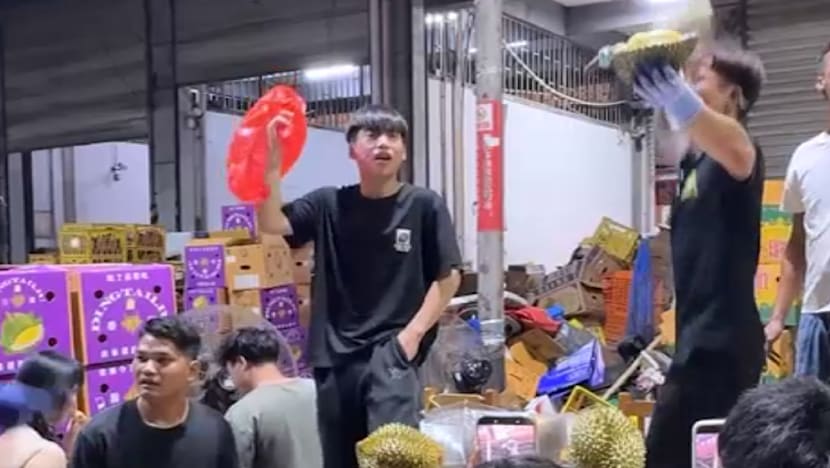
At a sprawling fruit market in the southern Chinese city of Nanning, finding a Vietnamese durian takes some work.
Thai durians are everywhere – from Thai-grown Musang King to the Monthong, also known as the Golden Pillow.
China imported nearly US$7.5 billion worth of fresh durians last year, fuelling an increasingly fierce contest for the Chinese consumer.
Thailand remained its biggest supplier by value, at about US$4 billion last year.
But Vietnam, which only gained access to China’s fresh durian market in 2022, is catching up.
The balance could slowly be starting to shift.
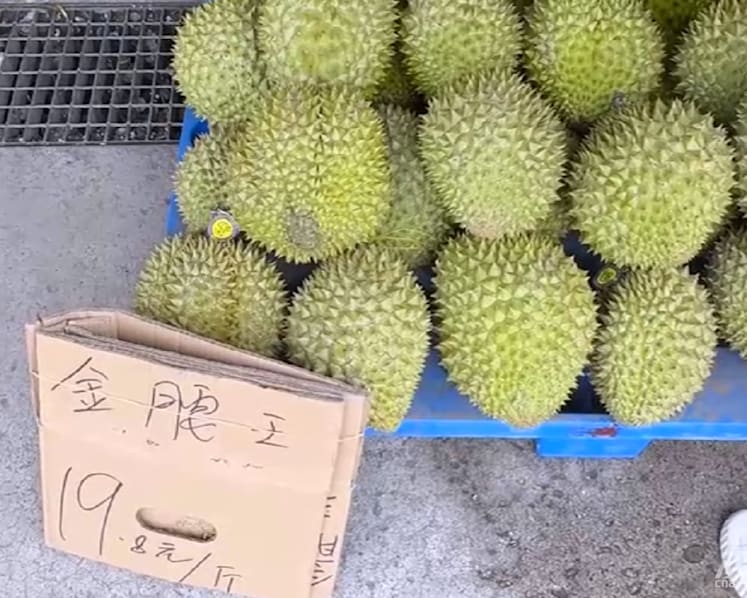
In 2025, China imported a greater volume of fresh durians from Vietnam than Thailand for the first time.
The growing trade is one sign of deepening economic ties between China and Vietnam, with more goods and people crossing their shared border and creating opportunities on both sides.
But getting products across the border is one thing, getting consumers to buy them is another.
CHASING CHINA’S DURIAN CONSUMERS
CNA bought a Vietnamese Gan Yao durian and a Thai Puangmanee durian for an informal blind taste test.
On three separate occasions, shoppers at the Nanning market tried both and preferred the Thai durian each time.
One shopper said the durian had the flavour she was looking for.
“With Thai durian, you can easily smell the aroma even before you open it. With Vietnamese durian, you only really experience its richness when you taste it.”
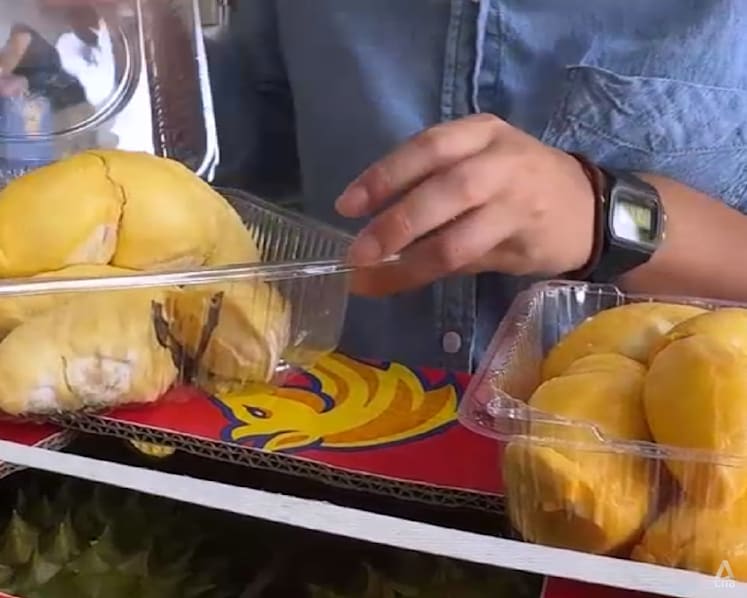
The result was consistent with what traders at the market told CNA.
“Customers seem to prefer (Thai) Golden Pillow durian,” said fruit seller Huang Xiulian.
“However, this year, varieties like (Vietnamese) Gan Yao, which are of decent quality, are also quite popular and selling well,” she added.
Thailand has had decades to cultivate the Chinese market, while Vietnam has had just four years of official access for fresh durian.
But Vietnam has a considerable advantage: China’s huge consumer market is right next door.
And with perishable fruit, every hour counts.
Improving transport links and customs infrastructure, such as smart port clearance, are helping Vietnamese produce move more quickly across the border.
In Pingxiang, a Chinese city bordering Vietnam, traders receive the fresh produce before sending it onwards through China’s cold-chain network – in some cases as far north as Heilongjiang province.
“Under ideal conditions, it takes three days to get here from southern Vietnam, but sometimes it can take as long as six or eight days,” said Huang Haishu, general manager of Hesheng Trading Company.
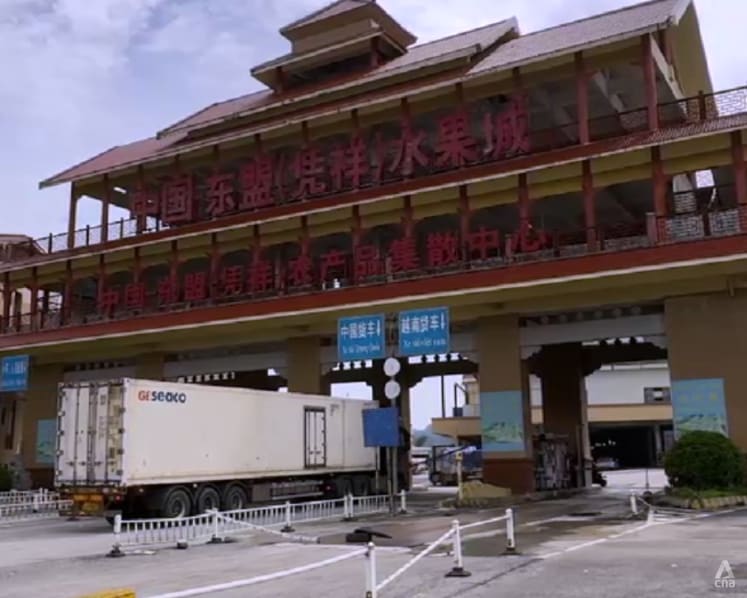
Nearly 895,000 tonnes of fruit from Southeast Asia passed through ports in China’s Guangxi region in the first four months of this year, up more than 12 per cent from the year before.
For communities along the border, this can translate into jobs and income.
In 2023, three China-ASEAN fruit trading centres were set up in Guangxi to handle growing demand.
Ye Yanyu, vice manager of Pingxiang International Trade Development Group, said border residents can benefit from the trade by earning an extra 3,000 to 5,000 yuan (US$447 to US$746) a month.
“It also provides income for fruit farmers and other rural residents in the mountainous areas of Guangxi, increasing their employment opportunities,” he added.
VIETNAM’S DURIAN BET
Across the border in Vietnam, durian farmers are hoping to capture a bigger share of the Chinese market.
Vietnam’s diverse geography and climate allow durians to be harvested nearly year-round, with production shifting between the Mekong Delta, southeastern Vietnam and the Central Highlands as the seasons change.
In Ben Tre, in the Mekong Delta, farmer Tong Van Muoi has spent 12 years growing durians.
“Durian is the most difficult crop I’ve ever grown,” he said. “But the harder it is, the more you have to persevere.”
“You need to carefully tend the trees to get them to flower and be patient. In good weather, it takes about a month; in rainy or unfavourable conditions, up to a month and a half.”
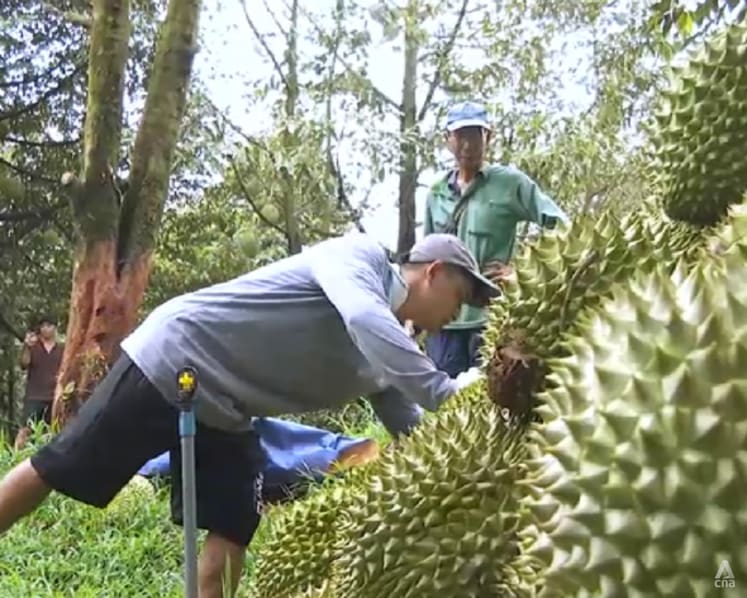
His farm produces several varieties, including the local Ri6, Malaysian Musang King and Thai Monthong.
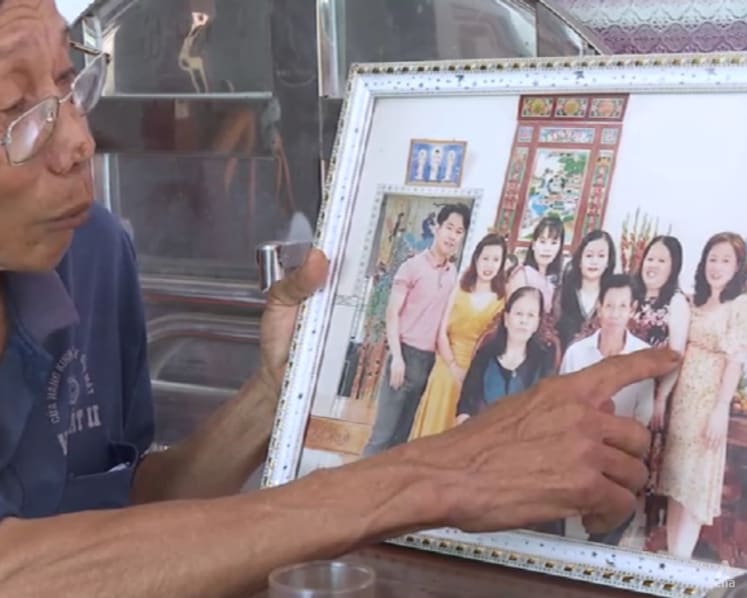
Muoi credits the crops for having put his six children through school and supporting his wife’s medical bills when she suffered a cerebral aneurysm.
"The durian trees provide for my family, so I feel I have a responsibility to take good care of them in return."
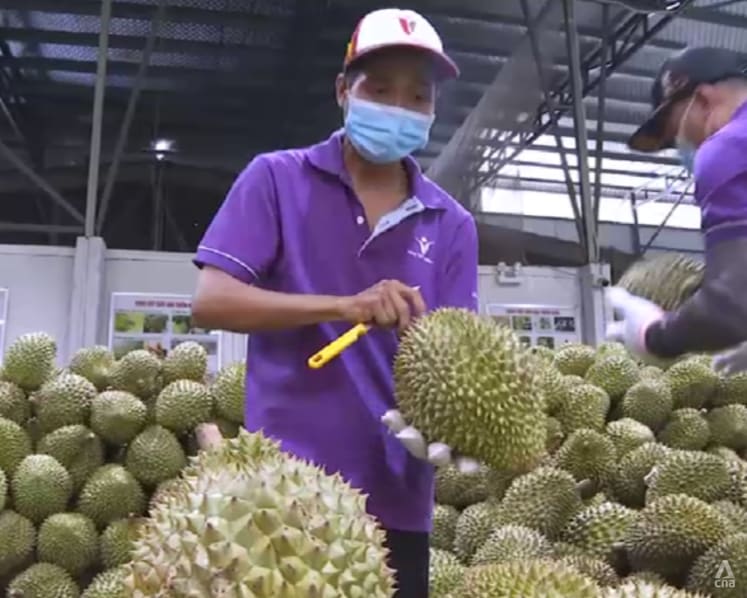
Since formal market access was granted in 2022, Vietnamese durian exports to China have grown, reaching US$2.2 billion in 2023.
The industry is targeting to reach US$4 billion this year.
“Chinese consumers were already familiar with Vietnamese durian before official export channels were established,” said Nguyen Dinh Tung, CEO of Vina T&T Import-Export Company.
“Formalising that through official export registration gave us a significant edge,” he added.
Yet industry representatives acknowledge that weaknesses remain.
“The first issue is uneven product quality across the sector. The second is food safety,” said Nguyen Thanh Binh, president of the Vietnam Fruit and Vegetable Association.
“Problems such as pesticide residue and banned substances in products must be addressed seriously and comprehensively.”
He also pointed to the testing and inspection capacity of export certification bodies, which he said “currently remains very low and falls short of what exporters require”.
MORE THAN JUST GOODS CROSSING THE BORDER
The expanding relationship is not confined to cargo trucks and fruit markets.
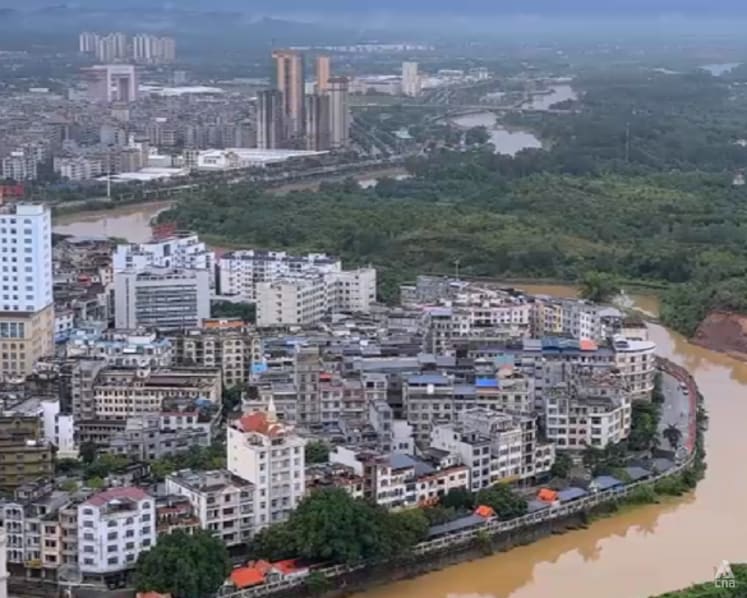
In the northeastern Vietnamese city of Mong Cai, a river separates Vietnam from the Chinese city of Dongxing.
Last year, more than 8 million people crossed the Mong Cai-Dongxing land border.
Authorities are looking to roll out smart border technology, including facial recognition and fingerprint systems, to speed up the movement of people and goods.
But Mong Cai faces a particular challenge: Many Chinese tourists cross there, only to head straight for better-known destinations such as Ha Long Bay and Hanoi.
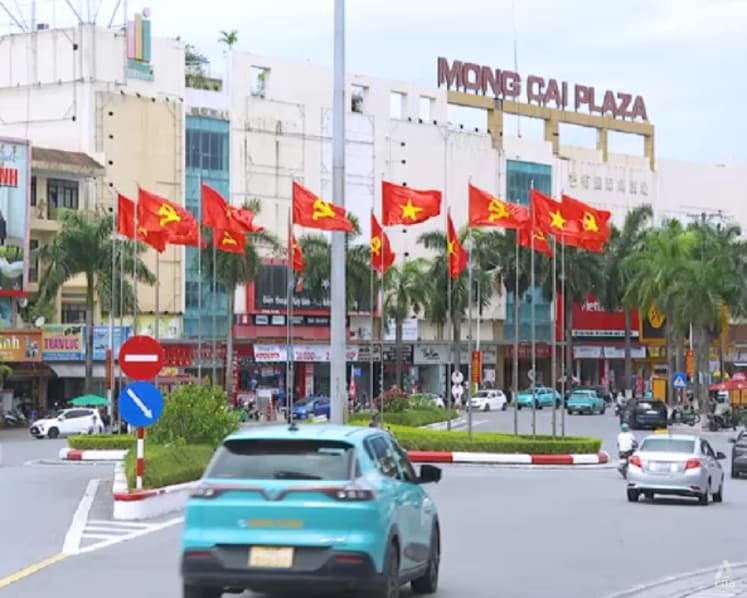
That leaves the border city with fewer opportunities to capture spending on hotels, restaurants and local attractions.
“I think Mong Cai should build more beautiful and distinctive landmarks to attract more tourists,” said shopper Bui Truong Giang.
“For young people like me, more cafes, eateries and outdoor bars would also help draw younger visitors.”
Authorities are looking to revitalise the city’s wholesale market and promote cruises along the Bac Luan River.
Across the water, Dongxing has turned its border culture into part of its appeal.
The Chinese city recorded more than 18 million domestic tourist visits last year, generating more than 17 billion yuan (US$2.5 billion) in revenue.
The Vietnamese influence is visible in its streets, from coffee and food to the traders who cross the border to work and do business.
More than 6,000 Vietnamese nationals are estimated to cross through Dongxing Port every day.
Since 2017, eligible Vietnamese border residents have been allowed to run small businesses in Dongxing, with more than 1,000 now registered.
The cultural exchange is visible in the food too.
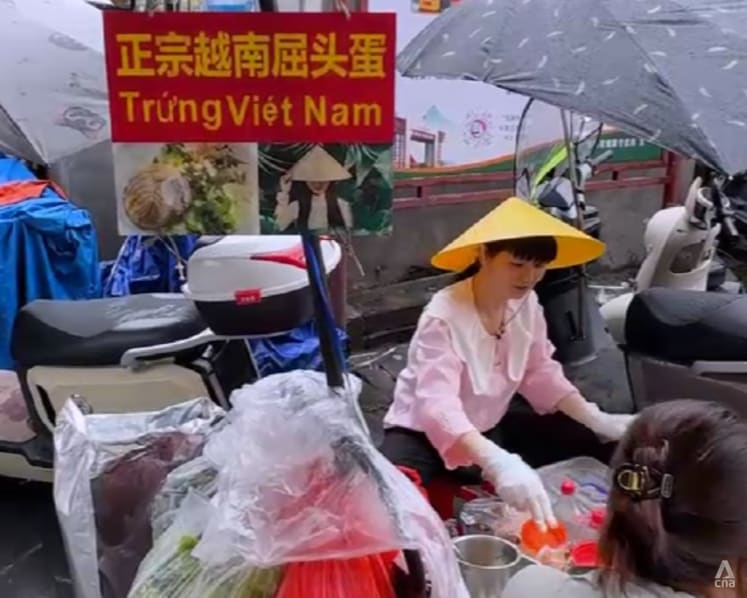
One example is the adaptation of Vietnamese balut – fertilised duck egg – to Chinese taste buds.
“When people ate balut (fertilised duck egg) in Vietnam, there was no broth in them, and there weren't many vegetables either. Nowadays, the general taste is mainly based on Chinese preferences,” said street food vendor Die Er.
The mixing of cultures, however, predates today’s surge in trade.
China’s Jing people trace their roots to northern Vietnam. They settled on islands off Dongxing, in China’s Guangxi region, around five centuries ago.
“When they first arrived from Vietnam along the coastline during the Ming Dynasty, this island was essentially deserted and disconnected from the mainland. So, they could only survive by sea,” said writer Thomas Tang, who grew up in Guangxi.
Their traditions remain part of life in the area today, with residents also turning that heritage into economic opportunities through restaurants, hotels and fishing tours for visitors.
TURNING A BORDER INTO AN ADVANTAGE
For centuries, people have crossed the river between what is now southern China and northern Vietnam to trade, work and build livelihoods.
Today, modern commerce is adding new layers to those connections.
Bringing more people across the border is only the first step.
As trade and travel deepen, the challenge for both sides is no longer simply how to get more goods and people across their shared border.
It is how to turn those growing flows into a shared advantage – one that communities on both sides can feel.
KioskNews shows a cleaned-up reading view extracted from the publisher’s page — the original always lives on their site, not ours.