Delhi AQI 373, nears ‘Severe’ mark; IMD forecasts rainfall tomorrow
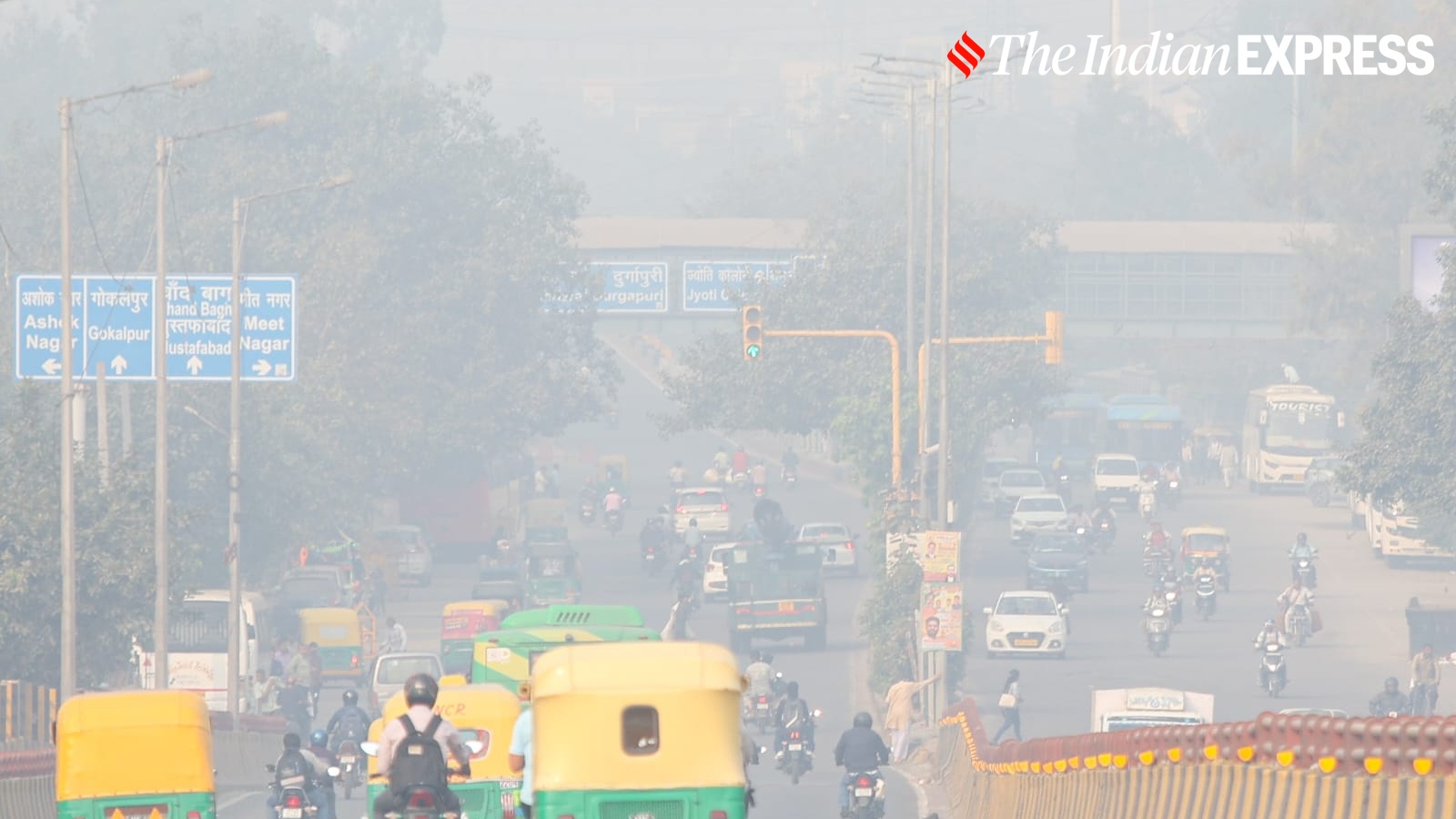
Delhi’s air quality deteriorated further on Friday, with the Air Quality Index (AQI) rising to 373 from 350 a day earlier, just 27 points short of the ‘Severe’ category. As a thick blanket of smog hung over the Capital, the India Meteorological Department (IMD) forecast light rain or drizzle on Sunday, raising hopes of some relief from pollution.
Delhi was the second most polluted city in the country, behind Ballabgarh in NCR, which recorded an AQI of 400. Gurugram and Noida remained in the ‘Very Poor’ category, with readings of 324 and 313, respectively.
An analysis of Central Pollution Control Board (CPCB) data since Diwali on November 8 showed that several areas outside Delhi’s 13 officially designated pollution hotspots recorded some of the highest pollution levels.
Among the 13, only Punjabi Bagh has ranked among the ten stations with the highest average AQI, at about 410. Jahangirpuri (about 396), Vivek Vihar (about 390) and Mundka (about 390) also recorded high pollution levels.
North Campus recorded the highest average PM2.5 concentration at 316.6 micrograms per cubic metre (µg/m³), with an average AQI of around 430. ITO recorded an average PM2.5 concentration of 311.5 µg/m³ and an AQI of 423, while Chandni Chowk had the highest average AQI of 442.
Further, Burari Crossing, DTU, Pusa (IITM), Talkatora Garden, CRRI Mathura Road and NSUT Jaffarpur ranked among the highest for fine particulate matter.
According to the Indian Institute of Tropical Meteorology’s (IITM) source apportionment data for Friday, vehicles were the biggest contributor to PM2.5 pollution at 31.5%, followed by secondary organic aerosols (24.7%) and biomass burning (20.8%), including crop residue, wood and dung cakes. Secondary inorganic aerosols accounted for 12.7%, waste burning 5.6%, firecrackers 2.2% and industrial sources 1.8%.
Story continues below this ad
Satellite monitoring by CREAMS Lab at ICAR-IARI recorded 537 paddy residue burning incidents across the region on Friday, including 246 in Madhya Pradesh, 214 in Punjab, 33 each in Uttar Pradesh and Rajasthan and 11 in Haryana.
Between September 15 and November 13, Punjab recorded 5,785 farm fires, up from 4,734 during the corresponding period last year and and 79,751 in 2020.
Officials cautioned that cloud cover over several northern states has been obstructing satellite monitoring, so the actual number of such fires could be higher. Smoke from these fires reaches the Capital mainly when winds blow from the north-west or north. When winds are light, that smoke mixes with local emissions and lingers, so regional and city sources build up together.
Weather conditions, meanwhile, remained unfavourable for dispersal of pollutants. Safdarjung weather station recorded a maximum temperature of 31.4 degrees Celsius, 2.9 degrees above normal, while the minimum settled at 16.2 degrees, 2.7 degrees above normal. South-westerly winds of 10 to 15 kmph prevailed and moderate fog formed at isolated places in the morning.
Story continues below this ad
According to the IMD, a fresh Western Disturbance is expected to affect Northwest India on Sunday, bringing the possibility of very light rain or drizzle at isolated places in Delhi and nearby areas. Stronger winds and drizzle help in dispersal of pollutants.
On Saturday, winds are forecast to be north-westerly at 10 to 15 kmph at midday, with moderate fog at isolated places in the morning.
The shift from Friday’s calm, south-westerly conditions to north-westerly flow is significant. North-westerly winds can bring smoke from fires in Punjab and Haryana into Delhi.
However, night temperatures are expected to fall by 3-5 degrees Celsius between November 16 and 19, with maximum temperatures likely to be in the range of 25 to 28°C and minimum between 13 to 16°C — potentially trapping pollutants closer to the ground. The IITM has forecast that AQI will remain in the ‘Very Poor’ category over the coming days.
KioskNews shows a cleaned-up reading view extracted from the publisher’s page — the original always lives on their site, not ours.