IPG calls for evidence-based debate on Lamu Dangote refinery
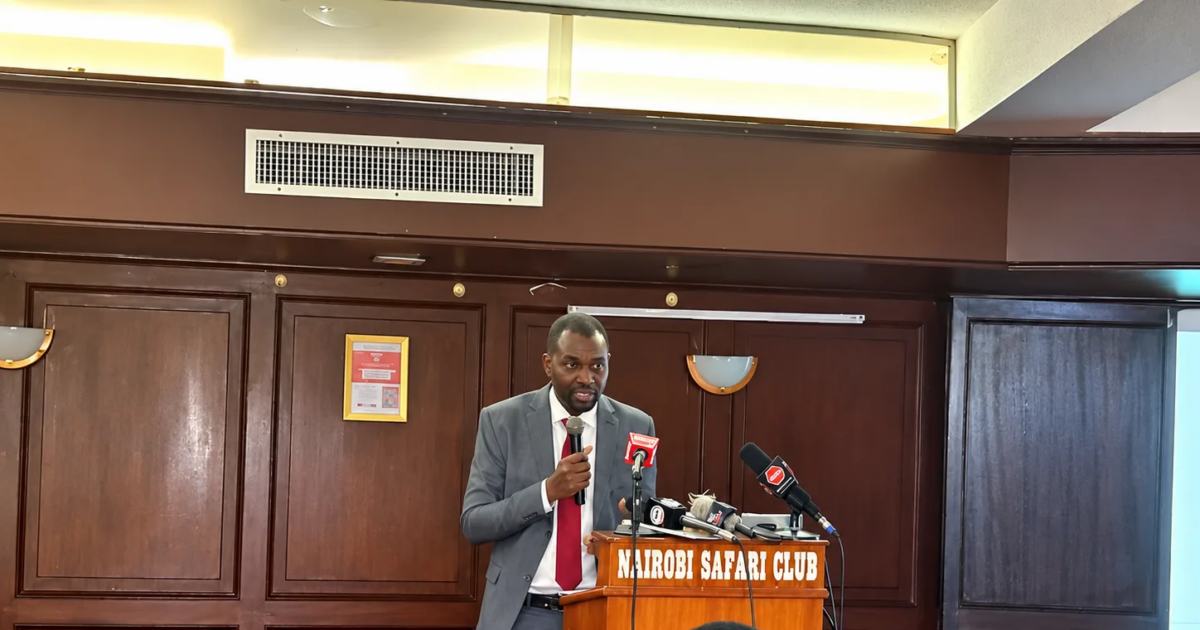
NAIROBI, Kenya, Oct 22 — The International Policy Group (IPG) has called for a fact-based national debate on the proposed $16 billion Dangote East Africa Petroleum Refinery in Lamu, saying the project presents a major opportunity to transform Kenya’s industrial and energy landscape but also carries significant financial, governance, environmental and regional risks.
IPG Chief Executive Officer Dr Kenneth Orengo said public discussion on strategic investments of the scale of the Lamu refinery must be anchored in verifiable facts, credible evidence and informed analysis rather than political interests, speculation or sensationalism.
“Kenya is increasingly living in a post-truth age, where misinformation and disinformation about major development projects risk undermining public confidence and delaying the country’s much-needed economic transformation,” Orengo said.
He said the refinery presented an “unprecedented geostrategic opportunity” for Kenya to strengthen its position as an industrial and energy hub for Eastern and Central Africa.
The project, he said, could help revitalise the LAPSSET corridor, expand trade across a regional market of about 400 million people and strengthen Kenya’s position against rival regional transport and energy corridors.
But Orengo said unlocking those opportunities would require Kenya to manage complex structural risks, including multibillion-dollar sovereign equity exposure, debt ceilings, consumer protection, local-content requirements, AfCFTA rules of origin, environmental concerns and regional security.
He said the national conversation should therefore move beyond political positions and examine how Kenya can maximise the economic benefits of the project while protecting the public interest.
“In an environment where public opinion can be shaped more by emotional narratives than by objective realities, a lack of information can distort the national debate, discourage potential investors, and jeopardise opportunities for economic growth, industrialisation and employment creation,” Orengo said.
He urged the government to strengthen its governance capacity by engaging civil society organisations, think tanks, industry experts and other stakeholders in the development process.
Orengo said civil society should not be viewed only as a watchdog or a source of criticism, but should also contribute constructive analysis, independent research and evidence-based recommendations.
“Their responsibility should not be limited to holding governments accountable or supporting government initiatives; rather, they should provide both positive and negative criticism grounded in reliable information, independent research, and evidence-based analysis,” he said.
He said this was the rationale behind IPG’s decision to convene the media breakfast and wider stakeholder engagements on the Lamu refinery.
“It is precisely against this backdrop of immense geopolitical opportunity and intricate policy risk that the International Policy Group is initiating these strategic public and stakeholder engagements,” Orengo said.
The engagements, he said, were intended to bring together policymakers, industry experts, civil society and the media to advance rigorous, data-driven oversight, bridge the gap between national ambition and grassroots accountability, and ensure that Kenya “jealously guards, shapes, and executes” the project in line with sustainable development, transparent governance and the sovereign public interest.
The IPG forum examined the strategic opportunities, execution risks and regional implications of the Lamu Dangote Refinery, with discussions covering energy, the environment, law, investment and governance.
Among the issues identified for deeper examination were the extent to which the refinery could reshape East Africa’s economy, the strategic risks associated with crude supply dependencies, environmental sustainability, land ownership and public participation.
The forum also raised questions about the boundaries of executive discretion under the 2010 Constitution and whether ongoing legal disputes over land for the refinery exposed wider gaps between ancestral land ownership and statutory definitions of public land under the Community Land Act.
Mukhwana backs refinery
Speaking during the forum, Principal Secretary for Industrialisation Juma Mukhwana defended the proposed refinery, describing it as a major investment that could accelerate manufacturing, industrialisation and job creation in Kenya.
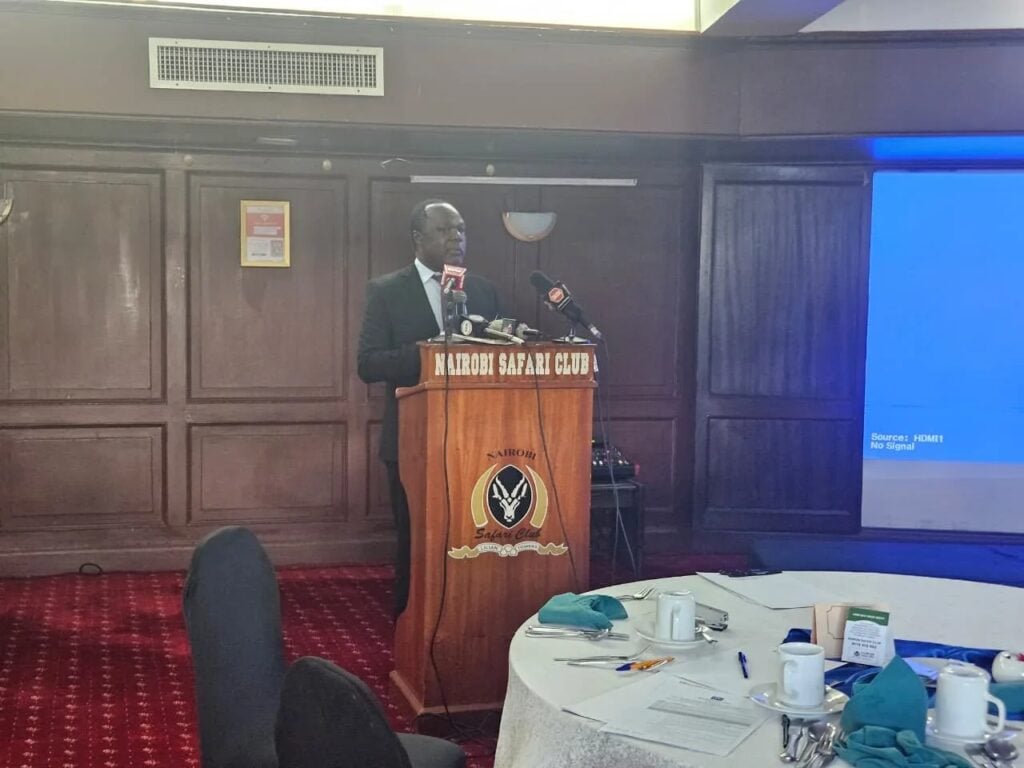
Mukhwana said the project presented an opportunity for Kenya and the wider African continent by stimulating industries linked to refining and expanding the country’s industrial capacity.
He said the refinery should be viewed alongside other planned and ongoing investments along the coast and elsewhere in the country.
Mukhwana cited the Galana Kulalu agricultural project, Vipingo Industrial Park, Dongo Kundu Special Economic Zone and DP World Industrial Park in Mombasa as developments that could contribute to an expanding manufacturing ecosystem.
He also pointed to industrial projects and special economic zones planned or under development in other parts of the country.
The PS said Kenya needed investments of this scale to take advantage of regional markets under the East African Community, COMESA and the African Continental Free Trade Area.
According to Mukhwana, limited investment in large-scale manufacturing has constrained trade across these markets despite their potential to support industrial production and wider distribution of locally manufactured goods.
A $16 billion industrial complex
The Dangote East Africa Petroleum Refinery was formally launched on September 30, 2026, when President William Ruto and Dangote Group President and Chief Executive Officer Aliko Dangote led the groundbreaking ceremony in Mokowe, Lamu County.
The KSh2.2 trillion project is designed to process up to 700,000 barrels of crude oil per day. The wider complex is expected to include a 1,000-megawatt power plant as well as chemical, fertiliser and petrochemical facilities.
The project is expected to create about 60,000 direct and indirect jobs, while a training school planned by Dangote is expected to train about 1,000 people from Lamu for opportunities arising from the refinery and associated industries.
At the groundbreaking, Ruto described the investment as “bigger than a refinery”, saying it would strengthen Kenya’s energy security, industrialisation and regional integration.
He said the refinery would provide an industrial anchor for the Lamu Port-South Sudan-Ethiopia Transport (LAPSSET) Corridor.
“A corridor without commerce is just a road. A port without industry is just a harbour,” Ruto said, arguing that the refinery would give both the port and the corridor a stronger economic purpose.
Dangote said the project would go beyond petroleum refining and create a broader industrial ecosystem covering energy, petrochemicals, logistics, engineering, marine services, manufacturing, technology and small and medium-sized enterprises.
“We are not here merely to build tanks, pipelines, processing units and jetties. We are here to help build an industrial ecosystem,” Dangote said at the groundbreaking.
He pledged to commission the refinery within 40 months and announced plans for a training school in Lamu that will train 1,000 local people, including engineering diploma and degree holders.
Balancing opportunity and risk
Mukhwana also addressed concerns surrounding environmental protection and public participation, acknowledging that Kenya’s Constitution provides for public involvement in decision-making.
However, he argued that environmental considerations should be weighed alongside the country’s economic interests.
Expressing his personal view, Mukhwana questioned what he described as an imbalance in global discussions on carbon emissions, arguing that African countries should also be allowed to develop their industries and utilise their natural resources.
To illustrate his argument, Mukhwana cited Kenya’s coal resources in Kitui and referred to past legal challenges over proposed coal mining in Lamu.
He questioned why Kenya continued importing coal from Tanzania, Mozambique and South Africa while its own resources remained undeveloped.
He also claimed that Kenyan steel and cement industries import coal worth approximately KSh30 billion annually.
Mukhwana acknowledged that the refinery project carried risks but said he did not consider them insurmountable.
He urged investors to consider opportunities around the proposed development, arguing that supporting infrastructure, including roads and the Standard Gauge Railway, could help connect industrial centres and improve the movement of goods.
He added that such investments could create employment opportunities for young people.
For IPG, however, the scale of the opportunity makes rigorous public scrutiny more important, not less.
The organisation’s policy brief argues that the refinery could position Lamu as a strategic energy and industrial hub, but says the economic gains must be secured alongside safeguards on sovereign exposure, consumer welfare, local participation, environmental sustainability, water resources and regional security.
The project is also expected to have implications beyond Kenya, with its success potentially affecting fuel supply, logistics and trade patterns across Eastern and Central Africa.
Orengo said the media breakfast was intended to create space for government, civil society, scholars, experts and the media to engage in what IPG described as constructive and national-interest-driven dialogue free from political bias, heavy politicisation and misinformation.
He said the objective was not simply to support or oppose the refinery, but to ensure that decisions surrounding a project of such scale are informed by evidence, public interest and a clear understanding of both its opportunities and risks.
KioskNews shows a cleaned-up reading view extracted from the publisher’s page — the original always lives on their site, not ours.