What can Cambridge teach Hong Kong about building university towns?
Strong government-industry partnership and interdisciplinary education are what make a university town financially viable and successful, the head of a University of Cambridge college has said, sharing the UK’s experience as Hong Kong develops its Northern Metropolis plan.
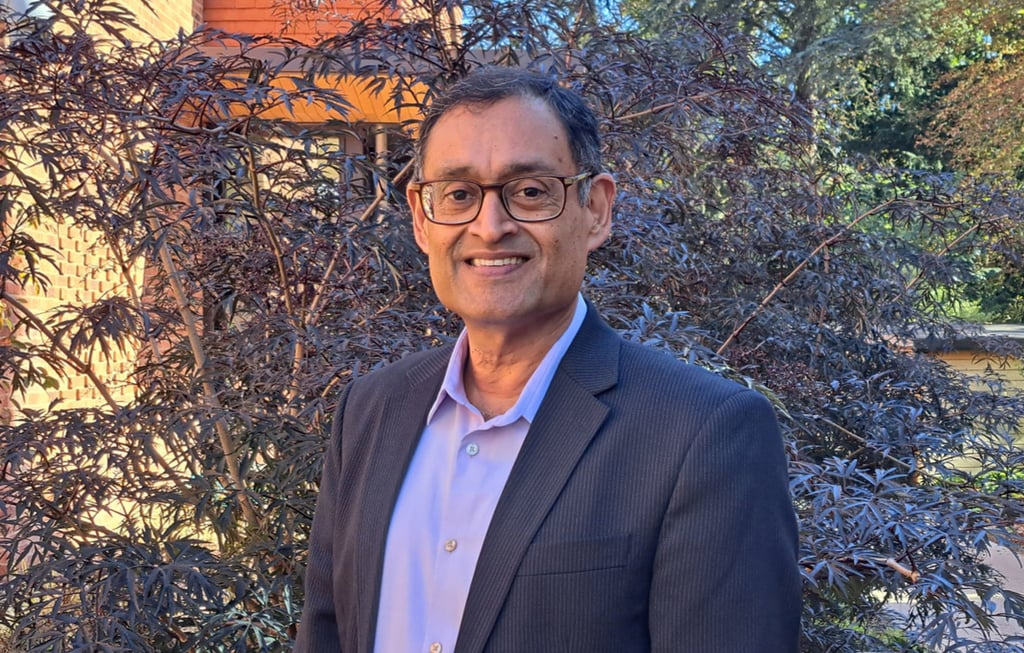
In an interview with the South China Morning Post, Professor Girish Menon, president of Lucy Cavendish College, said Hong Kong’s cosmopolitan character made it “best placed” to place young people at the heart of its university town.
“A successful university town has to think about what young people need to survive and thrive – a strong pastoral community, recreation and opportunities to engage with enterprise, the public sector and civil society,” he said.
“Hong Kong is best placed to do this, with students from all over the world, and that helps build global understanding and global solidarity.”
Menon was in Hong Kong for the Global University Presidents and Leaders Summit, held on Tuesday and Wednesday last week, where he spoke on global knowledge and social sustainability.
Organised by the Hong Kong Association for External Friendship, the summit brought together 10 local universities and leaders from over 50 institutions across more than 20 countries and regions, with five bureau chiefs among the speakers.
The college president said he was fascinated to see the Northern Metropolis written into Hong Kong’s five-year plan as a government-academia-industry partnership, an ambition mirrored in Cambridge’s research and innovation ecosystem.
“I see many parallels between Hong Kong and Cambridge. It is about putting students and young people at the centre, and developing a strong research, enterprise and innovation ecosystem around them,” he said.
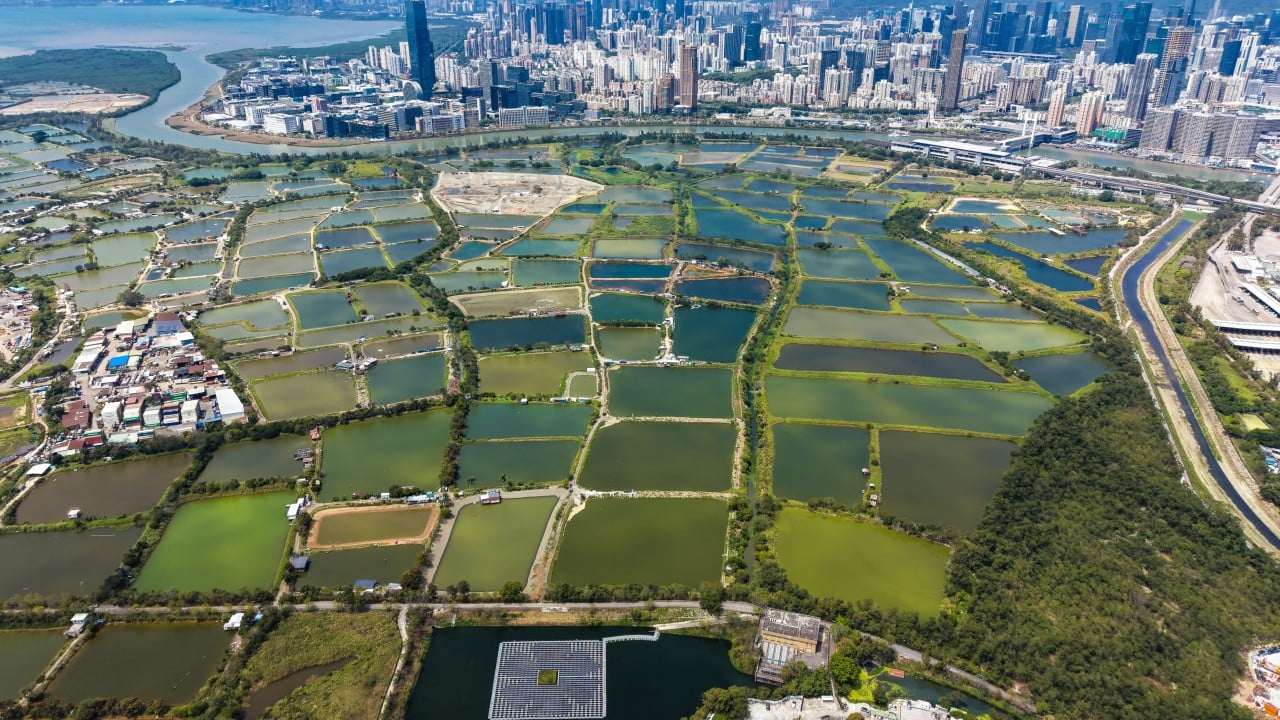
First proposed in 2024, the three university towns of San Tin, Hung Shui Kiu and Ta Kwu Ling form a 1,000-hectare (2,470- acre) project within the Northern Metropolis aimed at fostering synergy among industry, academia and research while integrating education, technology and talent.
September’s policy address confirmed their core campus areas would span up to 300 hectares, with applications for the first town, in Hung Shui Kiu, closing at the end of this year and results due in early 2027.
Officials have repeatedly said the project will be self-financing, supported by low-interest loans with longer repayment periods and waived land premiums, with successful bidders paying a nominal HK$1,000 (US$127) for land in the towns.
On finance, Menon said that a university town could only be sustained through a strong government-industry partnership, supplemented by philanthropy.
The government, he said, should take the lead on policy, pointing to Cambridge’s close work with UK authorities on an innovation corridor and its collaboration with Oxford and Manchester to build a wider innovation ecosystem.
“The government and industry have to lead in promoting that kind of ecosystem, but equally, many philanthropic foundations, spun out of large businesses, will play an important role in putting in the capital,” he said.
He also cautioned against building the town around science and technology alone. While fields such as engineering and life sciences were critical, he said, managing them still required soft skills.
“The people managing it need a good understanding of human relations, legal frameworks, governance and regulation, philosophy and history, and it is all also about communication, creative thinking, storytelling,” he said.
Menon noted that Cambridge’s ecosystem had grown “organically and slowly” over more than 800 years, with local businesses and industry, such as pharmaceutical giant AstraZeneca, flourishing around the colleges in what he called a “symbiotic” relationship.
He also pointed to uneven development around university towns, stressing that surrounding communities must not be left behind, and noted that some parts of Cambridge still lacked access to higher education.
“There are still many communities on the fringes of Cambridge without access to university education, so the colleges run reading programmes and libraries for them,” he said, referring to the “town and gown” divide between the university and the wider community.
Sustainable architecture was another lesson Hong Kong could take on board, Menon said. Cambridge’s historic college buildings are now expensive to maintain and are only now being retrofitted with solar heating and alternative energy, long after they were built.
“Climate change was not an issue 800 years ago. If it is a new town, you have the opportunity to think now for the next 50 years and next 100 years, so you can actually future-proof it based on the challenges that we are seeing today,” he said.
Lucy Cavendish College has partnered with City University since 2025, making CityU the first international partner of the college’s Future Global Leaders Programme, an intensive course on values-driven leadership linked to the United Nations sustainable development goals.
Menon said the college was open to taking part in the Northern Metropolis alongside its Hong Kong partner.
KioskNews shows a cleaned-up reading view extracted from the publisher’s page — the original always lives on their site, not ours.