Praised as heroes, stung by criticism: firefighters torn over Tai Po blaze report
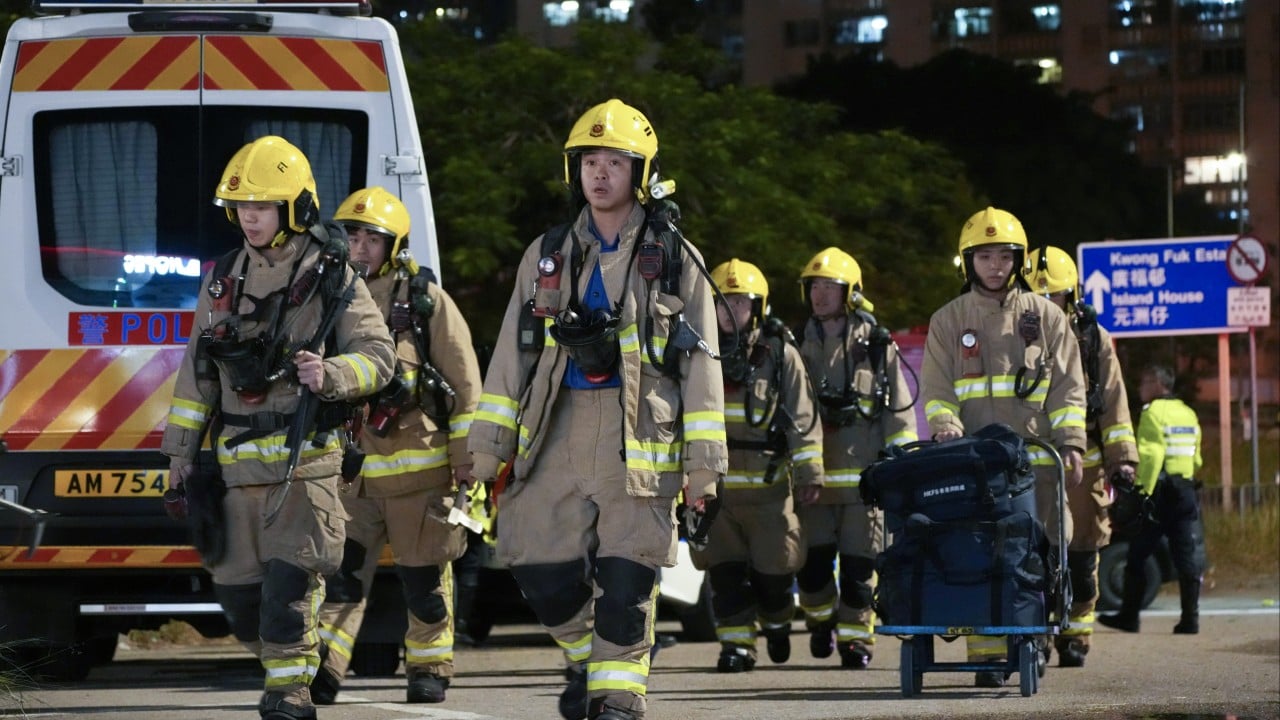
After spending 12 gruelling hours battling the Tai Po inferno, frontline firefighter Ah Fai* could not have imagined that, barely a year later, his department would find itself under the harsh glare of public scrutiny.
The trauma of that night is still raw. He remembers burning debris from the bamboo scaffolding raining down from above, blocking one of the main entrances of Wang Fuk Court.
“Our colleagues simply had no chance of getting in,” he said.
Those who eventually breached the towers were met with scenes of unimaginable horror, Ah Fai said, recounting the experience of another crew member who searched for survivors.
“He walked down the corridor twice without realising anyone was there, until his partner spotted what turned out to be a human skull.”
Firefighters, already struggling with grief over the blaze at Wang Fuk Court last November, had more to process when an independent inquiry report into the tragedy that killed 168 people was made public last week.
The report praised frontline officers for their “great heroism”, while also singling out the Fire Services Department (FSD) for oversight failures that contributed to the blaze. While saying problems had long been known, some firefighters felt the report had driven a wedge between frontline personnel and management.
Asked whether he had a guilty conscience, Ah Fai said, sobbing: “I do feel a bit [guilty] … With so many residents dying, I do not think we have any right to speak up against all those criticisms [from the report].”
A senior officer, Peter*, who has been with the department for more than two decades, shares that feeling. “I also feel a sense of remorse myself. All I can say is that the ultimate responsibility lies with us,” he said.
“Judging by the outcome, it is really hard to say we did a good job,” said Peter, who did not take part in the Tai Po operation. “If you think about it, in any society or any advanced city, a death toll like this is simply indefensible.”
He said society as a whole had been quite forgiving towards the department because people did not normally blame frontline firefighters.
“Looking strictly at the number of casualties, there is no way we can claim we performed well,” he said. “Of course, a colleague sacrificed his life, and the frontline crews fought incredibly hard. I would never deny that.”
The late firefighter Ho Wai-ho, 37, showed exceptional bravery and a deep sense of duty while responding to the incident, the report said.
He stopped to assist an elderly woman in a wheelchair fleeing Wang Tai House, while his teammates continued on. Amid the confusion, he entered Wang Tai House alone.
After he reached the 25th floor, conditions deteriorated rapidly, but he was deemed fully capable of escaping.
“However, it is believed that he stayed on in Wang Tai House in an attempt to assist the evacuation of other residents.”
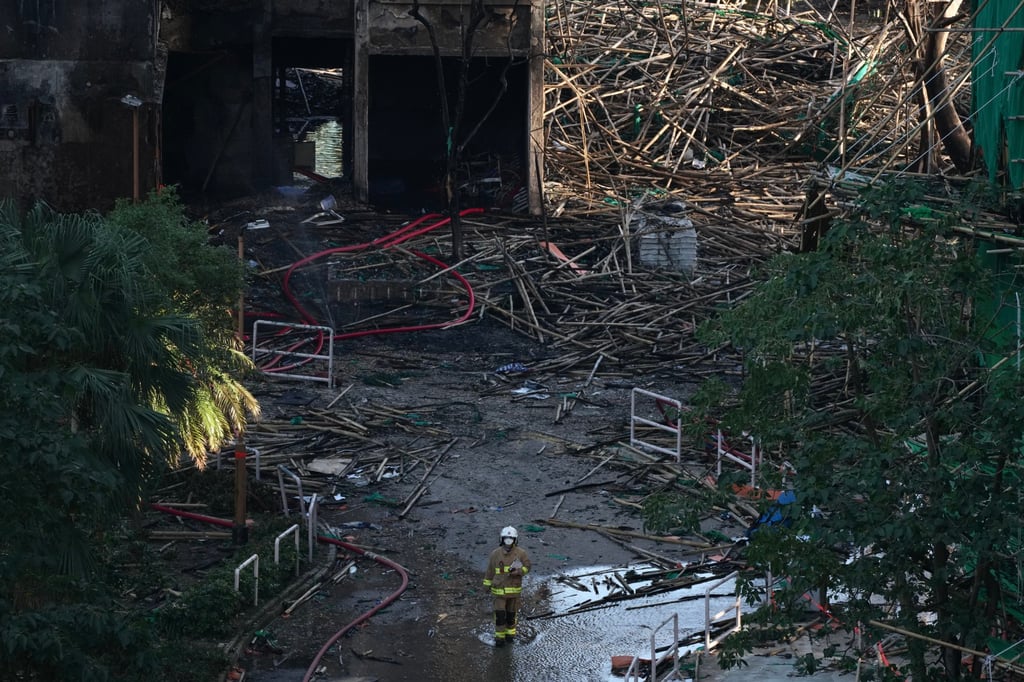
He was later found lying unconscious outside the building, believed to have fallen from a height.
“Despite the challenging and life-threatening conditions, he prioritised the rescue of others over his own life, exemplifying the highest standards of selflessness and dedication,” the report said.
Thirteen other firefighters were injured during the operation. The report also praised all firefighters, saying: “They deserve the greatest respect and gratitude from the people of Hong Kong.”
According to Peter, the report has inevitably hurt frontline morale, with firefighters feeling aggrieved. But the top brass believed the independent panel’s comments about the department were “more lenient than expected” in both wording and intensity.
The report criticised the department for a “lack of sense of crisis” and for relying on a “passive, paper-driven” audit regime.
It had received notices that the estate’s fire hydrant and hosepipe reel systems had been deactivated for maintenance, but its officers paid only “cursory initial visits” and relied on verbal reports rather than conducting inspections themselves.
The shutdown notice system was gravely abused, with fire alarms and hydrants in each building at Wang Fuk Court shut down for extensive periods, leaving many residents initially unaware that the fire had broken out.
The department took no enforcement action against contractors for prolonged shutdowns of such equipment.
“Lax enforcement of the regulatory regime would inevitably lead to lax and poor performance of, or even exploitation by, the corresponding contractors,” the report said.
Peter conceded that supervision by the department’s fire prevention team had been loose in the past and that it had neglected a “well-known” problem: the mixed quality of contractors’ work. The current system, he said, put too much trust in contractors and lacked any check-and-balance mechanism.
“There has been an overwhelming workload. Obviously we tend to believe the contractors, without verifying the credibility [of what they submitted] in detail,” he said.
Director of Fire Services Andy Yeung Yan-kin testified to the panel that his department had a role in regulating fire hazards related to combustible polyfoam and movable wooden boards installed in emergency staircases in place of fireproof windows.
This contradicted testimony given by Michael Yung Kam-hung, the department’s assistant director for fire safety, who said such matters should be handled by building authorities.
Peter recalled that colleagues had been “shocked” by Yeung’s “new interpretation” of duties, as the frontline had been under the impression that the established mechanism left such tasks to building authorities.
“It feels like the blame is being shifted onto the frontline staff. They might end up thinking, ‘Are you saying it is our fault? That we failed to carry out our duties properly?’” he said.
The committee criticised the shifting of responsibility, which created a vacuum and left fire safety issues at Wang Fuk Court in a grey area.
According to Ah Fai, the long-standing laid-back working culture of the fire prevention team had left contractors with little regard for the department’s supervision.
He noted that because the department wanted to improve its fire prevention and building inspection efforts, many frontline firefighting officers had been reassigned to help, further straining already limited manpower.
Resources had been used to open new senior posts without replenishing frontline staffing, he said.
He cited an example in which operations meant for a five-officer team were being handled by just two, inevitably adding to the workload and hurting morale.
He said he only hoped the department would make the improvements that should have been made years ago.
“With so many lives lost, I feel like the department is just shutting the stable door after the horse has bolted, doing things they should have done 20 years ago,” he said.
Responding to questions from the South China Morning Post, An FSD spokesman said the department took the independent committee report seriously and was following up on its recommendations.
The department “attached great importance to maintaining staff’s morale and their esprit de corps, which remained as strong as ever,” he said.
He added that since the report was published, the management had kept in close contact with staff at all levels, including through meetings with staff associations and visits to fire stations and offices, to explain the follow-up work and listen to their views.
The spokesman stressed that the department was fully committed to protecting the lives and property of the public from fire and other calamities. It would continue to implement reform measures, strengthen fire safety governance, and “respond to society’s expectations through concrete actions”.
Despite officials’ apologies and the housing minister stepping down, Ah Fai said it was too little, too late, and he held out little hope that the government could shed its entrenched bureaucracy.
As a firefighter, he believed that bureaucracy, together with a long-standing tolerance for bid-rigging, was a root cause of the blaze.
“This disaster was really caused by the whole government. Not a single department can bear the full responsibility,” he said.
KioskNews shows a cleaned-up reading view extracted from the publisher’s page — the original always lives on their site, not ours.