How to turn your old MacBook into a home NAS server
Aleksey H/Shutterstock
To get more out of your old MacBook you may have thought about using it as a home Network Attached Storage (NAS) server. There are several paths to take, from very straightforward use of built-in macOS sharing tools all the way up to advanced, Linux-based solutions.
What can you do with a NAS?
Most NAS servers exist for one of three things: as a home media library, for collaboration and sharing, or for storage and backup. Given the value of the data, storage constraints and inherent risk of disk failure with older Macs, you should use external storage drives within your setup.
Once you've got your Mac erased, reset to factory settings and updated to run the most stable macOS it can, what will you require? You'll need a network and an Ethernet cable for fast and stable connection to your router. If your Intel Mac has an HDMI output, you'll want a headless HDMI plug to trick it into thinking a display is attached and activating the GPU for best video performance. You'll also use the free Amphetamine app to prevent your Mac from sleeping.
macOS has built in file sharing
Screenshot by Jonny Evans (Apple)
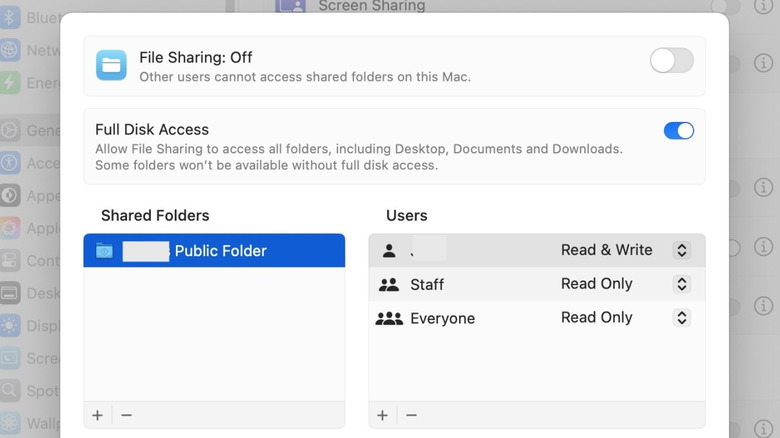
The easiest option is already available in macOS in Apple's built-in Sharing settings. Open these to enable File Sharing and select folders to share. You can assign user access privileges, make your data available to Windows and Android devices, even share from your external drive. You connect using an IP address your Mac will provide and navigate shared files through the Finder.
Your old Mac? Your new media server
Old Macs can run excellent media server applications, including Plex, Kodi and Infuse. Plex is widely used. It offers an attractive, user-friendly interface, ease of use and the capacity to stream content remotely for a fee. Home streaming is free.
As explained here, to install Plex you'll need an account and a Plex Media Server, and you must follow the intuitive setup wizard. You'll show Plex where all your media is located across your network, and Plex will download appropriate movie artwork and information to populate its Netflix-like media browser, featuring your content.
One more thing: Older Macs with low RAM may stutter when transcoding footage at 4K, so set Plex to stream in Original quality to minimize this.
One step beyond with Linux
You can transform an old Mac into a highly sophisticated NAS system with Linux and open-source applications. Doing so supercharges your NAS setup with useful tools like web-based dashboards, though old Macs with low memory will struggle.
Linux is a vast ecosystem with a multitude of approaches. One relatively user-friendly solution for both Intel and Apple Silicon Macs is to replace the OS with Debian and then overlay that with CasaOS or Umbrel, both of which provide you with excellent, helpful resources to guide you through the process. M-series Macs can also install Debian as a virtual machine. If you are comfortable with command-line access, you can run Docker directly on Debian to install and manage apps even more effectively.
It's important to point out that adopting Linux means your Mac won't be running macOS anymore but will become a headless NAS system managed remotely through a browser. You can spice up your setup with additional tools, including Nextcloud, which turns your Mac into an online file storage system, or Jellyfin, a free, open-source Plex alternative. You'll have fun and get more out of your old Mac.
KioskNews shows a cleaned-up reading view extracted from the publisher’s page — the original always lives on their site, not ours.