10 War Films That Are Perfect From Start to Finish

Sign in to your Collider account
War movies are tough to rate, because the best ones aren’t fun to watch any way. You don’t finish them feeling pumped up, you finish them quiet, maybe a little shaken, and you sit there for a minute before you say anything. That’s the kind of movie I wanted for this list, the ones that stay serious from the first minute to the last (and make you suffer somehow).
The movies mentioned here cover six decades and about as many wars as you can fit into ten films, from the trenches of World War I to the jungles of Vietnam and the burned villages of Belarus. A few are famous for their battle scenes, but what makes them hold up is how much attention they pay to the emotional quotient of people involved in war. So, let’s have a look.
10 ‘The Bridge on the River Kwai’ (1957)
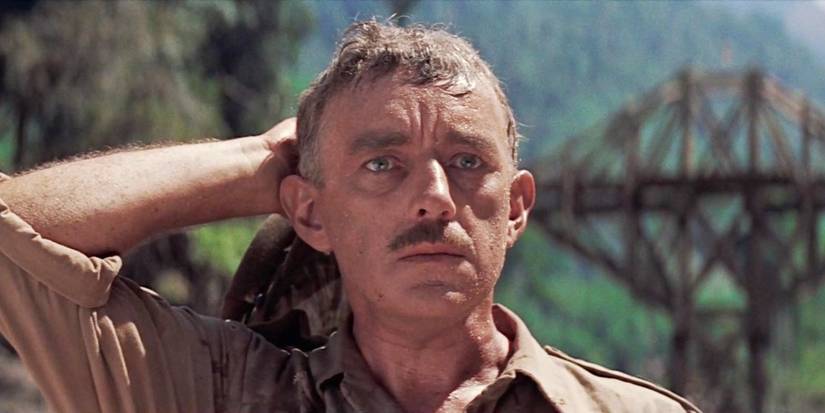
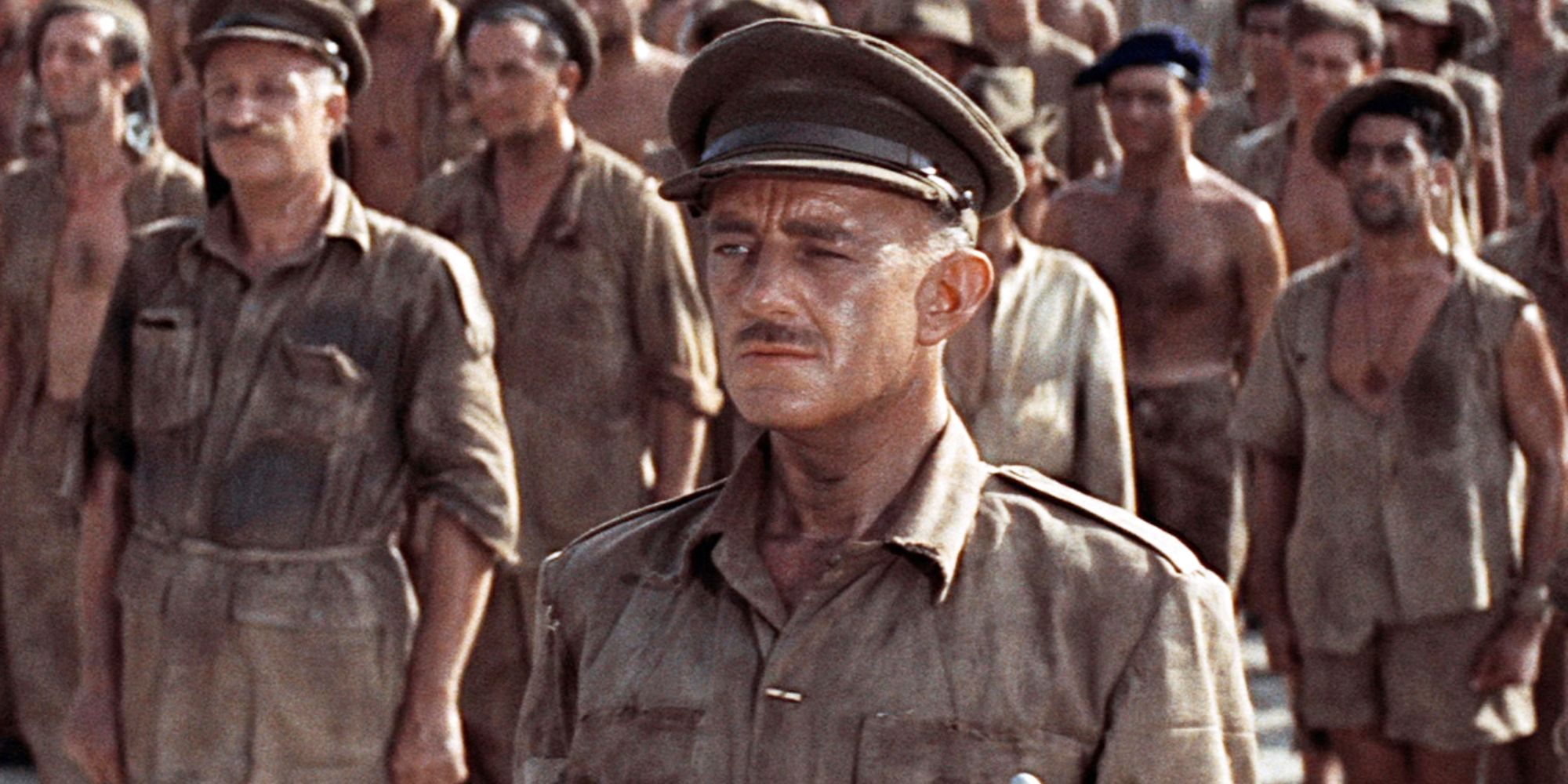
Colonel Nicholson (Alec Guinness), a stiff-upper-lip British officer, marches his men into a Japanese prison camp in Burma, where the commander, Colonel Saito (Sessue Hayakawa), orders them to build a railway bridge for the enemy. Nicholson insists on doing the job properly to prove British discipline, and his pride slowly blurs the line between honor and madness. Shears (William Holden), an American who escapes the camp, gets dragged back to blow up the same bridge. David Lean directed The Bridge on the River Kwai, and it won seven Oscars, including Best Picture and Best Actor for Guinness.
The bridge was built for the film in Sri Lanka by hundreds of workers and took about eight months, and the final explosion, with a real train, was shot in a single take. Pierre Boulle, who wrote the novel and never spoke English, took the Oscar for the screenplay. The real writers, Carl Foreman and Michael Wilson, had been blacklisted in Hollywood, and the Academy only gave them credit decades later. The whistled “Colonel Bogey March” stays in your head for days.
9 ‘The Deer Hunter’ (1978)

Michael (Robert De Niro), Nick (Christopher Walken), and Steven (John Savage) are steelworkers in a small Pennsylvania town, and the first hour of The Deer Hunter is a long wedding party and a deer hunting trip before they ship out to Vietnam. Michael Cimino takes his time on purpose, so by the time the three are captured and forced to play Russian roulette, you’re already attached to them. Meryl Streep plays Linda, a woman caught between two of the men. The film won Best Picture, and Walken won Best Supporting Actor.
John Cazale, who plays Stan, was already seriously ill with cancer during the shoot, and this was his last film. The slap De Niro gives Walken in the roulette scene was reportedly real, and Walken’s face shows it. The Russian roulette scenes aren’t based on any documented real events, which sparked a lot of debate. But the film isn’t about facts, it’s about what war does to friends who thought they’d always have each other.
8 ‘All Quiet on the Western Front’ (2022)
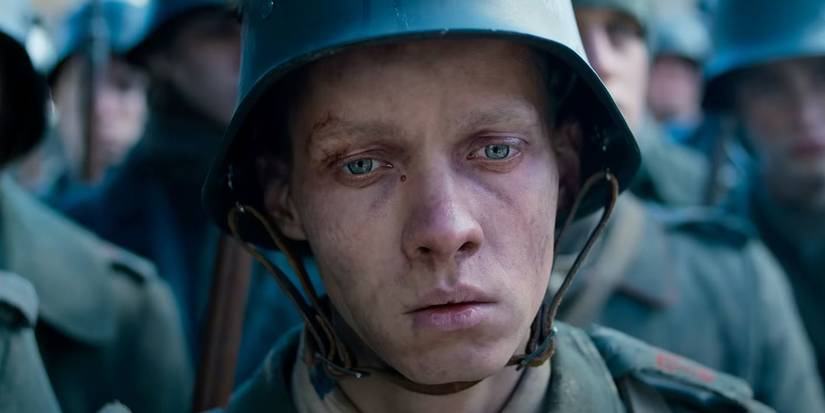
Paul Bäumer (Felix Kammerer), a German teenager, signs up to fight in 1914 with his classmates, fed on promises of glory, and quickly finds himself in the mud and rain of the Western Front. Edward Berger directed All Quiet on the Western Front, the first German-language adaptation of Erich Maria Remarque’s 1929 novel. Kammerer was a stage actor with almost no film experience, and Berger cast him after a long search. Kat (Albrecht Schuch), an older soldier, becomes Paul’s guide and friend.
Volker Bertelmann’s score uses a harsh three-note motif that hits like a drum in your chest. The film won four Oscars, including Best International Feature and Best Cinematography. The Nazis burned Remarque’s novel, which tells you how much they feared its message. The 1930 adaptation won Best Picture, and this version honors it by telling the story with the same heartbreak, minus the glamour.
7 ‘The Thin Red Line’ (1998)
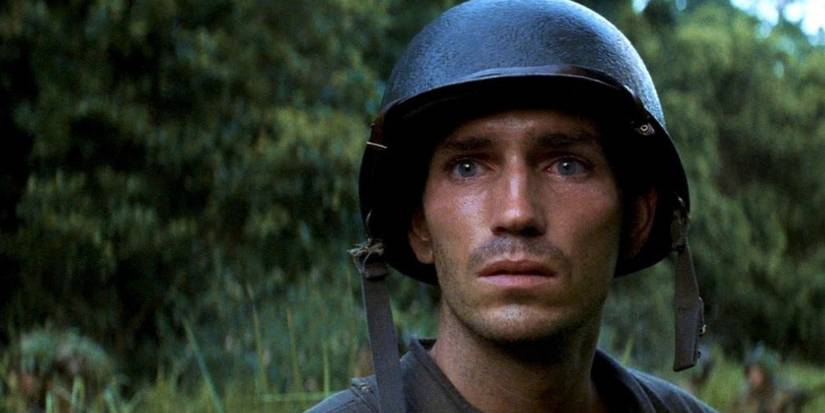
Terrence Malick hadn’t made a film in twenty years when he came back with The Thin Red Line, set on Guadalcanal in 1942. The story follows an American infantry company as it fights its way up a hill, with voiceovers from soldiers like Private Witt (Jim Caviezel), a quiet deserter who keeps noticing the beauty of the island, and First Sergeant Welsh (Sean Penn), a cynical veteran. Lt. Col. Tall (Nick Nolte) pushes the men forward with a ruthless ambition.
Malick shot hours of footage and cut many actors’ roles down to almost nothing. Adrien Brody was promoted as a lead and ended up with only a few lines, while others, including Mickey Rourke and Gary Oldman, were removed from the finished film entirely. Hans Zimmer wrote a haunting score that still gets copied in trailers. It earned seven Oscar nominations and won none, which is a shame.
6 ‘Das Boot’ (1981)
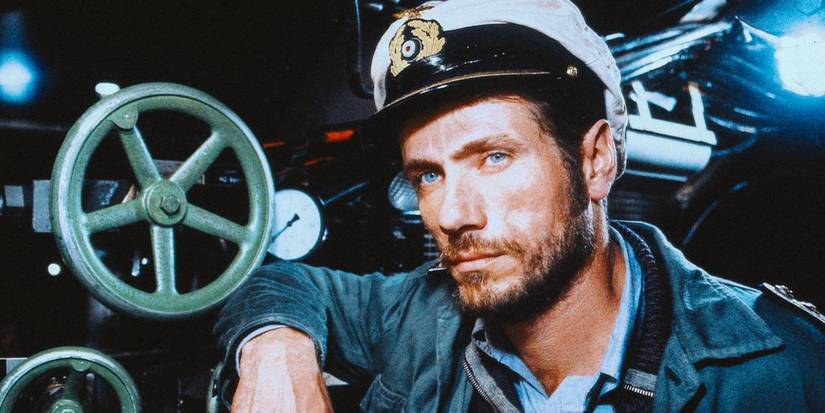
The Captain (Jürgen Prochnow) leads a German U-boat crew out of port in 1941 on a mission to sink Allied ships in the Atlantic, and a young war correspondent, Lieutenant Werner (Herbert Grönemeyer), rides along to write about it. Wolfgang Petersen directed Das Boot, based on Lothar-Günther Buchheim’s novel, and the film is set on a real submarine, U-96. The enemy is mostly unseen, and the dangerous part of it comes from water, the pressure, and the claustrophobia.
The film was shot in chronological order inside a life-size replica of the sub, and the actors were kept out of the sun so they’d look pale and worn. Cinematographer Jost Vacano ran through the narrow corridors with a handheld camera, which puts you right in the crew’s boots. It earned six Oscar nominations, and Grönemeyer went on to become one of Germany’s biggest pop stars. The scene where the boat sinks to the seabed and the hull groans under the pressure is almost unbearably tense.
5 ‘Lawrence of Arabia’ (1962)
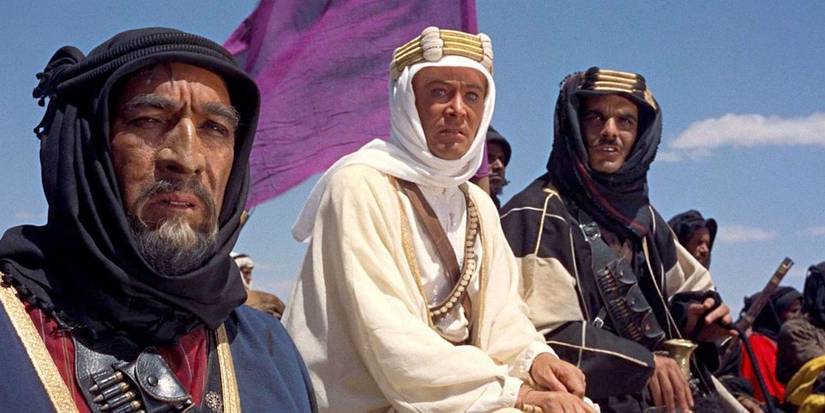
T.E. Lawrence (Peter O’Toole), a young British officer, is sent into the Arabian desert during World War I and he ends up uniting rival tribes to fight the Ottoman Empire. David Lean shot Lawrence of Arabia in 70mm across Jordan, Morocco, and Spain, and its desert vistas still look amazing on a big screen. O’Toole was a little-known stage actor when he got the part after Albert Finney turned it down, and the role made him a star. Sherif Ali (Omar Sharif) is introduced as a speck in the heat shimmer that slowly grows into a rider, in a long, slow shot.
The famous match cut goes from Lawrence blowing out a match to the sun rising over the desert, and it’s one of the best transitions in cinema. The film won seven Oscars, including Best Picture, and Steven Spielberg and Martin Scorsese helped restore it in 1989. Prince Faisal (Alec Guinness) and Auda Abu Tayi (Anthony Quinn) round out a cast that treats the story with the seriousness it deserves. It runs nearly four hours, and few films have earned their length more.
COLLIDERInteractive
Ballot sealed
Movies/Academy Awards/Best Picture
Collider · Best Picture
Which Oscar Best Picture
Is Your Perfect Movie?
Five winners · ten questions · one envelope
Five Oscar Best Picture winners. Five completely different visions of what cinema can be and what it can do to you. One of them is the film made for the way your mind works, and ten questions will work out which. The nominees
2020Parasite
2023Everything Everywhere All at Once
2024Oppenheimer
2015Birdman
2008No Country for Old Men
Reel01 / 10
Question 01 of 10TONE
01 What kind of film experience are you really after? The best movies do not just entertain. They leave something behind.
Keys 1 to 5 or A to E · Enter to advance
Reel02 / 10
Question 02 of 10THEME
02 Which idea grabs you most in a film? Great films are driven by a central obsession. What is yours?
Keys 1 to 5 or A to E · Enter to advance
Reel03 / 10
Question 03 of 10STRUCTURE
03 How do you like your story told? Form is content. The way a story is shaped changes what it means.
Keys 1 to 5 or A to E · Enter to advance
Reel04 / 10
Question 04 of 10VILLAIN
04 What makes a truly great antagonist? The opposition defines the protagonist. What kind of opposition fascinates you?
Keys 1 to 5 or A to E · Enter to advance
Reel05 / 10
Question 05 of 10ENDING
05 What do you want from a film's ending? The final note is the one that lingers. What do you want it to sound like?
Keys 1 to 5 or A to E · Enter to advance
Reel06 / 10
Question 06 of 10WORLD
06 Which setting pulls you in most? Where a film takes place shapes everything: mood, stakes, what is even possible.
Keys 1 to 5 or A to E · Enter to advance
Reel07 / 10
Question 07 of 10CRAFT
07 What cinematic craft impresses you most? Every great film has a signature, the element that makes it unmistakable.
Keys 1 to 5 or A to E · Enter to advance
Reel08 / 10
Question 08 of 10PROTAGONIST
08 What kind of main character do you root for? The protagonist is the lens. Who you follow says something about you.
Keys 1 to 5 or A to E · Enter to advance
Reel09 / 10
Question 09 of 10PACE
09 How do you feel about a film that takes its time? Pace is a choice. Some films sprint. Others let tension accumulate slowly, deliberately.
Keys 1 to 5 or A to E · Enter to advance
Reel10 / 10
Question 10 of 10AFTERMATH
10 What do you want to feel walking out of the cinema? The best films leave a mark. What kind of mark do you want?
Keys 1 to 5 or A to E · Enter to advance
The envelope, pleaseAnd the Oscar goes to
★ Best Picture, 2020 Parasite Bong Joon-ho, 2019 A film that hides its true intentions until the moment it is ready to reveal them.
You are drawn to films that operate on several levels at once, that begin in one genre and quietly, brilliantly migrate into another. Bong Joon-ho's Parasite is a film about class, desire and the architecture of inequality that manages to be darkly funny, deeply suspenseful and genuinely shocking across a single extraordinary running time. Your instinct is for cinema that rewards close attention and punishes assumptions, right up to its devastating final image. From the Collider file
- The first film not in the English language to win Best Picture, in the Academy's 92-year history to that point.
- It took four Oscars in one night: Picture, Director, Original Screenplay and International Feature.
- It won the Palme d'Or at Cannes in 2019 by a unanimous jury vote, the first Korean film to do so.
- The Park family's modernist house was not a location. It was built from scratch on an outdoor lot.
Reads between the lines Loves a reveal Attention to detail
★ Best Picture, 2023 Everything Everywhere All at Once Daniel Kwan and Daniel Scheinert, 2022 A film that refuses to choose between being entertaining and being meaningful.
You want it all, and this one gives you all of it. The Daniels' Everything Everywhere All at Once is among the most maximalist films ever made: action comedy, multiverse science fiction, family drama, existential crisis, and an emotional core that sneaks up on you in the middle of the chaos. You respond to ambition. Being overwhelmed is the design, not the side effect, because the feeling of being crushed by infinite possibility is exactly what the film is about. From the Collider file
- Seven Oscars, including three acting wins for Michelle Yeoh, Ke Huy Quan and Jamie Lee Curtis.
- Michelle Yeoh became the first Asian woman to win Best Actress.
- The visual effects were handled by a team of fewer than ten people, most of them self-taught.
- Ke Huy Quan had all but left acting for two decades before this role brought him back.
Wants everything Big swings Soft center
★ Best Picture, 2024 Oppenheimer Christopher Nolan, 2023 A film about the gap between what we can do and what we should do.
You are drawn to cinema on a grand scale, films that treat history not as a backdrop but as a force, then place their characters inside that force and watch what happens. Christopher Nolan's Oppenheimer sits inside one of the most consequential moments in human history and refuses to look away from it. You want your films to feel important without being self-important, earning their ambition through craft and the gravity of the subject. This one is enormous, complicated, and offers no easy comfort. From the Collider file
- Seven Oscars, including Nolan's first wins for directing and for Best Picture.
- Cillian Murphy and Robert Downey Jr. both took their first Academy Awards for it.
- Kodak engineered a black-and-white 65mm stock that did not previously exist so Nolan could shoot those sequences on IMAX.
- A three-hour, R-rated drama about theoretical physics that passed 950 million dollars worldwide.
Thinks in decades Scale and weight No easy comfort
★ Best Picture, 2015 Birdman Alejandro G. Iñárritu, 2014 A film doing something that probably should not be possible.
You are drawn to films that foreground their own construction, where the how of the filmmaking becomes part of the what it is about. Alejandro G. Iñárritu's Birdman, stitched to appear as one continuous take, is cinema examining itself through the cracked mirror of a fading actor's ego. You respond to formal daring. Michael Keaton's performance and Emmanuel Lubezki's restless camera make something unlike anything else: a film about creativity, relevance, self-destruction and never quite knowing whether your work means anything at all. From the Collider file
- Four Oscars, among them Best Picture and Best Director for Iñárritu.
- Emmanuel Lubezki's win here was the middle of three consecutive cinematography Oscars, after Gravity and before The Revenant.
- Antonio Sánchez's improvised drum score was ruled ineligible for the score category, which caused a minor uproar.
- The long-take illusion was built from a handful of extended shots joined by hidden cuts.
Formally daring Camera as character Ego and art
★ Best Picture, 2008 No Country for Old Men Joel and Ethan Coen, 2007 A film that treats dread as a form of meaning.
You are drawn to cinema that trusts silence, refuses to explain itself, and lets unease do the talking. The Coen Brothers' No Country for Old Men is about the arrival of a new kind of evil: implacable, arbitrary, and indifferent to the moral frameworks we use to make sense of things. It is one of the most tightly controlled films ever made, and that control is the source of the terror. You want your films to haunt you rather than comfort you, and you have no interest in a resolution that would be a lie. From the Collider file
- Four Oscars: Picture, Director, Adapted Screenplay, and Supporting Actor for Javier Bardem.
- Adapted from Cormac McCarthy's 2005 novel, with much of his dialogue carried over intact.
- Carter Burwell's score runs about sixteen minutes and is nearly inaudible by design.
- Roger Deakins was nominated twice that year, for this and The Assassination of Jesse James, and won for neither.
Trusts silence Dread over answers No tidy endings
Ballot tally · your top three
1
2
3
Copied to your clipboard
Ballot counted byCOLLIDERCollider.com · The Awards Desk
4 ‘Paths of Glory’ (1957)

In 1916, a French general orders an impossible attack on a heavily defended German position, and when his troops fail, he demands that three random soldiers be executed for cowardice. Colonel Dax (Kirk Douglas), a lawyer in civilian life, defends them in a sham court-martial, while General Mireau (George Macready) and General Broulard (Adolphe Menjou) play politics with their lives. Stanley Kubrick directed Paths of Glory when he was only 28, and the film is based on a novel by Humphrey Cobb.
The trench scenes use long tracking shots that make you feel like you’re walking beside the soldiers. German police officers were used as extras for the attack scenes. The film was banned in France until 1975 because it criticized the army. The last scene, in which a German girl sings to rowdy soldiers, is played by Susanne Christian, who later became Kubrick’s wife. It’s short, bitter, and cold.
3 ‘Saving Private Ryan’ (1998)
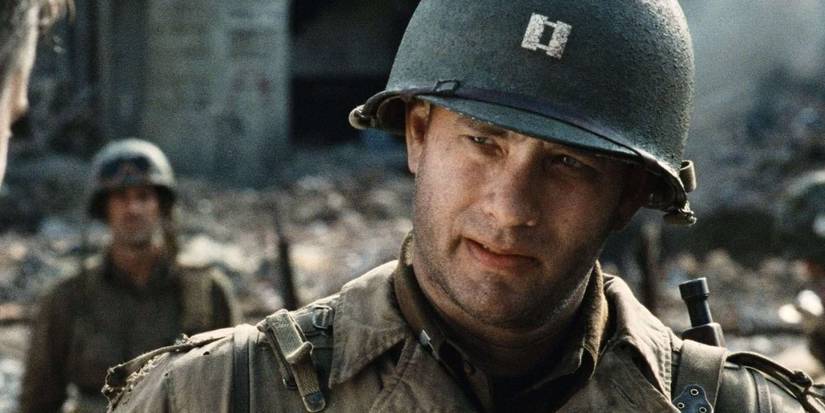
Captain Miller (Tom Hanks) and his squad are sent behind enemy lines after D-Day to find Private Ryan (Matt Damon), whose three brothers have all been killed in action. The opening 24 minutes recreate the landing at Omaha Beach, shot handheld with washed-out colors to resemble real wartime footage. Steven Spielberg used about a thousand extras, including members of the Irish Army Reserve, for Saving Private Ryan. The scene reportedly cost over $11 million and still looks brutal.
The actors went through a week of military boot camp led by Captain Dale Dye, a former Marine, and Damon was kept out of it so the others would resent him on screen. Sergeant Horvath (Tom Sizemore), Reiben (Edward Burns), and Upham (Jeremy Davies) fill out the squad, and each gets a moment that matters. Spielberg won Best Director, but the film lost Best Picture to Shakespeare in Love, an upset which people still argue about.
2 ‘Apocalypse Now’ (1979)
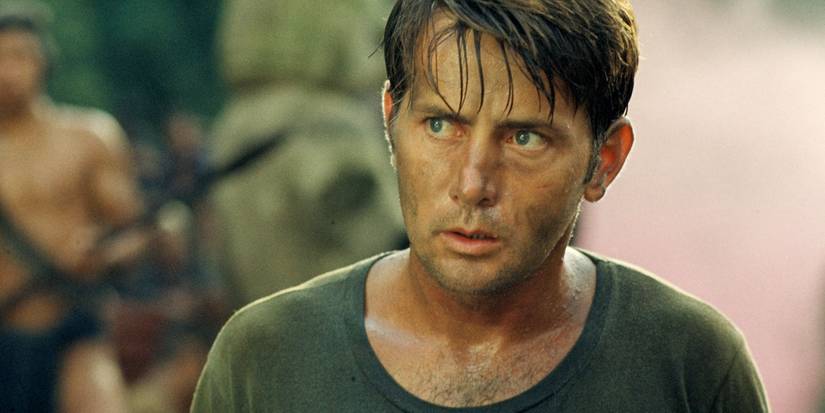
Captain Willard (Martin Sheen) is sent up a river in Vietnam to find and kill Colonel Kurtz (Marlon Brando), a decorated officer who has gone rogue and set himself up as a god in the jungle. Francis Ford Coppola based Apocalypse Now on Joseph Conrad’s novella Heart of Darkness, and the shoot in the Philippines turned into a disaster. A typhoon destroyed sets, the schedule ran more than a year over, and Sheen suffered a heart attack. Harvey Keitel was originally cast as Willard, but Coppola fired him after two weeks.
Brando showed up overweight and hadn’t read the book, so Coppola had to improvise Kurtz’s scenes. Lt. Col. Kilgore (Robert Duvall), the surfing helicopter commander, steals the first half, and Laurence Fishburne, who plays Clean, was only fourteen on set yet managed to give the best performance of her life.
1 ‘Come and See’ (1985)
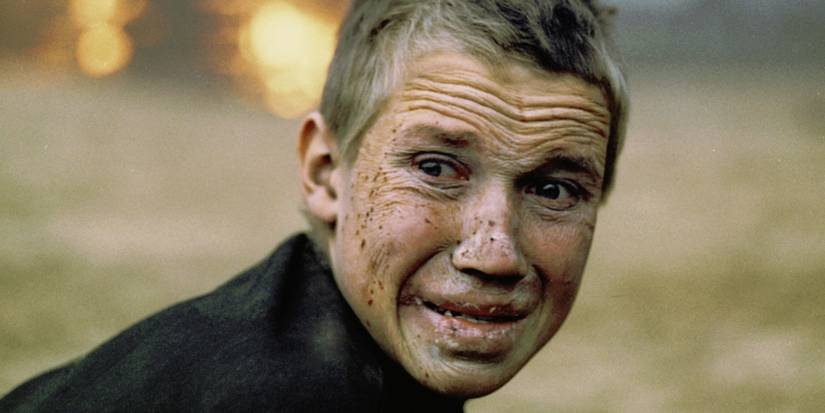
Come and See takes place in Belarus in 1943, when a teenage boy, Flyora (Aleksei Kravchenko), digs up a rifle and joins the partisans, ignoring his mother’s pleas. He soon witnesses horrors that age him far beyond his years. Elem Klimov spent about eight years fighting Soviet censors to get the film made, and it was shot in chronological order so Kravchenko’s performance would change naturally. The title comes from the Book of Revelation.
Stories about the shoot say Kravchenko worked with a hypnotist to handle the most intense scenes, and that real ammunition was fired near him for realism, though accounts differ. Glasha (Olga Mironova), a young girl Flyora meets, is the only bright spot for a while. Millions of viewers saw it in the Soviet Union, and it won the top prize at the Moscow Film Festival. It’s difficult to watch and impossible to forget, and that’s why it’s at number one.

Come And See
- Release Date
- October 17, 1985
- Runtime
- 142 Minutes
- Director
- Elem Klimov
- Writers
- Elem Klimov, Ales Adamovich
KioskNews shows a cleaned-up reading view extracted from the publisher’s page — the original always lives on their site, not ours.