The Israel we could build: What the next gov't should do in its first 100 days - opinion
Israel has an opportunity that may not come again for many years: to replace not only Prime Minister Benjamin Netanyahu but the political culture that has brought the country to this point. The voters have opened the door to change. The question now is whether Israel's political leaders have the courage to walk through it.
A government led by Gadi Eisenkot, bringing together Naftali Bennett, Yair Lapid, Yair Golan, Avigdor Liberman, and Mansour Abbas, with the Joint List providing parliamentary support from outside, would be an extraordinary coalition. Its members disagree on fundamental questions, but they share an opportunity to restore democratic institutions, reestablish the rule of law, rebuild national security, and begin repairing the country.
This cannot be another government held together by vague promises, ministerial appointments, and agreements to postpone difficult decisions. Israel has had enough of that. The new coalition must be built around a binding program of action, with clear deadlines, designated responsibilities, and public accountability.
The first hundred days must demonstrate that a different kind of government is possible. The first weeks must demonstrate that it is serious.
Here is the governing agreement I would propose.
1. Restore democracy: The first 14 days
At its first meeting, the government will establish an independent state commission of inquiry into October 7, 2023, examining political, military, intelligence, and institutional failures.
Within 14 days, the justice minister will submit legislation reversing measures that weakened judicial independence and democratic oversight.
The independence of the Supreme Court, attorney-general, state comptroller, and professional civil service will be guaranteed. Political appointments will require professional qualifications, and government spending will be transparent.
A cabinet committee chaired by the prime minister will monitor implementation monthly.
2. Restore the rule of law in the security establishment
Within seven days, the prime minister and responsible ministers will issue binding directives reaffirming the legal obligations of the Shin Bet (Israel Security Agency), the Mossad, the IDF, and Israel Police.
Unlawful political interference in investigations, intelligence assessments, operations, and appointments will be prohibited. An independent review will investigate allegations of political interference and misconduct, referring evidence of criminal activity to the appropriate authorities.
Senior appointments must follow professional criteria. Security personnel reporting unlawful orders through authorized channels will be protected. No minister may use security institutions for partisan purposes.

3. End Jewish nationalist terrorism: The first 30 days
Within 72 hours, the government will establish a joint operational command involving the Shin Bet, police, IDF, military prosecution, and the State Attorney's Office to dismantle Jewish extremist networks responsible for violence against Palestinian civilians.
Suspects involved in killings, arson, assaults, property destruction, and organized intimidation will be arrested where legally justified, investigated, and prosecuted. Illegal weapons will be confiscated, and those financing or facilitating violence will be investigated.
Within seven days, the defense minister will publish a plan to dismantle all unauthorized settlement outposts, agricultural farms, and illegal installations in the West Bank. Removals will begin during the first week, prioritizing installations linked to violence, land seizures, or Palestinian displacement. A 30-day target will apply wherever legally and operationally possible.
Military commanders and police officers will be instructed to protect Palestinian civilians. Failure to enforce lawful orders will trigger disciplinary investigation. There will be no immunity for violent settlers, their financiers, or officials who unlawfully protect them.
4. Rebuild national security
Within 60 days, the defense minister will present a revised security doctrine addressing border defenses, intelligence coordination, civilian protection, and reserve-force readiness.
A multiyear program will support reservists, injured soldiers, bereaved families, and displaced communities.
The government will propose legislation establishing fairer military and civilian national service obligations.
Security policy must combine military capability with achievable political objectives.
5. Gaza: Establish a workable alternative
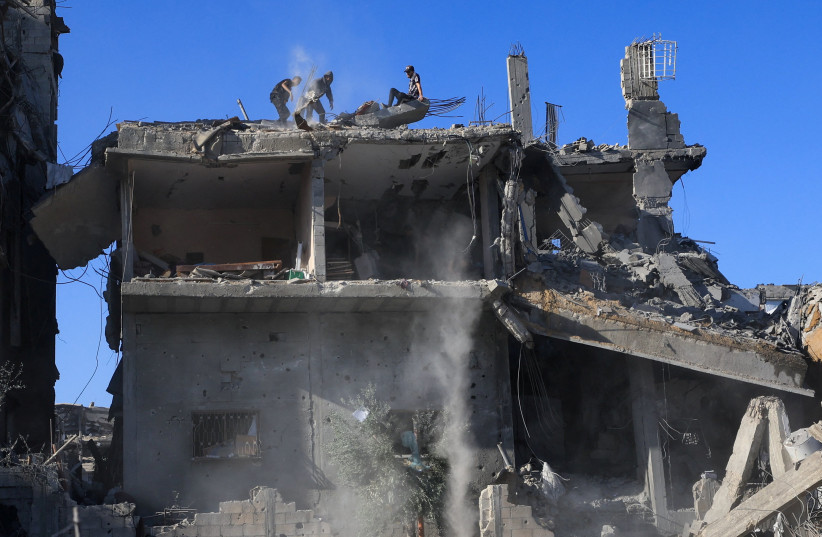
Within 30 days, the government will adopt a Gaza policy based in accordance with the Trump 20-point plan on Palestinian civilian governance, enforceable security arrangements, and reconstruction. Hamas will not retain an independent armed force or governing monopoly.
Israel will negotiate with Palestinian technocratic authorities, the Board of Peace, Egypt, the United States, and Arab partners on administration, policing, humanitarian access, and reconstruction.
Civilian responsibilities will be transferred according to an agreed timetable, alongside security arrangements and monitored humanitarian assistance. The objective is a secure Israeli border and Palestinian civilian governance in Gaza.
6. Full equality for Arab citizens
Mansour Abbas will serve as a senior minister responsible for implementing a comprehensive equality program.
Within 30 days, the government will approve a funded five-year plan covering housing, planning, transportation, education, employment, and municipal infrastructure in Arab communities.
An immediate national campaign against organized crime will combine policing, financial investigations, witness protection, prosecution, and cooperation with local authorities.
Budget allocations and implementation results will be published. Arab citizens will receive equitable representation in public institutions.
7. Reduce the cost of living
Within 60 days, the finance and economy ministers will present a program addressing food prices, housing, competition, and transportation. The government will reduce unnecessary import restrictions, enforce competition laws, and accelerate housing construction.
A five-year infrastructure program will improve transportation and employment opportunities in peripheral communities.
Fiscal discipline will accompany investment in technology, research, small businesses, and vocational training.
8. Repair healthcare, education, and welfare
Within 100 days, the health minister will present a funded program to reduce waiting times, strengthen hospitals, and expand mental-health services, prioritizing war survivors and affected families.
The education minister will propose improvements in teachers' conditions, school infrastructure, science, languages, and democratic civic education.
Social programs will strengthen support for older citizens, people with disabilities, and families living in poverty.
9. Religion and state
The government will protect freedom of religion and conscience while respecting religious communities. A ministerial committee will develop practical reforms concerning marriage, personal status, public transportation, and religious services.
Coalition partners will retain their ideological positions while committing to negotiated solutions.
10. The Palestinian question and regional diplomacy
The coalition will prohibit unilateral annexation and unauthorized settlement construction.
The government will enforce the law against violence and land seizures, improve Palestinian movement and economic conditions consistent with security requirements, and strengthen accountable Palestinian institutions.
Within 90 days, the foreign minister will present a diplomatic initiative involving the Board of Peace, the United States, Saudi Arabia, Egypt, Jordan, and Palestinian representatives.
The initiative will address normalization, security guarantees, economic cooperation, and a negotiated Israeli-Palestinian settlement.
Coalition partners may disagree on Palestinian statehood but must preserve the possibility of a negotiated agreement.
11. The Joint List: Parliamentary cooperation
The Joint List will remain outside the cabinet. A written agreement will define its commitments concerning government formation, confidence votes, budgets, democratic reforms, and equality legislation.
Its representatives will retain independence on security and foreign policy. A permanent consultation mechanism will address parliamentary disagreements.
12. Make the agreement enforceable
A coalition leadership council, chaired by the prime minister, will meet weekly. Every commitment will specify a responsible minister, deadline, budget, and measurable outcome.
Implementation reports will be published quarterly. Disputes will follow an agreed resolution procedure, and coalition partners will commit to a full parliamentary term.
A government measured by actions
The first month will demonstrate whether this government represents genuine change. If unauthorized outposts remain, violent extremists operate with impunity, security agencies face political interference, and judicial independence is not restored, changing the prime minister will have accomplished too little.
Imagine instead a government that enforces the law equally, restores professional institutions, protects democratic rights, includes Arab citizens in governing, and improves everyday life.
Its members will disagree, argue, and compromise. What matters is that they govern. Israel does not need another coalition agreement filled with promises. It needs decisions, deadlines, and accountability.
Replacing Netanyahu is not enough. Israel needs a concrete plan for repairing the country.
The writer is the Middle East director of the International Communities Organization and the co-head of the Alliance for Two States.
KioskNews shows a cleaned-up reading view extracted from the publisher’s page — the original always lives on their site, not ours.