French journalists attacked, camera stolen in Lyon as 106,000 join protests across France
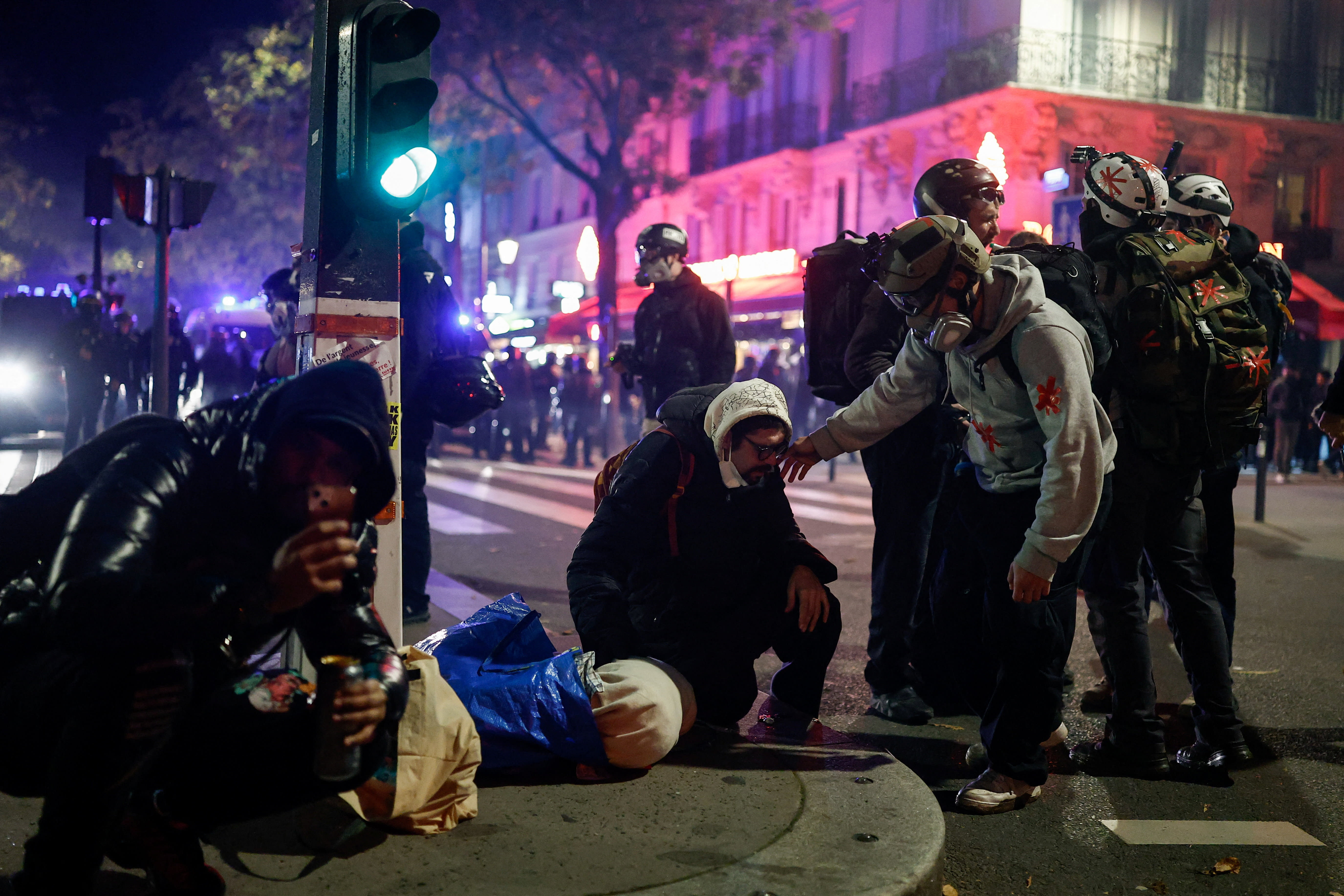
A group of journalists was violently attacked by protesters in Lyon on Saturday as demonstrations over the cost of living, social inequality and government policies drew 106,000 people across France, according to the French Interior Ministry.
The journalists, working for BFMTV, a French 24-hour television news channel, were covering a demonstration focused on children's rights, youth issues and climate action. According to French newspaper Le Monde, the crew consisted of two journalists and two security guards.
Protesters approached the crew in what local authorities described to Agence France-Presse (AFP) as an extremely violent attack carried out with the intent to lynch the journalists. Riot police quickly intervened to protect them.
One suspected attacker was arrested, the Interior Ministry announced Saturday evening.
A freelance journalist who witnessed the assault told AFP that one member of the BFMTV crew was repeatedly struck by protesters. His camera was thrown to the ground, broken, and then stolen.
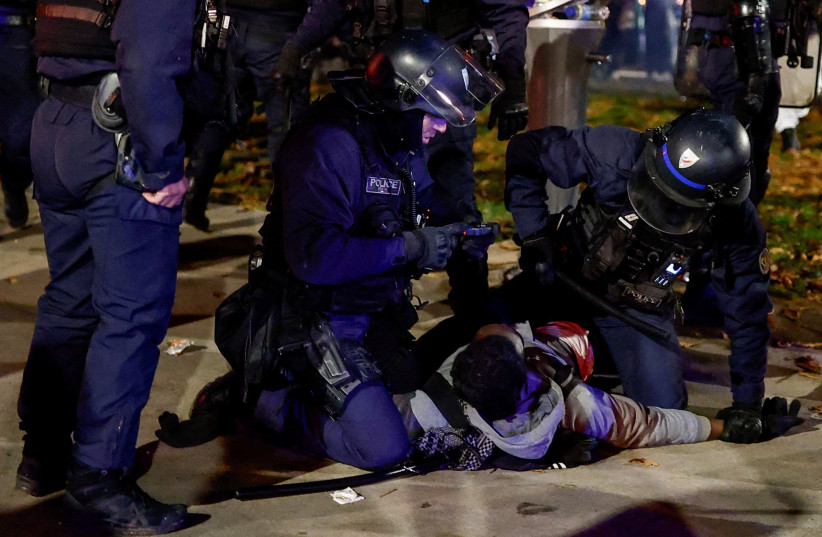
"It was very, very violent. One of them was hit several times. His camera was thrown to the ground, broken, and then they picked it up and stole it. He was in shock," the witness said.
The journalist, who publishes videos under the name Medave Prod on social media, said he had also been targeted.
"I had to take off my press badge myself, otherwise I would have been lynched too," he told AFP, adding that he had been hit twice in the foot.
BFMTV condemned the assault, warning that the violence put journalists at risk while doing their jobs.
"These behaviors are unacceptable, endangering journalists in the exercise of their profession," the broadcaster said in a statement.
CMA Media, BFMTV's parent company, expressed its support for the journalists and said it would join them in filing a criminal complaint.
The broadcaster reaffirmed its commitment to independent journalism and urged the public not to share footage of the attacked journalists on social media out of respect for their privacy and safety.
Étienne Guyot, the French government representative for the Auvergne-Rhône-Alpes region, condemned the attacks, saying that freedom of the press and the public's right to information were fundamental to democracy.
The attack occurred during a demonstration attended by approximately 8,000 people in Lyon.
Although most of the march remained peaceful, tensions escalated near the front of the crowd. Fireworks were launched, police fired tear gas, and a barricade was erected and set on fire shortly before the journalists were attacked.
More than 100,000 demonstrate across France
The violence in Lyon came as demonstrations took place across France for a fifth round of protests, bringing together labor unions, students, climate activists and organizations campaigning for children's rights.
According to figures reported by Le Monde, the Interior Ministry counted 106,000 demonstrators nationwide, including 24,000 in Paris.
A coalition of student and youth unions, including the Student Union, USL, FAGE and UNEF, disputed the official figures, claiming that 200,000 people participated nationwide, including nearly 100,000 in the capital.
Turnout was lower than the previous Saturday, November 7, when authorities counted 146,000 demonstrators. The protests peaked on October 17, when the Interior Ministry recorded 550,000 participants, compared with an estimate of 800,000 from organizers.
Approximately 70,000 police officers and gendarmes were deployed across France on Saturday, maintaining the same level of security as during the previous three weekends.
Authorities reported 137 operations to maintain public order nationwide and 219 arrests by approximately 6 p.m.
The Interior Ministry said the situation remained generally under control despite disturbances in several cities.
The demonstrations brought together groups with a range of demands, including higher wages, more funding for education, stronger protections for children and opposition to proposed legislation concerning police use of firearms.
Human rights organizations have denounced the proposal, which would establish a legal presumption that officers acted legitimately when using their weapons under certain circumstances, as a "license to kill."
Meanwhile, children's rights organizations and climate activists called for action to protect children and teenagers from violence and safeguard their future.
The Yellow Vest movement, which has helped organize weekly demonstrations against the rising cost of living since October 17, joined students, unions and civic groups in Paris.
Benjamin Ball, a member of the movement's coordinating group, rejected suggestions that declining turnout meant the protests were losing momentum.
"We don't get the impression that the movement is losing steam," Ball said, arguing that it was instead "taking root" and reflected "an entire people rising up."
Growing concerns over attacks on journalists
The assault in Lyon has added to concerns about the safety of journalists covering the demonstrations.
Reporters Without Borders (RSF) has documented more than 70 incidents in which journalists were prevented or obstructed from reporting on protests in France in recent weeks, according to Le Monde.
Those incidents included 44 cases of physical violence, 29 of which were attributed to law enforcement officers.
Television news organizations have faced particular hostility from some protesters, who accuse them of being too sympathetic to the far right. The broadcasters deny those allegations.
BFMTV director Fabien Namias recently warned about the increasingly hostile atmosphere surrounding journalists and the country's political divisions.
"I have never seen such a volatile, violent, brutal, and divisive climate six months before a presidential election," Namias said, according to Le Monde.
The continuing demonstrations have put pressure on French authorities to maintain public order while protecting the rights of protesters and journalists.
Another round of demonstrations is scheduled for Tuesday, as unions, student organizations and advocacy groups continue to press their demands.
KioskNews shows a cleaned-up reading view extracted from the publisher’s page — the original always lives on their site, not ours.