A woman survived lethal injection. Here’s how executions work across the US
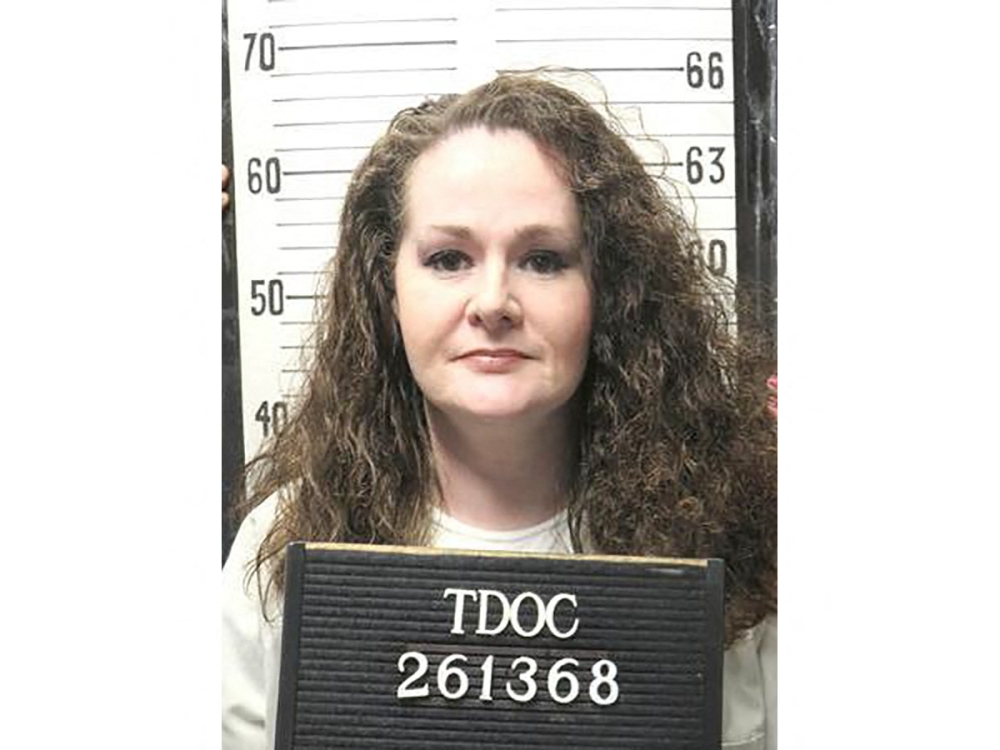

Christa Pike, the only woman on Tennessee’s death row, survived a botched lethal injection attempt on September 30, reigniting scrutiny of execution methods used across the United States. — AFP pic/Tennessee Department of Correction
First Published: Friday, 02 Oct 2026 9:00 PM MYT
WASHINGTON, Oct 2 — The unprecedented botched execution of a woman in Tennessee has reignited the debate over execution methods in the United States — which varies from lethal injection to firing squads.
Methods used in the US
Methods vary by state. States carry out the vast majority of executions, while federal executions are rare.
Lethal injection, authorised in 28 states and at the federal level, remains by far the most common execution method since the death penalty was reinstated in the United States in 1976.
Of the 47 executions carried out in 2025, 39 were by lethal injection.
Five others were by nitrogen inhalation, a method first used anywhere in the world in the southern state of Alabama in 2024 and likened by UN experts to a form of “torture.”
Three were by firing squad in South Carolina, marking the first use of that method in the United States since 2010.
But some states have struggled to obtain the necessary drugs from pharmaceutical companies reluctant to be associated with capital punishment.
This was the case, for example, in South Carolina, Utah and Indiana, which resumed executions in 2024 after suspending them for more than a decade for this reason.
In terms of frequency, electrocution and gas inhalation are, respectively, most common, each authorised in nine states, followed by firing squads, a method provided for in five states.
A litany of botched executions
No execution method is immune to the risk of spectacular failure.
In Alabama in 1983, John Evans’s leg caught fire after the first electric shock, while smoke rose from his hood and the smell of burning flesh began to fill the room. It took three shocks in all before the condemned man’s heart stopped beating.
In the northern state of Ohio in 2009, Romell Broom endured two hours of attempts by three members of the state’s execution team, who stuck needles into his arms, hands and legs 18 times in an effort to administer the lethal injection.
The first condemned prisoner to survive an execution attempt in the United States since 1946, he ultimately died of Covid-19 in his cell in December 2020.
Even firing squads, supposedly a more decisive method, present difficulties, Laura Porter, director of a coalition of US organisations campaigning to abolish the death penalty, told AFP.
During Mikal Mahdi’s execution in South Carolina in 2025, the shooters, “missed the target of the heart, and so it took longer for [him] to die,” she said, citing the autopsy findings.
Nitrogen inhalation was used “with severe, severe problems in Alabama,” and “it’s temporarily on hold,” she said.
“I don’t believe that there is a perfect way to kill people,” Porter said.
“Participating in execution is incredibly stressful and harmful to corrections officers,” she added.
Botched execution consequences
US states generally respond to the most shocking failures by imposing a moratorium to revise their execution protocols or by introducing new execution methods.
Tennessee imposed a moratorium in 2022 before resuming executions by lethal injection in 2025 under a revised protocol.
Alabama tried nitrogen inhalation in January 2024 following a botched lethal injection execution in November 2022.
But Porter said no lasting solution would be possible until the secrecy surrounding executions was lifted.
“When there are problems with protocols, or when there are problems with the drugs, or there are problems with the competency of the execution team, it is very, very difficult to obtain any information until after the problem has happened because we are given no information about the execution process,” she said. — AFP
KioskNews shows a cleaned-up reading view extracted from the publisher’s page — the original always lives on their site, not ours.