The Next David Lynch Just Stunned With Their Latest Horror Film

Marli Messner is a passionate writer who has written for literary magazines, educational zines, and now, Collider. She earned her BA in English Literature with Minors in Creative Writing and Spanish Translation from Knox College. She has won awards for her poetry, creative nonfiction, and literary criticism. She served as Co-Editor-in-Chief for Knox College's Catch magazine. Marli is a letterpress hobbyist, former theatre kid, and current poet.
Her background in theory and literature lends a thoughtful edge to her writing. She loves convincing her friends that unexpected movies, like Predator, are "actually really sophisticated." She's interested in all things horror, sci-fi, and action. Her favorite film is Alien.
Beloved filmmaker David Lynch was the master of telling stories about people's most private fears and desires. He was obsessed with the secrets people keep, even from themselves. Given his interest in the inner-life, it's no surprise that Lynch made dream-like films, using symbols and mystery to get to the heart of a character's dilemma, eschewing linear logic in favor of emotional truth. Sometimes, this dream logic makes Lynch's films difficult to interpret, but his work rewards repeat viewings. Over a year after the death of David Lynch, an unexpected director is picking up where he left off. Jane Schoenbrun, director of We're All Going to the World's Fair and I saw the TV Glow places themself squarely in David Lynch's lineage, and Teenage Sex and Death at Camp Miasma proves they're ready to inherit the throne of surrealist film-making.
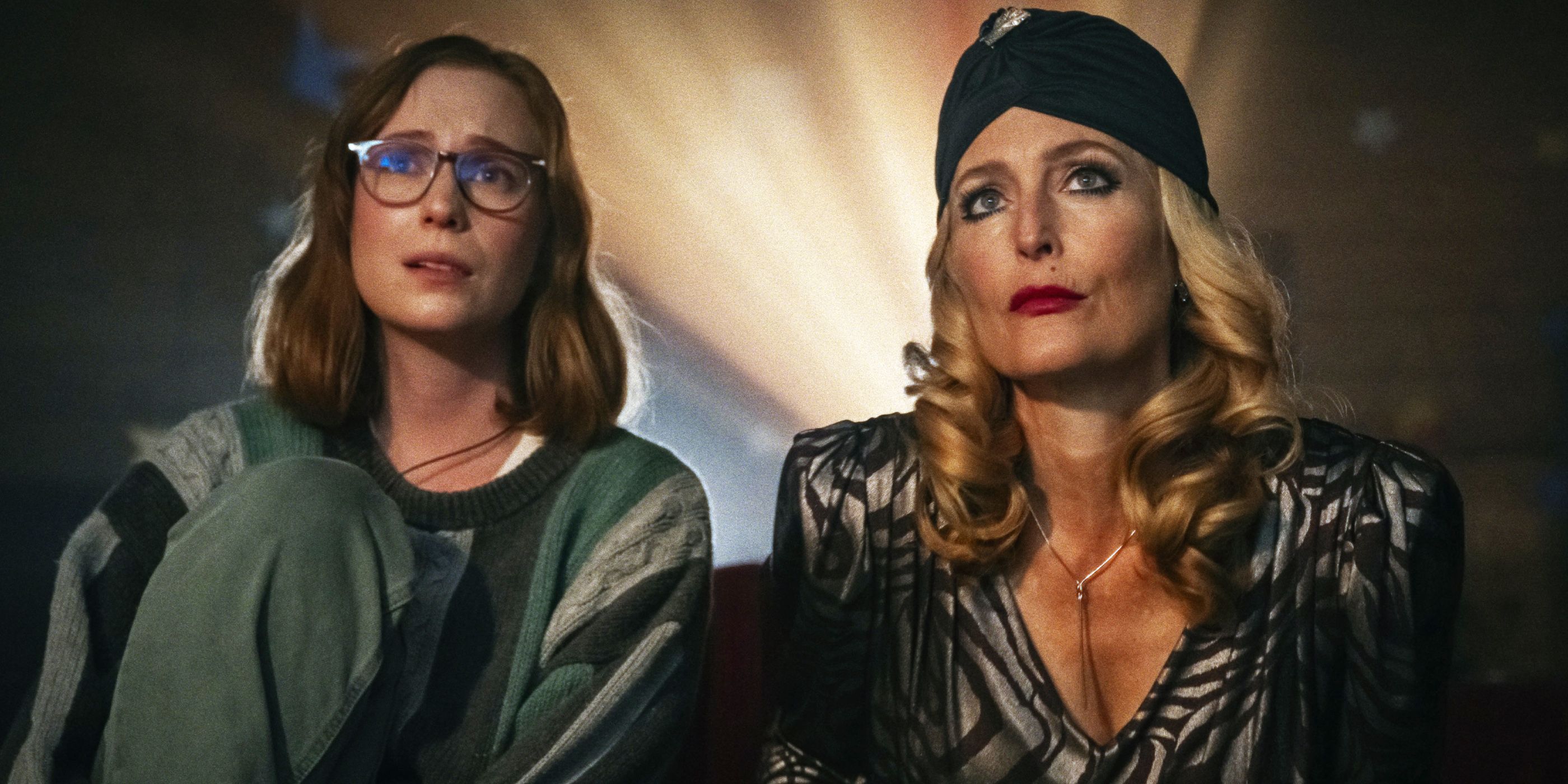
Teenage Sex and Death at Camp Miasma follows a young filmmaker, Kris Williams (played by Hannah Einbinder), who sets out to create the next reboot of the Camp Miasma franchise. She journeys to a defunct summer camp in the remote Pacific Northwest to meet the actress who played the franchise's original final girl, Billy Presley (played by Gillian Anderson). Loving references to Friday the 13th and Halloween show that this film is for the weird girls who watched too many scary movies growing up, but it's more than fan service — it's the most profound exploration of sexual fantasy ever put to film.
Schoenbrun Departs From Lynch's Dream Logic in One Important Way

Lynch's films slip in and out of the dream world, sometimes without warning or clear distinction. In Twin Peaks, many of Agent Cooper's breakthroughs are the result of revelations in his dreams. He sees another world with interpretable symbols which lead him to the truth he seeks. He sees a glowing horse, a giant, an owl, and these symbols mean something. In dreams, there are shortcuts to understanding big, difficult truths through feelings and images. Agent Cooper is seeking the truth through his dreams, actively trying to decode their messages. Some of Lynch's other characters, like Betty (played by Naomi Watts) in Mulholland Drive dream to escape reality. Her dream betrays her by allowing reality to intrude. Neither Agent Cooper nor Betty have control over the dream. The dream dictates the structure of the film and of the characters' revelations.
Lynch's dream logic works through a structure of symbolism. Schoenbrun's fantasy logic is about playing in the world of symbolism and its gaps. In Teenage Sex and Death, Kris and Billy share several sexually charged scenes before they try to have sex. After some frustration, Kris asks Billy to stop. Kris explains to Billy that she's never been able to "get there" with someone else without imagining she's the final girl in a Camp Miasma film. In her fantasy, she's explicitly a victim, explicitly objectified through the imaginary camera, watching herself be hunted by a faceless killer. The difference between dream and fantasy is that dreams are imposed on the dreamer, whereas one must participate in the fantasy.
Jane Schoenbrun Plays with Slasher Conventions
In Teenage Sex and Death at Camp Miasma, Schoenbrun weaves fantasy, film and reality together, so that it's not easy to tell them apart. Throughout the film, the sets transition between beautiful, obviously painted backdrops and more naturalistic sets. The images of soaring pink-washed mountains and glittering snow make no attempt to hide their artificiality. They evoke old Hollywood sets like those in Black Narcissus and The Wizard of Oz, reminding the viewer that they are watching a film. Even the more naturalistic interior settings have strange homages to movie culture, like a candy-wrapper light shade hanging over the bed in which Kris and Billy play out the film's central sexual fantasy. Through fluid storytelling, Schoenbrun suggests that fantasy (and film) may be just as true as reality, or maybe even truer.
The characters are also tongue-in-cheek aware of their own participation in the film. Kris is extremely aware of the tropes of the slasher genre, including its fraught history of sexism and transphobia. Billy appears onscreen for the first time out of the shadows, like the monster in a horror movie. When she speaks, she has a thick, almost silly southern drawl. The dialogue in the first act is slightly canned. Gillian Anderson has brought terrible dialogue to life in her career, so it's safe to say that this campiness is to challenge the viewer's understanding of what is real and what is fantasy.
'Teenage Sex and Death' Stays With You, Even After You Turn it Off

In the final act in which Kris and Billy finally play out Kris' fantasy, Teenage Sex and Death at Camp Miasma becomes its most convincing. Schoenbrun doesn't outright reject what makes the slasher problematic. Instead, through Kris, they play with it. Kris' fantasy of victimhood accepts the symbols of the slasher genre and then highjacks them for her own pleasure. She finally resists the urge to intellectualize the fantasy, to explain it or to censor it. Within the safety of fantasy, she and Billy can go as far as they want into the embarrassing, problematic world of the film that was the site of each of their sexual awakenings.
That's the pleasure of the slasher — to get as absurd and violent as possible, to wrap that violence up with sex, to watch teenagers die gory deaths, and to still be safe on your own couch. "If it gets too real, you can always turn it off" becomes a mantra of the film, speaking to the roles that horror and fantasy play in people's lives. Schoenbrun acknowledges the pleasure of being allowed to stay at a safe distance through the magic of film in Teenage Sex and Death, but they also acknowledge the real consequences of the slasher genre's values. For example, Kris can't have pleasure during sex without imagining violence. The film explores the complexity of the fantasy without judgment, but by ending with the vision of 8-year-old Kris watching Camp Miasma, the fantasy leaks into reality, reminding the viewer that when you turn off the movie, it doesn't really go away. Maybe the real difference between dreams and fantasy is that dreams tell the dreamer the truth, and fantasy constructs the truth, reshaping the world and the fantasizer too.
Lynch Seeks to Disturb, but Schoenbrun Seeks to Please

Schoenbrun's film plays within the conventions of the slasher genre while imagining what lies beyond those conventions, constructing a new truth. Their full-hearted exploration of feminine sexuality is a revelation in the industry. They acknowledge the symbol of the phallus, and the power it holds, and put it in the hands of a trans character. Then, they make it an object of pleasure in the sexual fantasy of two women who have each been wronged by the very film they are fantasizing about. Their pleasure comes from being able to remake the fantasy and engage with it on their own terms.
Schoenbrun's rich, psychological landscapes coupled with their commitment to the logic of fantasy makes it clear that they're the next David Lynch. Like Lynch, their films may at times be confounding, difficult to articulate, or misunderstood. For these innovative directors, film is a site of discovery, not just box office dollars. Lynch was skilled at finding the disturbing in the pleasurable: the dark underbelly of suburbia in Blue Velvet, and the pain of heartbreak in Mulholland Drive. Schoenbrun starts from the disturbing and explores the pleasure within it. In their films, the dark underbelly of society isn't the revelation, but pleasure is.

- Release Date
- August 7, 2026
- Runtime
- 112 minutes
- Director
- Jane Schoenbrun
- Writers
- Jane Schoenbrun
- Producers
- Dede Gardner, Jeremy Kleiner
KioskNews shows a cleaned-up reading view extracted from the publisher’s page — the original always lives on their site, not ours.