Haldhar Nag left school after Class 3, later won Padma Shri for his poetry
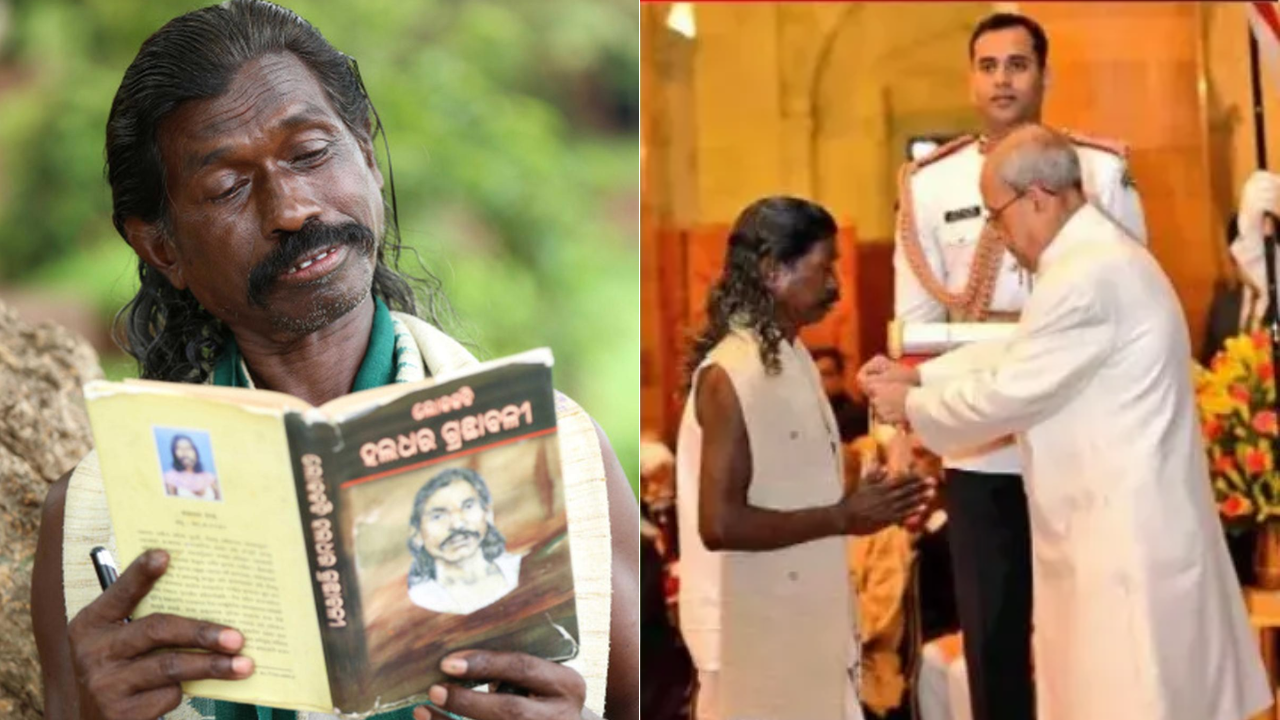
Haldhar Nag, the Odisha poet who studied only up to Class 3, received the Padma Shri in 2016 for his contribution to literature.
Haldhar Nag did not spend years in classrooms studying literature, nor did he follow the conventional path to becoming a recognised poet. He left school after Class 3, following his father’s death, and began working to support himself.
Decades later, his poetry in Kosli, also known as Sambalpuri, became the subject of doctoral research, and he received one of India’s highest civilian honours, the Padma Shri, in 2016.Nag’s story is not simply about a man who achieved recognition despite limited formal education. It is also about how a literary voice rooted in the language, landscape and everyday experiences of western Odisha found its way into academic institutions.According to a March 2016 TOI report, five scholars were pursuing PhD research on his poetry at the time. Sambalpur University was also compiling his writings into a collection intended for academic use. The poet, who had studied only up to Class 3, had become a subject of serious literary study.
From the classroom to a life of work
Nag was born on March 31, 1950, in Odisha’s Bargarh district. His father’s death when he was a child disrupted his education, and he could not continue beyond the third standard.
Instead of pursuing further studies, he entered the workforce. Accounts of his early life describe him working as a dishwasher at a local sweet shop before moving to a school, where he worked as a cook for 16 years.The work brought him into contact with the everyday life of a school, but it did not mean he returned to formal education. He eventually borrowed Rs 1,000 from a banker to start a small shop selling stationery and eatables to students.These details matter because Nag’s later literary recognition did not emerge from an established academic career or a conventional publishing network. His journey began with work, financial constraints and a life outside the formal institutions that typically shape literary reputations.Yet he continued to develop his writing in Kosli, the language associated with western Odisha that became central to his identity as a poet.
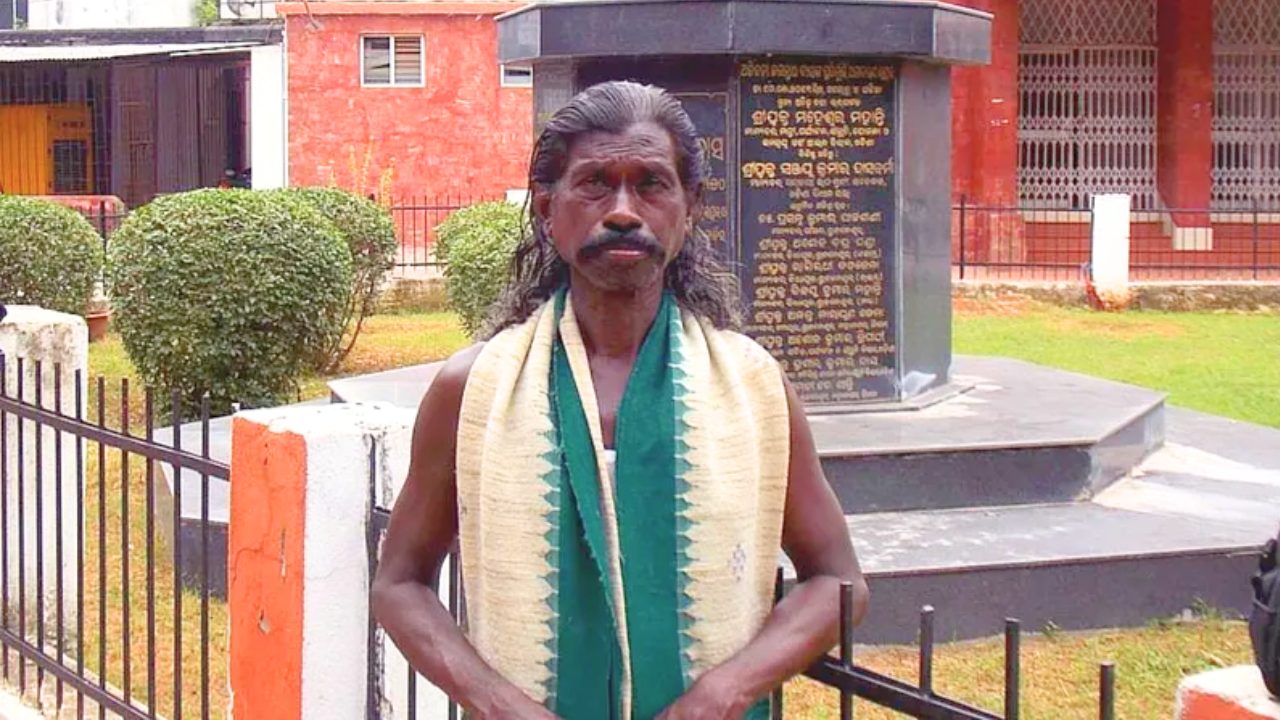
The Sahitya Akademi recognised Nag’s contribution to Koshali-Sambalpuri literature with the Bhasha Samman in 2017.
The poem that opened a new chapter
Nag’s first published poem, Dhodo Bargachh (The Old Banyan Tree), appeared in a local magazine in 1990. According to The Better India’s account, he had been writing folk stories in Kosli before publishing his first poem. The response encouraged him to send more work, and four additional poems were published.The banyan tree is a fitting starting point for understanding the literary world he would go on to build. Nag drew on the world around him, writing about nature, society, religion, mythology and social injustice.
His work was not confined to personal observations; it also addressed oppression and the concerns of ordinary people.His own view of poetry, reported by The Better India in 2016, was direct: “In my view, poetry must have real-life connection and a message for the people.”That emphasis on lived experience helps explain why his writing attracted attention beyond its original audience. Nag was writing in a language familiar to the communities whose lives and traditions informed his work, rather than building his reputation through an English-language literary establishment.He became known as Lok Kabi Ratna, a recognition of his standing as a people’s poet.
When his poetry became a subject for PhD research
The contrast between Nag’s formal education and his academic recognition is striking. In 2016, The Better India reported that five scholars were pursuing doctoral research on his poetry. The same report said Sambalpur University was compiling his writings into a collection called Haldar Granthabali-2, intended to be used in the university’s syllabus.The significance was not merely that scholars were studying an individual poet. Nag’s work offered material for examining the language, folklore, cultural memory and social realities of western Odisha through literature created outside the conventional academic system.His writing also formed part of a wider effort to give Kosli-Sambalpuri literature greater recognition. A poet who had not progressed beyond primary school had produced work that researchers considered worthy of sustained academic examination.The number of five doctoral researchers is a figure reported in 2016; it should not be treated as a verified count of scholars currently researching him. Nevertheless, the report establishes that his poetry had already become a subject of doctoral study at that time.
Recognition beyond his home region
Nag received the Padma Shri in 2016 in recognition of his contribution to literature. His standing in the literary world was also acknowledged by the Sahitya Akademi, India’s national academy of letters.The academy’s official records list him as a joint recipient of the 2017 Bhasha Samman for Koshali-Sambalpuri. Its biographical note identifies him as a writer in the language, notes that his works have been translated into Odia, Hindi and English, and lists works including Mahasati Urmila, Tara Mandodari, Veer Sundar Sai and Rasia Kavi.These recognitions place Nag’s work within a larger literary conversation, one that extends beyond the region in which he began writing.
His achievements also draw attention to the role of regional-language literature in preserving cultural traditions and recording experiences that may otherwise receive limited space in mainstream literary discussions.
A different measure of education
Nag’s story is sometimes framed as proof that formal education is unnecessary. That would be too simple a conclusion. His experience does not diminish the importance of schooling; rather, it shows that educational qualifications and literary ability are not the same thing.He missed out on years of formal education because of circumstances in childhood. He nevertheless developed a body of poetry that earned public recognition and attracted academic interest.The distinction matters. Nag did not need a doctorate of his own for his work to become worthy of doctoral research. His literary standing emerged from what he wrote, the language in which he wrote it and the cultural world his poetry recorded.His journey from leaving school after Class 3 to receiving the Padma Shri is remarkable in itself. But the more enduring part of the story is what happened to his words: they travelled from a local magazine into university study, from oral recitation into written collections, and from a regional literary tradition into wider recognition.Haldhar Nag’s life offers a reminder that a person’s education cannot be measured by certificates alone. Sometimes, the work of someone who had little opportunity to study formally becomes material through which others pursue the highest levels of academic learning.
KioskNews shows a cleaned-up reading view extracted from the publisher’s page — the original always lives on their site, not ours.