Take a trip around the world at Udon Thani’s horticultural expo
UDON THANI — What if a single walk through a garden could take you from the mountains of Montenegro to the tulip fields of Türkiye, from the Himalayas to the Mekong River, and into a greener vision of the cities of tomorrow?
That is the idea behind the Udon Thani International Horticultural Expo 2026, which opens on 1 November in Thailand’s northeastern province of Udon Thani, bringing together international gardens, cultural architecture, biodiversity and agricultural innovation in an unusual setting: a vast wetland where water occupies most of the landscape.
Running until 14 March 2027 at Nong Dae Wetland in Muang district, the expo will feature more than 32 international gardens representing 17 countries, alongside plant competitions, agricultural innovation exhibitions and gardens created by public and private organisations.
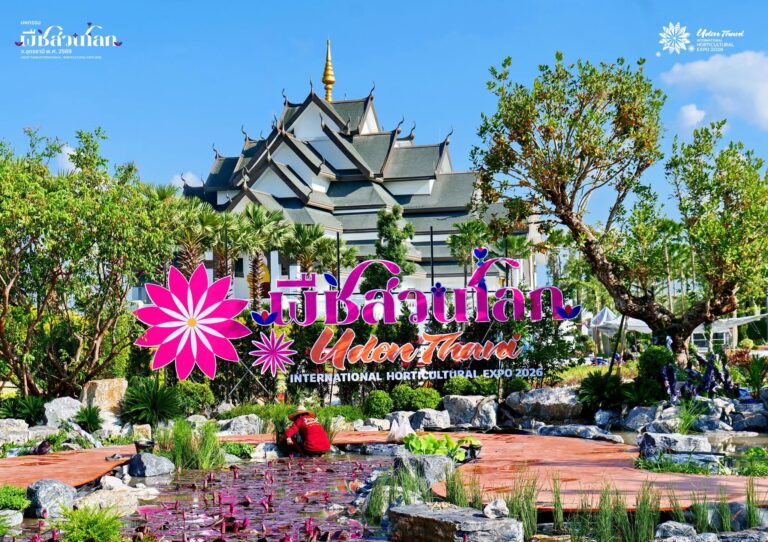
Under the theme “Diversity of Life”, the event aims to showcase not only the beauty of plants and landscape design, but also the different ways people around the world live alongside nature.
For visitors, it offers an opportunity to explore a collection of international landscapes without leaving Thailand, while discovering how gardens can tell stories about national identity, traditional wisdom and the future of sustainable living.
A world expo on a northeastern wetland
The venue is one of the expo’s defining features.
Covering nearly 2,000 rai, or about 320 hectares, Nong Dae Wetland has water covering an estimated 60-70% of its area. Organisers describe the event as the first horticultural expo in the world to be held on a wetland.
The setting also reflects the long relationship between water and life in Thailand’s Northeast, where rivers, wetlands and seasonal changes have shaped local livelihoods and traditions.
Rather than treating water merely as a backdrop, the expo places it at the centre of a wider conversation about biodiversity, environmental management and sustainable development.
Deputy Agriculture and Cooperatives Minister Watcharapol Khaokham said the ministry had worked with Udon Thani province and partners across sectors to prepare the event.
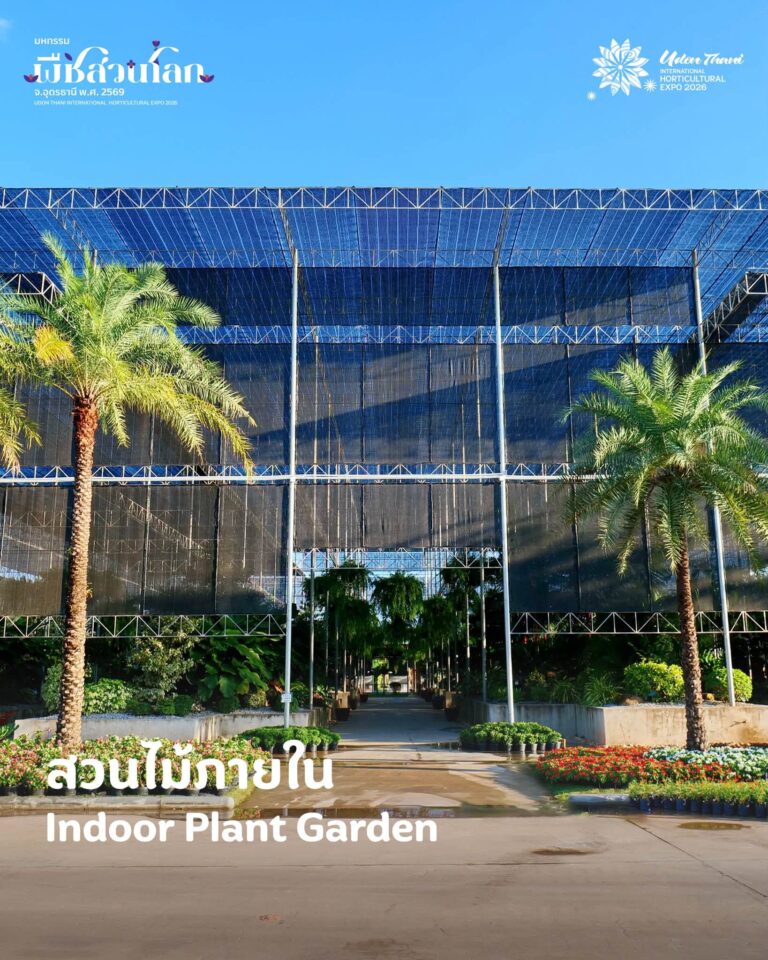
The main infrastructure and construction work has been completed, with remaining work focused on decoration and exhibition preparations.
Ten international garden highlights to explore
Each international garden presents a different interpretation of the relationship between people and nature. Some draw on centuries-old traditions, while others explore how technology and thoughtful urban planning could help create more sustainable communities.
Here are 10 highlights to look out for.
1. International Association of Horticultural Producers: Green cities for the future
The garden presented by the International Association of Horticultural Producers (AIPH) explores how urban environments can incorporate more greenery through the concept of “Green City for a Sustainable Future”.
Living green infrastructure, including green walls and roofs, demonstrates how plants can help absorb rainwater and reduce the urban heat island effect.
Another feature is a phytoremediation garden, which uses aquatic and wetland plants to help treat polluted water. The display offers a practical look at how landscape design can contribute to environmental management beyond simply making cities more attractive.
2. Colombia: From the Andes to the Amazon
Colombia’s garden celebrates the country’s remarkable biodiversity through the concept “Amazonas & The Andes”.
Visitors can discover a landscape inspired by the contrast between the Andes mountain range and the Amazon basin, two environments that support an extraordinary variety of plant and animal life.
Colourful Latin American architectural elements and houses decorated with cascading flowers add a cultural dimension to the display, combining natural diversity with the warmth and character of Colombian design.
3. South Korea: Traditional gardens meet smart technology
South Korea brings together traditional aesthetics and modern horticultural innovation under the theme “Green Future & Balance of Life”.
The garden features a traditional Korean pavilion, known as a jeongja, set among a pond and stone garden. The design draws on the calm, balanced atmosphere associated with traditional Korean gardens.
Alongside this heritage-inspired setting, a smart garden demonstrates how automated watering and environmental control systems can help manage plants, including those suited to wetland conditions.
The combination offers a glimpse of how traditional landscape principles can coexist with modern technology.
4. Montenegro: From black mountains to blue waters
Montenegro’s garden takes visitors on a journey through the country’s dramatic landscapes, from limestone mountains to the blue waters of the Mediterranean.
Under the theme “Wild Beauty: From Black Mountains to Blue Waters”, the display recreates elements of the country’s distinctive karst terrain using natural stone and waterways inspired by the Bay of Kotor.
The design highlights the contrast between rugged rock formations and coastal scenery, illustrating how geology and geography shape a country’s natural identity.
5. Pakistan: Gardens inspired by a historic civilisation
Pakistan’s garden connects the legacy of the Indus Valley civilisation with the challenge of adapting to climate change.
Its “The Cradle of Civilization & Green Resilience” concept draws inspiration from the country’s cultural heritage and the ability of plants to respond to changing environmental conditions.
A major feature is a Mughal-style garden inspired by the historic gardens of Lahore. Symmetrical layouts, flowing water and fountains reflect a tradition of formal landscape design in which geometry and water play central roles.
The display brings together historic architecture, garden craftsmanship and contemporary environmental concerns.
6. Nepal: From the Himalayas to the wetlands
Nepal’s garden explores the connections between the Himalayas, spirituality, nature and water.
Its concept traces the relationship between mountain environments and wetlands, reflecting how waterways sustain ecosystems and communities far beyond their sources.
The display evokes the tranquillity and spiritual significance associated with the Himalayas while connecting those ideas to Nong Dae Wetland itself.
For visitors, the garden offers a reminder that water links landscapes and people across vast distances, from mountain peaks to lowland wetlands.
7. Türkiye: The enduring legacy of tulips
Türkiye’s garden celebrates the biodiversity and horticultural heritage of Anatolia through the theme “Anatolia: The Gateway to Biodiversity”.
The display draws on Ottoman garden traditions, with particular attention to the tulip, a flower closely associated with Turkish cultural history.
Among the highlights are tulips in a variety of forms, including unusual needle-shaped varieties. The garden explores how a single flower can become an enduring cultural symbol while remaining part of a much wider story of plant diversity.
8. United States: Greener cities through innovation
The United States presents “Innovation for a Greener Tomorrow”, focusing on how technology can improve horticultural management and help communities respond to climate change.
Its “Urban Oasis” concept draws inspiration from vertical gardens and rooftop green spaces in major American cities such as New York and Chicago.
The display illustrates how urban areas with limited ground space can incorporate vegetation into buildings and other structures, bringing greenery into densely developed environments.
It also highlights the potential role of smart technology in making urban green spaces more efficient to maintain.
9. Bhutan: Happiness in harmony with nature
Bhutan’s garden centres on the philosophy of “Happiness in Harmony with Nature”, reflecting the country’s emphasis on Gross National Happiness and a balanced relationship between development and the natural world.
A traditional pavilion inspired by Bhutanese dzong architecture features carved wooden details and the eight auspicious symbols known as Ashtamangala.
The display connects architectural craftsmanship with a broader philosophy that places human well-being and the natural environment alongside material development.
10. Laos: The Mekong, a river of life
Laos brings the cultural and spiritual significance of the Mekong River to the expo through the theme “Mekong: The River of Life and Spiritual Bonds”.
The river has long connected communities, livelihoods and traditions across mainland Southeast Asia. The garden reflects those ties through the Lan Xang Pavilion, featuring a curved roof, carved wooden details and gold-coloured decorative patterns.
Inspired by Lao architectural traditions, the pavilion evokes cultural connections with Vientiane and Luang Prabang, the latter recognised as a UNESCO World Heritage Site.
The display offers a familiar regional perspective on the expo’s wider theme: nature is not simply scenery, but an integral part of everyday life, cultural identity and collective memory.
More than a collection of gardens
Taken together, the international displays offer different perspectives on what a garden can represent.
A garden may preserve architectural traditions, celebrate a country’s biodiversity or recreate a landscape thousands of kilometres away. It can also demonstrate how plants help manage water, reduce urban heat and make cities more liveable.
These ideas give the Udon Thani expo a broader purpose beyond sightseeing. The gardens serve as an introduction to different approaches to conservation, landscape planning and sustainable development, with the wetland setting reinforcing the importance of water and ecological balance.
The event also places Udon Thani on the international horticultural calendar, bringing a large-scale international exhibition to Thailand’s Northeast.
For travellers, it provides a reason to visit the province during the cooler months, explore the gardens at a relaxed pace and experience the region through an event that combines nature, architecture and culture.
Plan your visit
The Udon Thani International Horticultural Expo 2026 will run from 1 November 2026 to 14 March 2027 at Nong Dae Wetland in Muang district, Udon Thani province.
- Opening hours: Daily from 08:00 to 20:00
- General admission: 199 baht
- Tickets: Available at All Ticket counters at 7-Eleven stores nationwide, through the All Ticket website and at ticket booths at the venue.
With more than 32 international gardens from 17 countries, the expo invites visitors to discover how landscapes can express cultural identity, preserve natural heritage and offer ideas for a greener future, all within the distinctive setting of a northeastern Thai wetland.
KioskNews shows a cleaned-up reading view extracted from the publisher’s page — the original always lives on their site, not ours.