Rising tide: Shanghai climbs to No 2 maritime hub amid China push to grow shipping clout
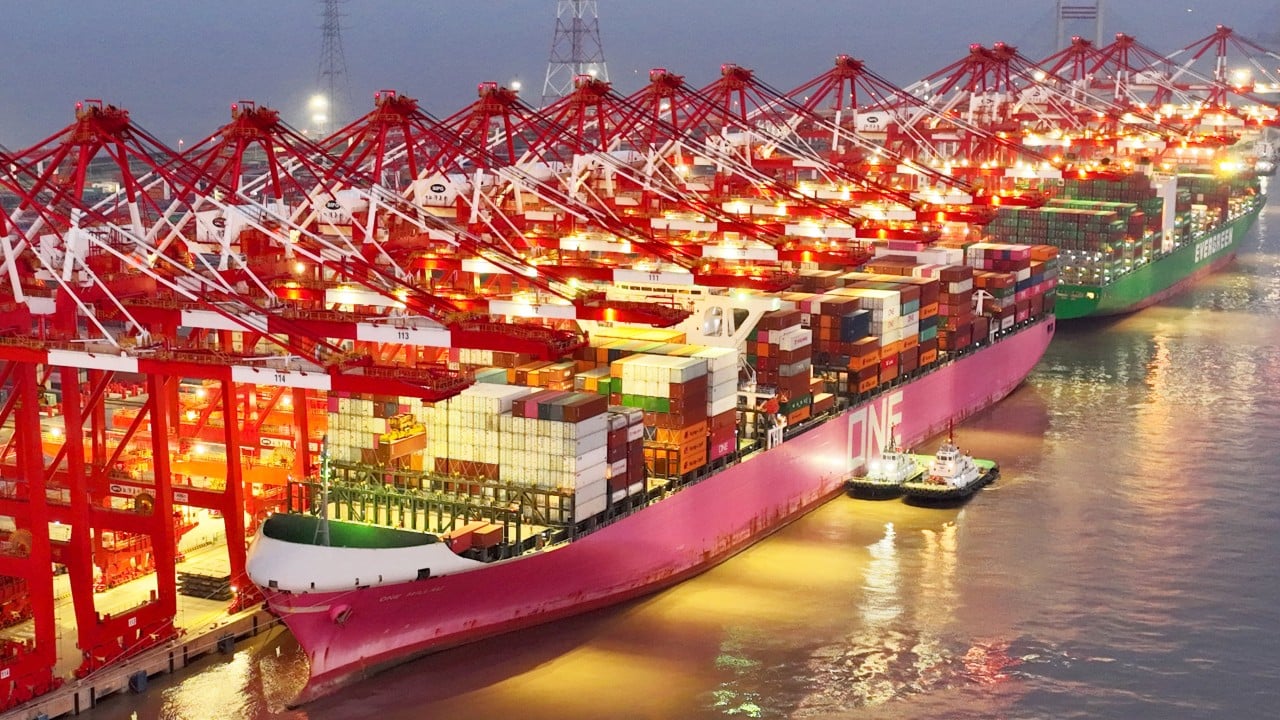
Shanghai has risen to second place in a ranking of major global maritime hubs, its highest position yet, as China expands its footprint in global shipping amid an increasingly complex trade environment.
The Chinese megacity secured the spot largely on the strength of its combined industrial and technological base, though it continued to lag global rivals in maritime services, according to The Leading Maritime Cities of the World 2026 report by DNV and Menon Economics, two Norway-based independent organisations.
The biennial index, launched in 2015, ranked Shanghai fourth in 2022 and 2024. Singapore retained the top spot this year, while Hong Kong was 11th, according to the report released last week.
The upgrade comes amid a shifting global maritime landscape increasingly shaped by geopolitical rivalry, supply chain resilience and fragmented regulations.
China has steadily expanded its influence in international shipping, dominating global container throughput, shipbuilding and smart port construction as it pushes to become a maritime power.
Speaking at a maritime merchants forum in Hong Kong on Monday, Leung Chun-ying, Hong Kong’s former chief executive, said supply chain resilience was under pressure and the shipping industry was “at a turning point”.
The ranking report said Shanghai’s rise to second place reflected its “strength across the physical and technological foundations of the maritime economy”.
The city’s combination of world-leading container throughput, liner connectivity, shipbuilding output, maritime patents and fleet size – reinforced by close links to China’s manufacturing, cargo and industrial system – showed how concentrating multiple segments of the maritime value chain in a single hub could turn industrial scale into broader maritime influence, it said.
The index evaluates global maritime cities on five core pillars: shipping centre capacity, maritime finance and legal services, maritime technology, ports and logistics, and comprehensive urban competitiveness.
Shanghai ranked first in maritime technology, second in ports and logistics, and third in shipping, but failed to break into the top five in the two other fields.
The city’s progress reflected a shift from a volume-driven cargo port into a broader maritime hub, though gaps in finance and legal services remained, analysts said. European centres such as London and Rotterdam retained advantages in these areas, according to the report.
Shanghai’s weakness remained high-end services such as international shipping brokerage, ship management and maritime arbitration, Zhang Yongfeng, chief consultant at the Shanghai International Shipping Institute, said in an interview with the official China Ship News in August.
He added that while Shanghai’s maritime arbitration caseload rose 38.5 per cent year on year in 2025, there was still a “gap with London’s international influence”.
Shanghai’s current development blueprint sets a 2030 target for “basically building” an international shipping centre with “significantly enhanced global shipping resource allocation capacity”, a goal municipal authorities explicitly linked to China’s ambition of becoming a shipping power.
State media reports have repeatedly described the 2026-30 period as “a critical phase” in China’s transition from a major maritime country to a maritime power.
KioskNews shows a cleaned-up reading view extracted from the publisher’s page — the original always lives on their site, not ours.