[Editorial] Intelligence rift between Korea, US cannot be allowed to fester
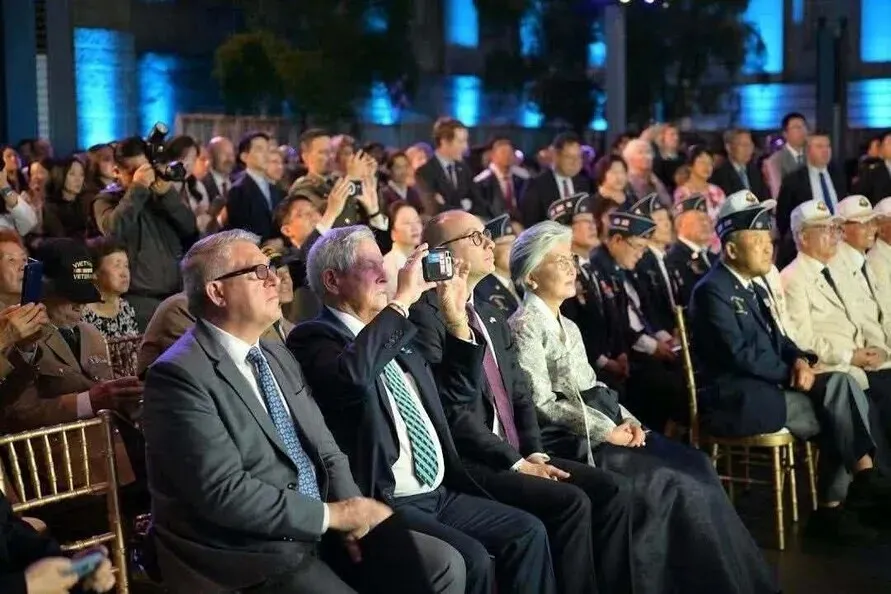
Ambassador Kang Kyung-wha and guests attend a Korean National Day and Armed Forces Day reception hosted by the Embassy of the Republic of Korea at the Smithsonian American Art Museum in Washington, DC, on Sept. 29, 2026. (courtesy ROK Embassy)
It was recently revealed that the US government asked South Korea’s National Intelligence Service (NIS) to sit out of a working group meeting about North Korea’s cyber threat that was held in the US in late June.
This suggests that the dispute between the South Korean and American intelligence communities — a dispute set off by Unification Minister Chung Dong-young’s remarks about a North Korean nuclear facility in Kusong in March — is spreading to other areas.
While the NIS insisted that the matter is “already behind us,” the fact is that such an unusual move has stirred up considerable anxiety among the South Korean public.
Along with determining the exact reasons behind the US’ behavior toward South Korea, which it has described as a “model ally,” the Seoul must do its best to clear up misunderstandings and disagreements between the two countries.
While responding on Thursday to news reports claiming that the NIS was asked by the US not to attend the working group meeting between foreign policy officials from Washington, Seoul and Tokyo, the NIS acknowledged that “there was a partial misunderstanding a few months ago, as described in the report, but that is already behind us.”
“We are currently working closely [with the US] in all areas of national security, including cyber issues and North Korea,” the intelligence agency added.
The US government also fiercely objected to a news story claiming that the National Geospatial-Intelligence Agency (NGA), which reports to the Pentagon, had rejected a proposed visit by NIS Director Lee Jong-seok in March, describing the report as false.
Despite the NIS’ insistence that the Korean and American intelligence are cooperating closely, it does seem that the dispute between the two sides continues to fester.
The US has yet to lift restrictions on sharing information about North Korea’s nuclear program that it imposed after Chung’s comments about Kusong.
Furthermore, there have been reports that the US government has recently been slow-walking visa approval for NIS agents awaiting assignments in the US.
Also notable is the fact that the US officials who attended Korean National Day and Armed Forces Day reception, an annual diplomatic event held on Sept. 29 this year at the Republic of Korea Embassy in Washington, were lower-ranking than last year’s officials.
A range of explanations have been offered for the dispute simmering between the two countries, including online retailer Coupang’s legal issues following a massive data leak and a delay in South Korea’s pledged investment package in the US.
Another theory is that Washington is pressuring President Lee Jae Myung to sack members of his administration — such as Unification Minister Chung Dong-young and NIS Director Lee Jong-seok — who have advocated greater autonomy in South Korea’s policy toward North Korea and China.
But Seoul and Washing also appear to be mending fences. One sign is Lee Jae Myung’s surprise meeting with US President Donald Trump on the sidelines of the UN General Assembly in New York on Sept. 22, which was arranged after South Korea’s recent announcement of a planned US$200 billion investment in the US.
Seoul should work proactively to clear up disputes while retaining a measure of autonomy in our foreign policy.
KioskNews shows a cleaned-up reading view extracted from the publisher’s page — the original always lives on their site, not ours.