Mexican Americans are Mexico’s untapped opportunity: A perspective from our CEO
Being married to a woman born in India, I have watched in amazement over the years at the level of engagement and activity that the Indian American community has with India. I think a lot of that starts with a deep-rooted sense of pride. Despite the country’s economic and other challenges, India’s education system instills a sense of pride in its history, culture and contributions to the world — a pride that people carry with them when they move abroad. You often see a similar sense of pride among immigrants from other countries. Many Indian businesses in the United States, despite the geographical distance from India, stay closely connected with the country. They look to India for customers to grow, for suppliers to source from, and for talent to staff their teams. They look to create businesses that can operate in both countries and take advantage of the strengths of each country.
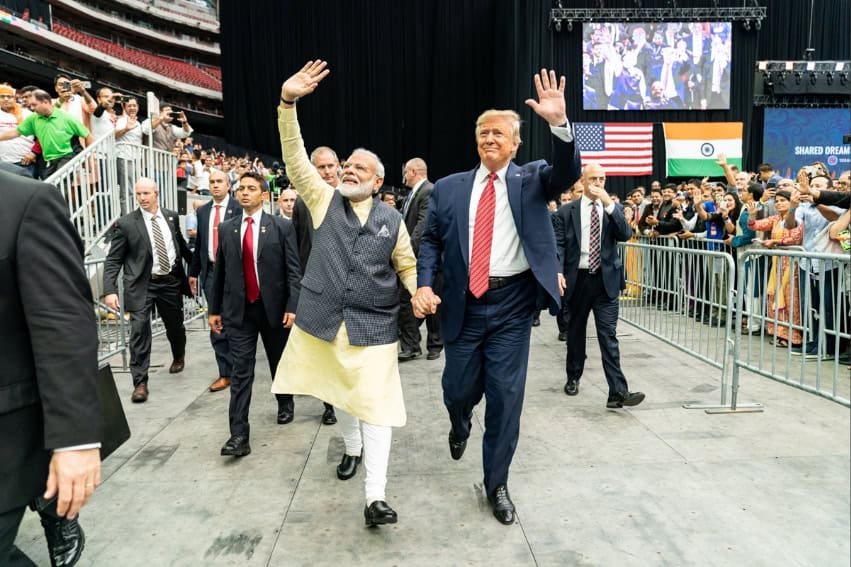
Just as importantly, the Indian government has worked hard to keep Indian Americans informed and educated about modern India — motivating them to stay engaged with the country. India’s prime minister, Narendra Modi, has taken 10 trips to the U.S. since he was first elected prime minister in 2014. On these visits, he often focuses on the business community. He has done rallies in Madison Square Garden in New York City, met with technology executives in San Francisco, and on his “Howdy Modi” tour in 2019, even gave a speech to over 50,000 people in a football stadium in Houston, Texas. His messages to the Indian American community — urging them to remember and invest in India — are crystal clear. He is aware that the Indian American community, estimated to be 5.6 million people, less than 0.4% of the Indian population in India, is vital to the success of his country. He has leveraged their cultural pride and inspired them to turn it into action. It’s about more than a community remembering its roots; instead, he has turned it into a recognition of the diaspora’s central role in India’s future.
By comparison, an estimated 38 million Mexican Americans live in the United States, equivalent to almost 30% of the Mexican population actually living in Mexico. A recent study by the Latino Donor Collaborative estimated the GDP of Hispanic Americans (of whom over 60% are Mexican) to be US $4.4 trillion, which would make it the fourth-largest economy in the world.
Despite the geographic proximity of Mexico to the U.S., the significant trade between the two countries, and the massive Mexican diaspora in the U.S., Mexican presidents have rarely spent much time in the U.S. President Andrés Manuel López Obrador, Sheinbaum’s predecessor, came to the U.S. just five times in his six years in office, each time to attend a large global conference like U.N. Security Council meetings or the APEC summit. Sheinbaum, in over two years, has gone just twice: once to attend the FIFA World Cup draw and the other time to attend the FIFA World Cup final. Neither president spent significant time engaging the Mexican American community or the business community in the U.S.
Think about that for a moment: India’s Prime Minister has come to the U.S. more frequently over the past decade than Mexico’s presidents have. For some further perspective, Canada’s Prime Minister, Mark Carney, has been to the U.S. seven times already in just his first 18 months in office. Other members of Sheinbaum’s cabinet do travel more often to the U.S. Her economy minister, Marcelo Ebrard, frequently travels to the U.S., usually to Washington, D.C., for trade negotiations. Her foreign minister, Roberto Velasco, has also gone several times in his first few months in office, but does not yet have the experience or gravitas of la presidenta.
So what is going on here? Does it matter that Mexico’s presidents for the past eight years have spent so little time in the U.S.? And if it does matter, why?
I think Mexico is missing out on a huge opportunity. It’s extremely important to understand that, despite the significant Mexican American population in the U.S., net migration of Mexicans to the U.S. has been essentially flat for nearly two decades. What that means is that many, if not most, Mexican Americans living in the U.S. today have an increasingly outdated perspective on modern-day Mexico. Many are second or third generation, and as a result have few direct ties to the country. Many others know little more about the country than what they hear from family members back in their hometowns. Still others have never been to Mexico, or perhaps haven’t been there for decades. Most can’t fathom doing business in Mexico, let alone moving back there someday.

I have seen this firsthand countless times. I have had hundreds of conversations with Mexican Americans throughout the U.S. who often know shockingly little about Mexico. They know where their family is originally from. They are, of course, connected culturally through language, religion, food and music. But they often recite the same generic, outdated and negative soundbites about the country that a typical non-Mexican American would have. When asked, they almost always focus on the violence, the cartels, the drug problems, etc. Both the U.S. and Mexican media are in part to blame for this, but it goes beyond that.
As our team was developing MND Kids and was speaking to dozens of Mexican American school administrators from majority Mexican American school districts, we were constantly amazed at how many of them had never been to Mexico. Sadly, when asked why, many of them cited violence and didn’t even express a desire to visit. I have been equally shocked at how many Mexican American businesspeople I’ve met who haven’t considered Mexico as a place to grow their businesses with new customers, to expand their supplier base, or to build a bi-national business that taps into the talent of Mexico. There are many tens of thousands of medium and small businesses that could benefit from doing business in Mexico. Let me be clear: I am not saying that Mexican Americans should engage with Mexico out of obligation, but rather see engagement as an opportunity for their own business or family.
It’s also important to point out that millions of Mexican Americans send remittances (over US $60 billion in 2025) back to family members in Mexico each year. As Sheinbaum has often said, these people are quite literally modern-day heroes for the sacrifices they make by working hard abroad, away from family and friends, while sending money back to support their communities.
Failing to build stronger ties with the diaspora is a huge missed opportunity, and the Mexico News Daily team is certain that we can and must play an important role in further engaging this community. I personally have been working very hard to actively find ways for us to do so, including attending the national conferences of the U.S.-Mexico Chamber of Commerce in Washington, D.C., and the U.S. Hispanic Chamber of Commerce in Fort Worth, Texas, in just the past few months. I have also met with Ana Valdez of the Latino Donor Collaborative to explore collaboration with her organization, and I just recently met with the newly formed American Mexican Leadership Council to find out how we can work with them.
Meet Ana Valdez, a Forbes ’50 over 50′ illuminating the Latino narrative in the United States
The following is a summary of what the MND team has been working on, as well as a preview of what is coming soon:
- Preparing a bi-weekly business newsletter for the U.S. Chamber of Commerce in Mexico – Active
- Preparing a monthly business newsletter for the U.S.-Mexico Chamber of Commerce chapters of California, Houston and Miami, with more chapters to come – Active
- Creating more business newsletters with other U.S.-Mexico organizations – Coming soon
- Publishing weekly MND Intelligence reports that educate and inform about Mexico with data, not opinions – Active
- Publishing MND Kids as a tool to educate, inform and engage Mexican American kids in the U.S. about Mexico. – Active
- Launching MND en Español to reach a broader audience of Mexican Americans who might prefer to read in Spanish – Coming soon
- Engaging with the Mexican government to inspire them to leverage our platform to connect with both Mexican American communities and foreign commuities in Mexico – Coming soon
- Launching a new podcast targeting the Mexican American community – Coming soon
- Publishing a deep-dive series on Education in Mexico to highlight problem areas, as well as opportunities for engagement and improvement – Coming soon
We are certain that both countries can achieve massive benefits from a more actively engaged Mexican American diaspora. The team at MND will do our part to educate and inform the Mexican American community, and to inspire leaders to increase the engagement between the two countries. We have no doubt that a more actively engaged diaspora can accomplish great things.
Travis Bembenek is the CEO of Mexico News Daily and has been living, working or playing in Mexico for nearly 30 years.
KioskNews shows a cleaned-up reading view extracted from the publisher’s page — the original always lives on their site, not ours.