‘Inconvenient truth’: Man City case spotlights realities of UK-UAE ties
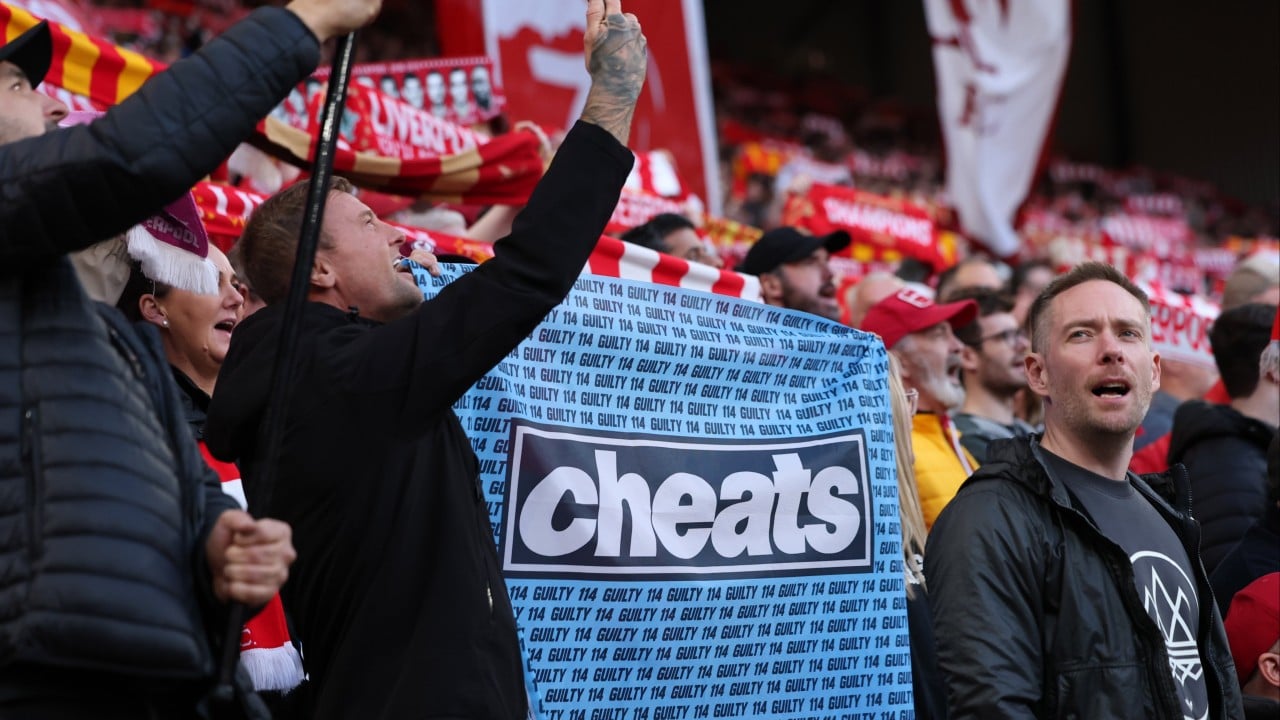
When Liverpool fans greeted Manchester City at Anfield on Sunday with jeers and banners demanding the Abu Dhabi-owned football club be relegated, they took aim at what critics have long dubbed “sportswashing” – the practice of using high-profile sports investments to launder a tarnished international reputation.
Focusing solely on public relations, however, obscures a much deeper network of high-stakes diplomacy and geopolitical economics between London and Abu Dhabi.
The reality behind the United Arab Emirates’ acquisition of the club is an “inconvenient truth” rather than a mere branding exercise, according to Simon Chadwick, a leading sports business expert and co-editor of The Geopolitical Economy of Football: Where Power Meets Politics and Business.
Rather than buying influence through sport, Sheikh Mansour bin Zayed al-Nahyan’s 2008 takeover was the result of “intense diplomacy” that subsequently helped London navigate the global financial crisis that struck later that year, Chadwick said.
An emergency £7 billion bailout of Barclays Bank organised by Sheikh Mansour, involving Emirati and Qatari sovereign wealth funds, spared cash-strapped British taxpayers from footing the bill.
However, it later transpired that Barclays misled shareholders about the mechanism of the UAE’s £3.25 billion share of the bailout. They were given the impression that Sheikh Mansour had invested in his personal capacity, rather than through Abu Dhabi’s International Petroleum Investment Company, triggering a lengthy legal battle with British firm PCP Capital Group.
It ended in 2021 with a British court finding Barclays guilty of “serious deceit”.
Nevertheless, the City acquisition remained “part of a diplomatic landscape that saw Britain and the UAE drawing closer together”, said Chadwick, a professor of Afro-Eurasian Sport at the Emlyon Business School in France.
This was evident during Chinese President Xi Jinping’s visit to Britain in 2015. Rather than touring Anfield or Old Trafford, home of Manchester United, Xi went to City, where he was prominently photographed alongside then British prime minister David Cameron and Chancellor of the Exchequer George Osborne.
Chadwick, himself a generational fan of Championship team Middlesbrough, said it was “inappropriate” to describe the City case as sportswashing.
“This is not sportswashing, it’s sport diplomacy,” he said.
“The British government was part of this and now, of course, through this diplomatic activity, we’ve got a level of interconnectedness between the UAE and Britain the realities of which are proving to be unpalatable to a lot of people.”
These realities are reflected by the £30 billion of investments in Britain made by UAE sovereign wealth funds and state-owned enterprises over the last five years.
Alongside the much-vaunted urban renewal of Manchester as part of Sheikh Mansour’s strategic investment in the Blues, these injections into Britain’s defence, technology, life sciences and connectivity infrastructure have been a welcome boost after the Covid pandemic wreaked economic havoc – much like the Barclays bailout in 2008.
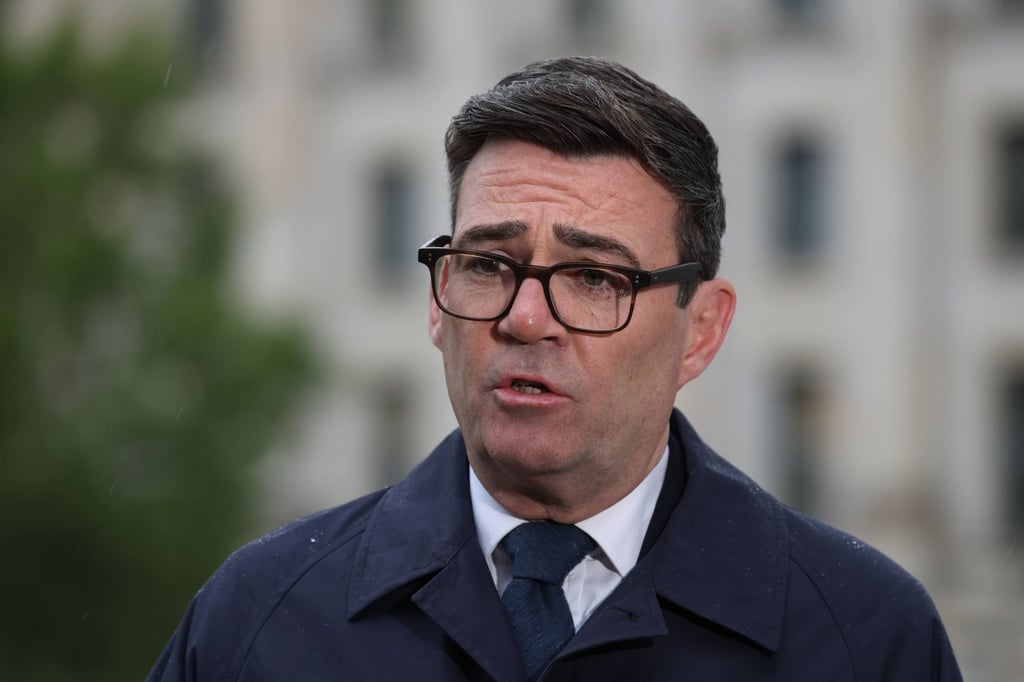
As mayor of Manchester during the Emirati-funded renewal of Britain’s second biggest city, Prime Minister Andy Burnham now finds himself trying to pull off a diplomatic rescue act to avert retaliation by the UAE.
Downing Street has made no secret of its worries that action by independent football regulators against City’s Emirati owners could have serious economic consequences.
Burnham, therefore, appears prepared to weather the domestic political storm, telling the BBC in an October 1 interview that he would be “really concerned to lose them” given that the UAE had been “such a huge partner” in building modern Manchester and turning City into a global force.
The prime minister’s initial response to the independent commission’s verdicts – which found the club’s leadership deliberately obstructive and evasive – was thus “tone deaf”, according to Guy Burton, a Brussels-based international relations researcher and co-host of The FootPol Podcast, a sports show focusing on the intersection of football and politics.
British newspapers have also noted that the Prime Minister’s Office, when approached for comment, has not disputed their reports that the UAE could freeze its investments in the country if independent regulators deem Sheikh Mansour’s ownership of City not “fit and proper”.
Shortly after taking office in July, Burnham called four Gulf leaders, including Mansour’s elder brother UAE President Sheikh Mohamed bin Zayed al-Nahyan, to reiterate British support for their defence against Iranian air strikes being carried out in response to attacks by the US and Israel.
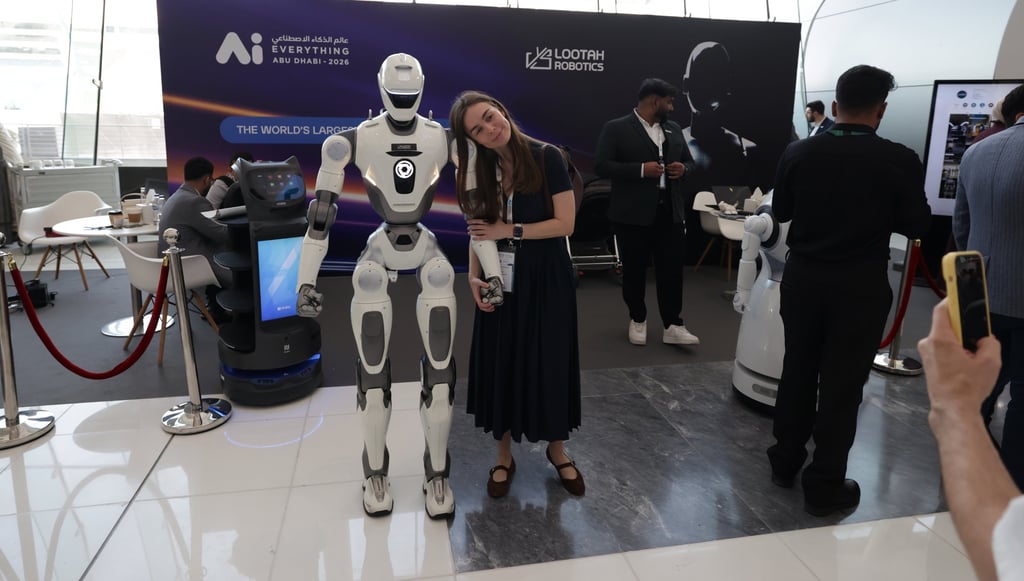
Their discussion further included ideas to “step up collaboration on technology and AI”, a Downing Street spokesman said in a statement.
The UAE is investing tens of billions of dollars in data centres, AI and other collaborations with US and European firms as part of a strategic drive to become a global leader in the field.
In addition to Burnham’s experience as Manchester mayor, his expectations of further UAE investment were fuelled by the free-trade pact Britain agreed with the six Gulf Cooperation Council states – the UAE, Qatar, Saudi Arabia, Kuwait, Bahrain and Oman – in May.
London hopes the deal, the first free-trade agreement between the GCC and a G7 country, could boost the UK economy by an estimated £3.7 billion (US$4.9 billion) a year and increase wages by £1.9 billion annually in the long run.
The UAE is Britain’s biggest economic partner in the GCC, accounting for £25 billion of the £53 billion in bilateral trade in 2025.
It is home to about two-thirds of the roughly 300,000 British nationals living in the Gulf monarchies, with most clustered in Dubai, the country’s commercial centre, and more than 5,000 British-owned businesses.
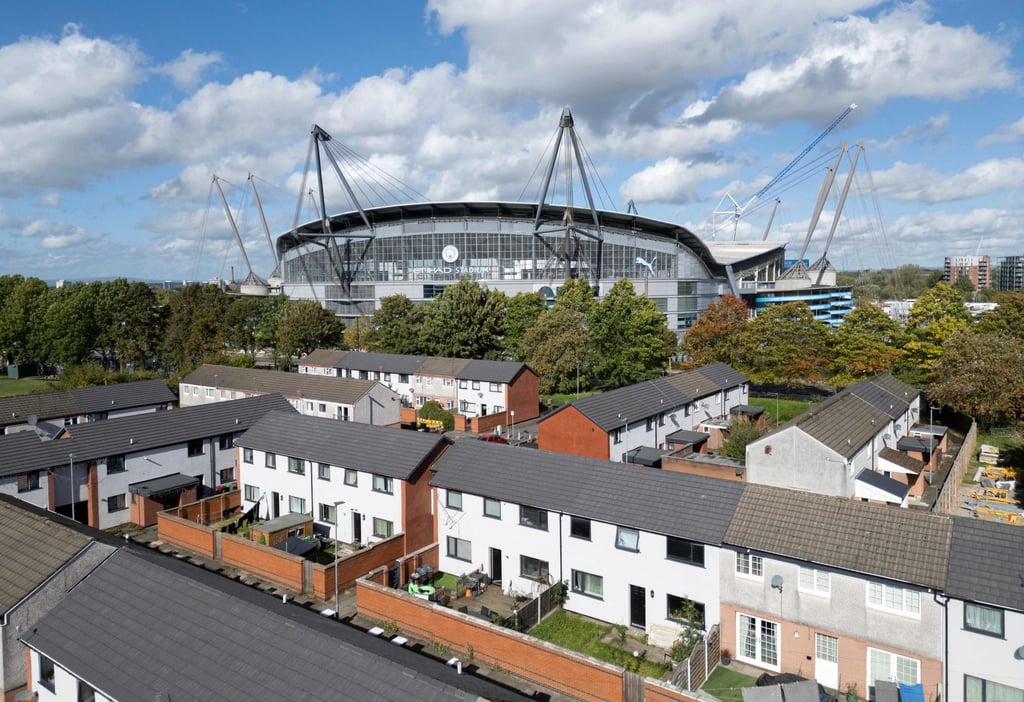
With City’s appeal against the verdicts and further deliberations pending, any Premier League sanctions are unlikely to be unveiled until after the end of the season in May.
Burton also predicted additional fallout from other clubs “who feel they missed out on financial opportunities because of City’s financial doping”, much of which would play out during and after May, and “for years to come”.
“There are a lot of twists and turns still to come in this story, much as there are in the wider instability in the region,” Burton said.
With so much at stake, Burnham’s vow not to politically interfere in the case may ultimately prove to be hollow.
City’s case, the governance and application of rules within the Premier League, and the thriving relationship between Britain and the UAE “are embedded within a very dense network of interconnections between the two countries”, Chadwick said.
That means “it is an inconvenient truth for many people” that the City case might not result in the strict application and enforcement of rules through a “set of draconian sanctions”.
Instead, the outcome could be a “negotiated diplomatic settlement”, Chadwick said.
KioskNews shows a cleaned-up reading view extracted from the publisher’s page — the original always lives on their site, not ours.