South Korea struggles to curb sexual exploitation sites 10 years after Soranet scandal
A decade after the shutdown of Soranet – a sprawling online hub for secretly filmed and non-consensual sexual videos that became a symbol of South Korea’s digital sex-crime crisis – the country is still struggling to stamp out similar networks and copycat sites that have emerged in its wake.
Their prevalence reflects the difficulties of deterring such illegal activities, policing the online space and changing societal attitudes towards women.
Last month, a man was detained over an alleged Soranet offshoot that investigators said shared more than 2,000 sexually explicit videos, illegally filmed material and deepfakes.
The site also allegedly recruited participants for partner-swapping sessions that were later filmed and uploaded, while members shared photographs of family members and acquaintances so users could rate their bodies.
The case highlights the challenge South Korea faces in tackling the darker side of the online space despite tougher laws and more aggressive police investigations.
Soranet was home to thousands of illegal pornographic videos viewed and shared by more than a million users in South Korea. The site featured videos secretly filmed in toilets and changing rooms, as well as intimate footage posted by former partners without the consent of the women recorded. Some victims who appeared in the videos later took their own lives.
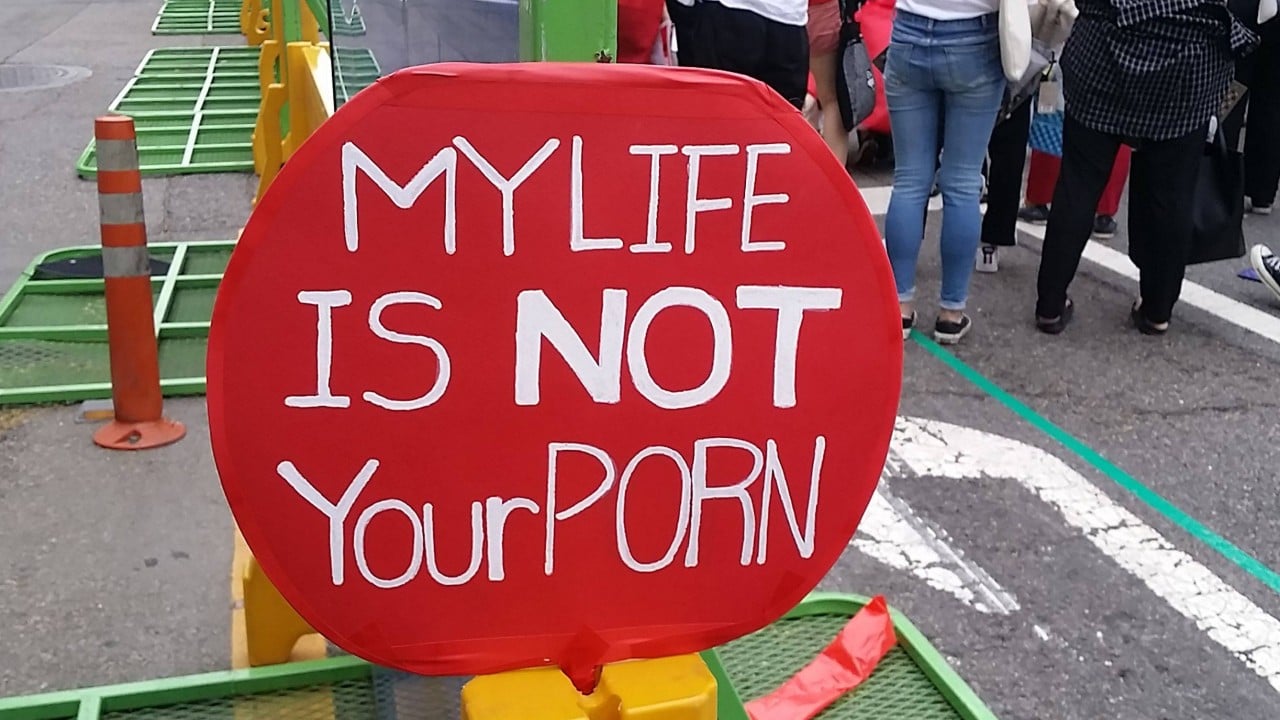
A public outcry, including large street protests organised by women’s groups, put pressure on the government. Authorities later arrested Soranet’s operators and shut down the site in 2016.
But the closure did not prevent similar sites from emerging, particularly small networks that have eluded the scrutiny of authorities.
Tougher laws
In May, police shut down a Soranet-inspired site known as the “Honours Club” after discovering that about 6,300 members had shared and watched photographs and videos of group sex and orgies facilitated through the platform.
Another infamous site, Yadong Korea, resurfaced last month under the same name after it was shut down in August, prompting the country’s feminist political group, the Women’s Party, to urge the police to reopen investigations into illegal pornography networks.
A police officer in Seoul was recently detained on suspicion of creating and distributing hundreds of AI-generated sexually explicit deepfakes and possessing about 5,600 illegal sexual images and videos.
The officer was caught following an undercover investigation by the Busan Metropolitan Police Agency into a Telegram chat room where such images were circulated. He was also suspected of possessing child sexual exploitation material and creating more than 400 AI-generated images and videos depicting acquaintances as nude.
During the molka, or spycam, crisis of the 2010s, the government strengthened laws against non-consensual distribution of intimate images, regardless of who originally recorded them.
In 2020, the Nth Room case further exposed how online platforms could be used to produce, sell and blackmail victims with sexually exploitative material. It led to the so-called “Anti-Nth Room Act”, which expanded criminal liability beyond creators and distributors to buyers and viewers.
Purchasing, downloading or knowingly viewing illegally filmed sexual exploitation material carries a sentence of up to three years in prison or a fine of 30 million won (US$22,440).
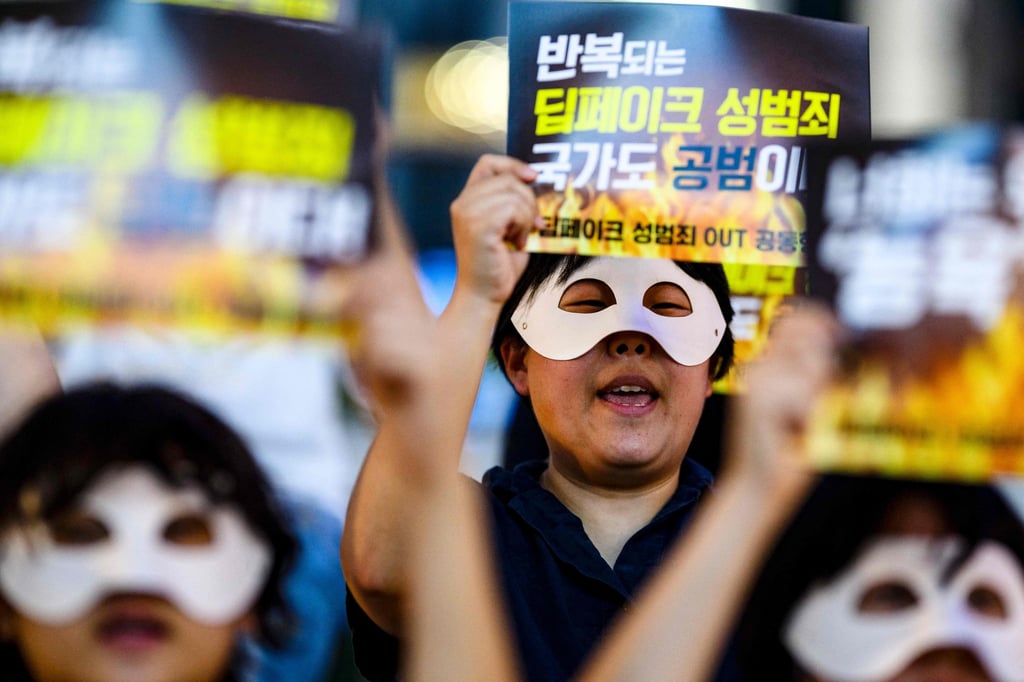
South Korea subsequently overhauled its laws on deepfakes following public outrage over Telegram-based sex crime rings that distributed doctored images of women and girls.

Creating sexually explicit deepfakes carries up to seven years in prison or a fine of 50 million won, while possessing, purchasing, storing or knowingly viewing such material can also result in criminal penalties.
An Gab-chul, a lawyer at Gammyung Law Firm who specialises in sexual crimes, said the law was now clearer on such offences.
“There are cases where the footage was originally recorded with the person’s consent. But if that material is later distributed without the person’s consent, that in itself constitutes a violation of the law,” An said.
But tougher laws have not eliminated the need for improved investigative tactics as perpetrators are often caught only following reports by victims, according to An.
Undercover investigations, once uncommon in South Korea, were authorised in 2021 for crimes involving minors and expanded last year to cover digital sexual offences involving adult victims.
A representative of the National Police Agency told This Week in Asia that a team of 20 investigators across four regional police agencies was established this month to investigate illegal websites promoting sexual exploitation.
“The more actively we investigate these cases, the more criminals try to evade detection, whether by using overseas servers or adopting other methods to prevent their activities from being traced,” the representative said.
“These cases are becoming increasingly difficult to investigate, but we are also working hard to keep pace with those changes.”
01:05
Senior officials dance up a ‘Storm’ in Korean city’s parody of rapper Yung Lean’s viral music video
Eluding police crackdown
However, An is not optimistic that the underground networks will disappear any time soon.
“What I found through my research is that whenever one of these sites is shut down, another one keeps appearing,” he said. “They disappear, and then they are created again.”
“There are people who demand these services, and there are people who see an opportunity to make money from them. As long as that structure remains in place, these sites will continue to be created.”
An said the problem extended beyond dedicated pornography sites, with online communities and open chat rooms becoming gateways to sexual exploitation and prostitution.
“Some of our most popular chat services seem to have essentially turned into platforms for prostitution,” he said.
Joohee Kim, an assistant professor of women’s studies at Duksung Women’s University in Seoul, said online sexual exploitation cases in South Korea had exposed the limitations of its legal understanding of sexual violence.
“The legal understanding of sexual violence has historically focused more on whether an act was forced through violence or threats than on whether the woman consented.”
Kim cited choehyeobui-seol, the legal interpretation under which rape or indecent assault was established only when a perpetrator’s violence or threats were serious enough to make it impossible or extremely difficult for the victim to resist.
The interpretation dominated South Korea’s criminal justice practice and legal scholarship for decades, and its influence remains despite a 2023 Supreme Court ruling that lowered the threshold for establishing indecent assault.
“Online sexual exploitation can be understood as a problem in which this disregard for consent is repeatedly amplified through digital technology,” Kim said.
Kim Yeo-jin, director of the Korea Cyber Sexual Violence Response Centre, linked the problem to the country’s online culture, particularly how technology had been used to sexualise women.
Male-dominated online forums, such as DCinside and FMkorea, have helped spread misogynistic language and a culture of sexualising women through lewd images and videos shared in open chats, according to Kim Yeo-jin.
“The biggest underlying problem is that attitudes towards sexually objectifying women without their consent have not fundamentally changed,” Kim said
“Ordinary members of the public need to change how they perceive and treat victims of sexual exploitation. Only then can we truly understand the magnitude of these crimes and have deeper discussions on how we can change for the better.”
KioskNews shows a cleaned-up reading view extracted from the publisher’s page — the original always lives on their site, not ours.