Philanthropy can help bridge gaps as AI and climate change reshape societies, says Philanthropy Asia Alliance chief
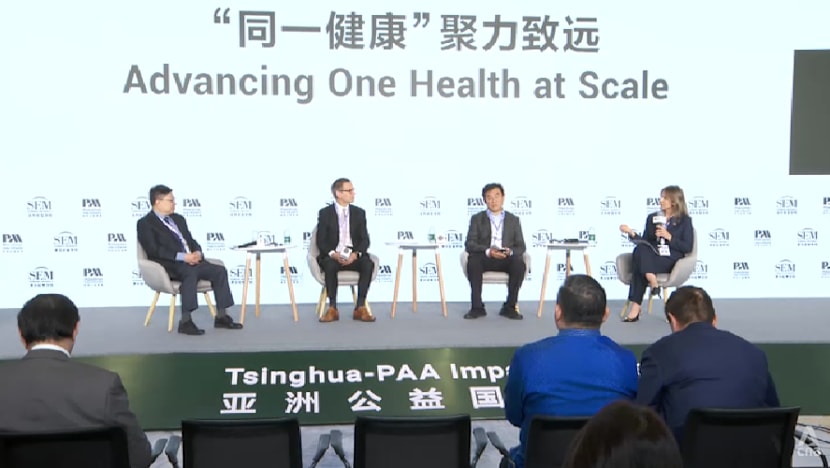
The Tsinghua-Philanthropy Asia Alliance Impact Summit brought together leaders from philanthropy, business, government and academia to explore how innovation and collaboration can help tackle challenges.
New: You can now listen to articles.

This audio is generated by an AI tool.

16 Oct 2026 06:12PM
BEIJING: Philanthropy could play a bigger role in helping societies adapt to rapid advances in artificial intelligence and climate change by testing innovative solutions that governments and businesses may be less willing to take risks on, said the head of Philanthropy Asia Alliance (PAA).
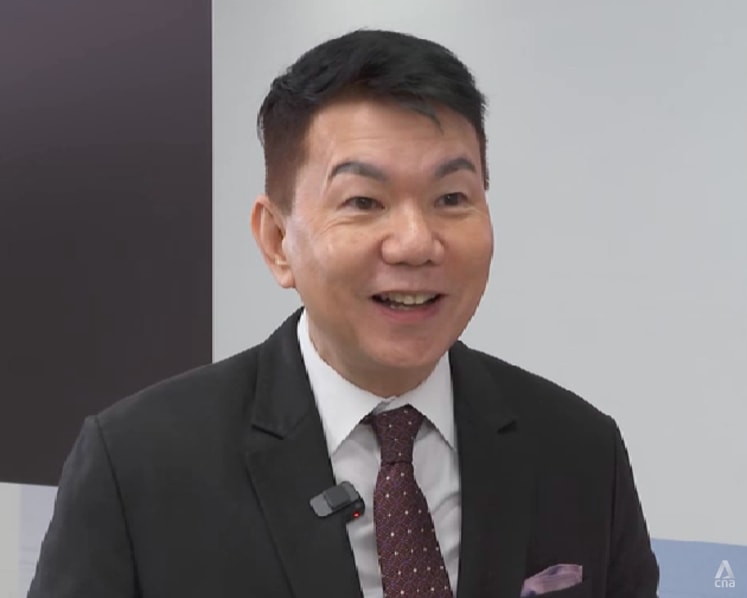
Its CEO Shaun Seow said philanthropic organisations could bring different sectors together for projects that could eventually be scaled up through private investment or government policy.
“Philanthropy has the ability to bring different players together and pilot because philanthropy can actually put out a risk capital,” he said at the inaugural Tsinghua-PAA Impact Summit in Beijing.
Even if such ventures fail, “lessons from (them) will be applicable to all”, he added.
The three-day summit, which concludes on Saturday (Oct 17), is jointly organised by China's Tsinghua University and PAA, an initiative of Singapore's Temasek Trust.
It brought together around 220 leaders from China and beyond, spanning philanthropy, business, government and academia, to explore challenges ranging from AI's impact on jobs to the transition towards cleaner energy.
BRIDGING THE GAP BETWEEN SECTORS
Seow called for closer collaboration to turn promising ideas into solutions that could benefit communities on a larger scale.
“In the old days, it was philanthropists talking among themselves, multilateral banks talking among themselves. We really need the government, private sector and philanthropists talking together,” he said.
He added that partnerships should be designed from the outset with a clear path towards scaling up successful projects, whether through commercial investment or public policy.
Ilaria Chan, founding chairwoman of non-profit Tech For Good Institute, said philanthropy could help bridge the gap between the different priorities of governments and businesses.
"Private sector moves fast because it follows a trail of money and commercial interest. Government usually has a long-term vision for the best interest of civil society,” said Chan, who is also an advisory council member of Peking University’s Stanford Center.
“There's always going to be a gap because of their different agendas. Philanthropy that is employed well should bridge this gap.”
She added that philanthropy needed to combine the ability to respond quickly to emerging challenges with the patience to support longer-term change.
PREPARING FOR AN AI-DRIVEN FUTURE
Among the issues discussed at the summit was how AI could reshape the future of work, and how to support those at risk of being left behind.
Seow said AI was increasingly taking over individual tasks rather than entire jobs, raising questions about how education systems and vocational training should evolve.
“What does college education look like to prepare students to really work in an AI environment?” he asked.
He said philanthropy could help pilot new approaches to education and workforce development before successful models are adopted more widely.
At the same time, AI could make essential services more accessible, particularly in underserved communities.
Seow pointed to the potential for AI-powered medical diagnostics to improve healthcare in rural areas, including by reducing the cost of procedures such as ultrasounds.
The challenge, he said, was ensuring that such technologies benefit a wider population rather than only those who can afford them.
On energy transition, attendees said expanding renewable energy generation is only one part of the equation.
“The challenge is not simply about more renewable capacity, but making the entire power system more flexible and efficient,” said Hu Ruoyu, deputy China director at the Asian Development Bank.
“The next phase of energy transition is not just about financing additional infrastructure. It is also about strengthening institutions, improving regulations, and developing commercially viable solutions.”
LEARNING FROM CHINA'S ABILITY TO SCALE
Organisers said the decision to hold the inaugural summit in China was deliberate, given the country's experience in developing and scaling innovative solutions.
Seow said China's approach offered valuable lessons for the rest of Asia.
“The ability of the Chinese market to take a small solution to (reach) maybe hundreds of thousands or millions (is) really quite amazing,” he said.
As part of the summit, delegates were also scheduled to visit projects around Beijing to see how technology was being applied to real-world challenges.
These included the use of AI to support children with autism, as well as digital tools to help preserve the Great Wall of China.
Seow said PAA also planned to bring more international partners to China to learn from environmental projects, including efforts to combat desertification in Inner Mongolia and innovations combining offshore wind farms with aquaculture.
“These are innovations that I think people should understand, and maybe adapt back home,” he said.
The summit, two years in the making, marked what organisers hope will be the start of deeper collaboration between PAA, Tsinghua University and other Chinese partners.
Seow said discussions would continue at the Philanthropy Asia Summit in May, stressing that the focus must shift from conversations to practical action.
“The conversation need not stop at one summit. Action requires continuous effort,” he said.
KioskNews shows a cleaned-up reading view extracted from the publisher’s page — the original always lives on their site, not ours.