Beijing hits out after Taipei bans mainland travel for Sun Yat-sen anniversary
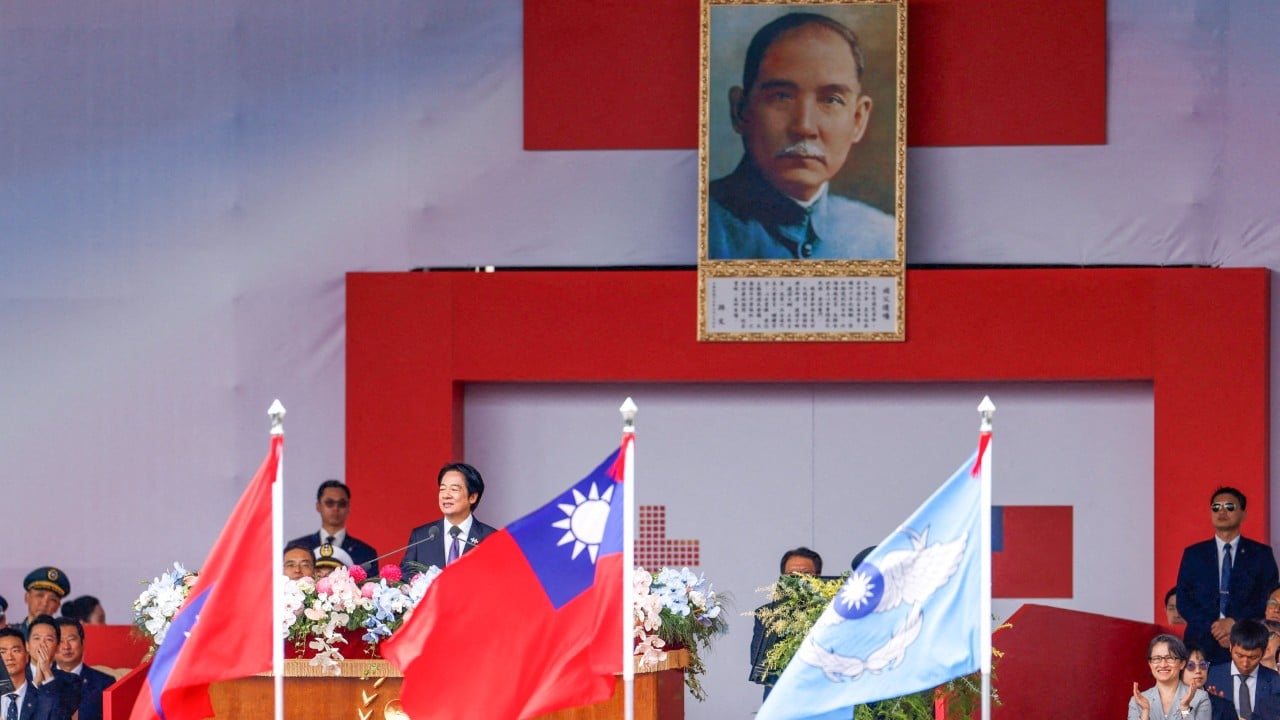
A fresh dispute has erupted between Beijing and Taipei over commemorations for Sun Yat-sen, a Chinese revolutionary hero who is revered on both sides of the Taiwan Strait.
Beijing on Wednesday lashed out at Taipei’s move to ban Taiwanese officials from attending events in the mainland Chinese capital marking the 160th anniversary of Sun’s birth on November 12.
Sun brought an end to more than 2,000 years of imperial rule when he founded the Republic of China (ROC) in 1912, and he also founded the Kuomintang (KMT).
After the civil war ended in 1949, the KMT government fled to Taiwan and the People’s Republic of China was established on the mainland by Mao Zedong and the Communist Party.
Zhang Han, a spokeswoman for the mainland’s Taiwan Affairs Office, condemned the travel ban by Taiwan’s ruling Democratic Progressive Party (DPP) as a “betrayal of history” that would “heighten cross-strait confrontation”.
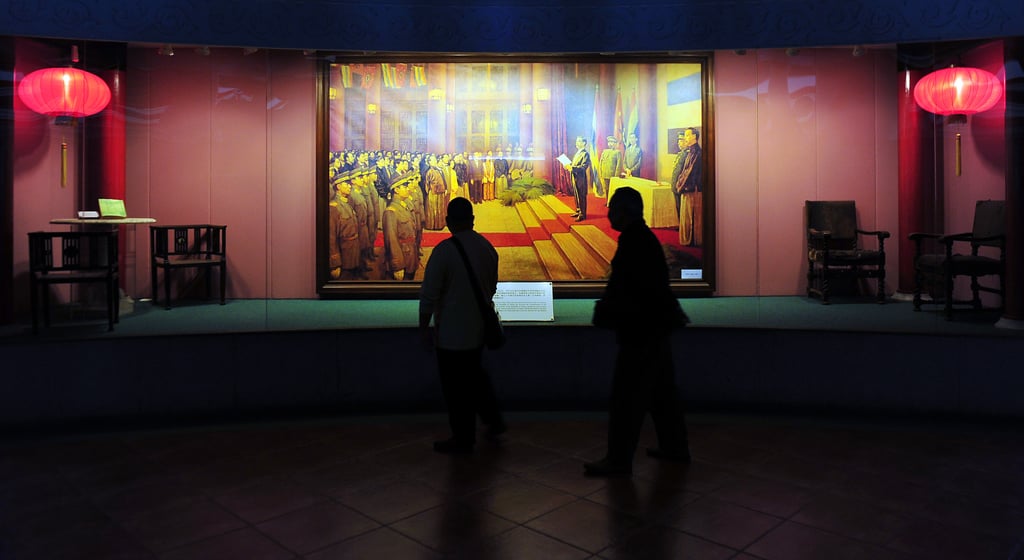
Beijing last year said it would host a grand celebration for the 160th birthday of Sun. President Xi Jinping delivered a speech at the 150th commemoration for Sun a decade ago and is expected to do so again this year.
It is the first time the DPP has formally blocked Taiwanese from taking part in mainland Chinese events honouring Sun, who died in 1925.
Sun remains one of the few historical figures claimed and honoured by both Beijing and Taipei.
Last week, Taiwan’s Mainland Affairs Council said it would reject travel permit applications from Taiwanese officials seeking to attend the official commemorations in Beijing. It urged “all sectors” to refrain from travelling to mainland China, Hong Kong or Macau to take part in related events.
High-ranking retired defence and security officials were also reminded of the island’s statutory rules prohibiting participation in political events hosted by mainland authorities.
At least 32 retired Taiwanese military officials and several retired senior KMT figures were among the 3,000 attendees of the 150th anniversary event at the Great Hall of the People in Beijing a decade ago.
The Mainland Affairs Council accused Beijing of distorting historical facts surrounding Sun and claimed the Communist Party used commemorative events as propaganda tools to advance its “anti-independence, pro-reunification” narrative.
In Taiwan, Sun is venerated as the founding father of the ROC, which remains the island’s official name after the ROC relocated its seat of government there in 1949.
In mainland China meanwhile, Sun is officially celebrated as the “Great Forerunner of the Democratic Revolution” and Beijing invokes his legacy as part of its narrative of national reunification.
Zhang emphasised this point on Wednesday, saying Beijing’s commemorations aimed to “unite all Chinese people – including Taiwan compatriots – to firmly counter ‘Taiwan independence’ forces, reject external interference, and work together towards national reunification and revitalisation”.
During his 2016 speech, Xi delivered a stern warning to pro-independence movements, saying: “We will never permit anyone, any group or any political party to split any portion of Chinese territory from the nation at any time or in any form.”
Sun’s political lineage is another point of contention between Beijing and Taipei.
At the 2016 event, Xi claimed that members of the Communist Party were “the most faithful successors of Sun Yat-sen’s revolutionary cause”.
His statement drew immediate pushback from the KMT. Its officials countered that the Kuomintang remained the legitimate successor to Sun’s founding ideals, calling it an “undeniable historical fact that stands beyond debate”.
For the DPP, with its emphasis on local identity, issues surrounding Sun pose a dilemma. DPP lawmakers have repeatedly introduced legislative amendments to end mandatory requirements for displaying Sun’s portrait in government spaces and school auditoriums, though these bills have stalled.
Taipei’s travel ban also reflects a broader policy stance that has limited exchanges between the two sides.
Similar restrictions were enforced last year when the DPP prohibited current and former officials from attending Beijing’s high-profile military parade in September. Taipei said it did not want to validate Beijing’s political framing.
Beijing sees Taiwan as part of China to be reunited by force if necessary. Most countries, including the US, do not recognise Taiwan as an independent state, but Washington is opposed to any attempt to take the self-governed island by force and is committed by law to supplying it with weapons.
Despite the tensions across the Taiwan Strait, Sun is also an enduring historical bridge.
The KMT frequently invokes Sun’s legacy during cross-strait exchanges to emphasise shared cultural and historical bonds.
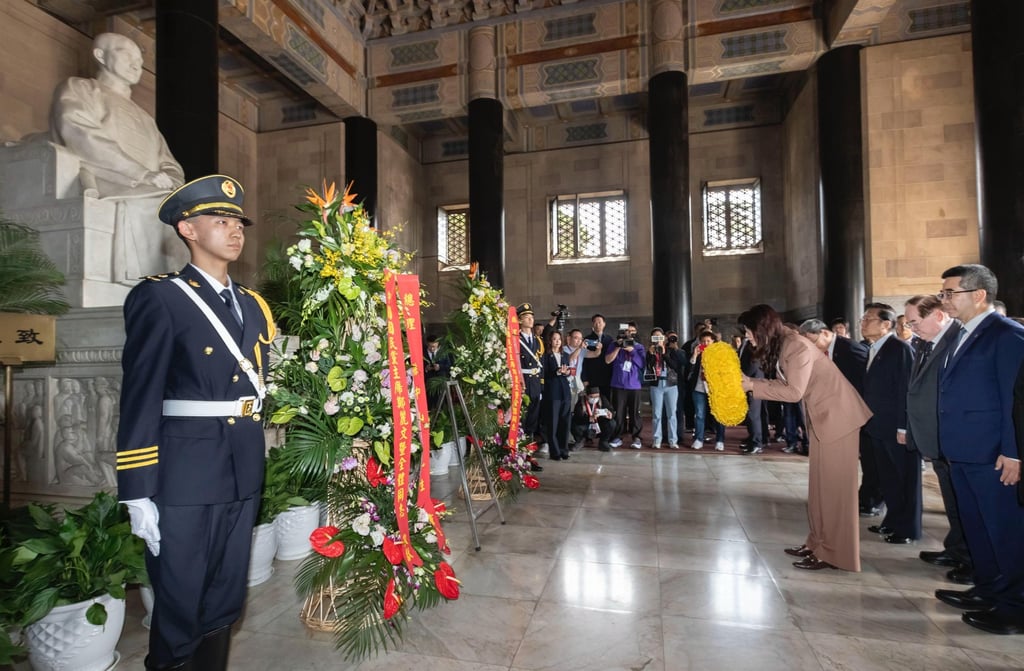
During a trip to mainland China in April, KMT chairwoman Cheng Li-wun visited the Sun Yat-sen Mausoleum in Nanjing, invoking his spirit to foster cross-strait peace and reconciliation.
Responding to the DPP travel ban, KMT caucus secretary general Hsu Yu-chen said the party welcomed anyone commemorating Sun’s legacy. But she said any cross-strait exchange or joint commemoration must be conducted on the basis of parity, dignity and explicit recognition of the ROC’s existence.
KioskNews shows a cleaned-up reading view extracted from the publisher’s page — the original always lives on their site, not ours.