France on high alert as Paris march begins in uneasy calm
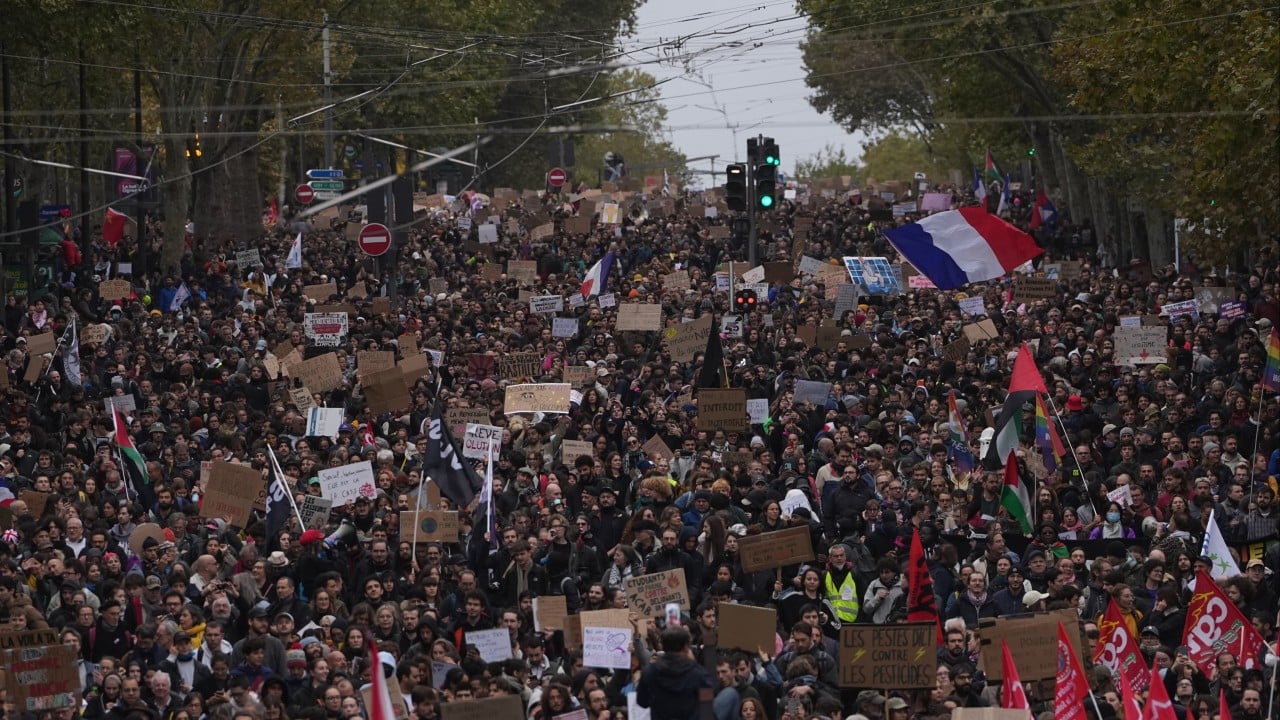
Protests in Paris began on Saturday, filling the city’s southern edge with the sounds of a brass band playing “Bella Ciao” and portable speakers blaring “I Will Survive”, despite fears of fresh street clashes.
Elsewhere in France, police began dispersing unauthorised gatherings in Lyon and Nice, firing tear gas in Lyon as demonstrators defied local protest bans.
French authorities expect up to half a million people to hit the streets on Saturday across the country, matching the scale of the 550,000 who protested last weekend. The October 17 demonstrations descended into looting and the worst urban rioting France had seen in years.
For many young students who gathered in Paris on Saturday, the main message was for the government to understand their struggle, their demand for better education and the general population’s suffering amid the rising cost of living.
Many of the protesters shared similar sentiments: they condemned the violence from looting and rioting, but also expressed anger at police conduct.
“Obviously I don’t support any kind of violence,” said Manon, a student. “But we shouldn’t blame everything on the troublemakers who came from an underprivileged background and who probably suffer from more invisible forms of violence in their everyday life.”
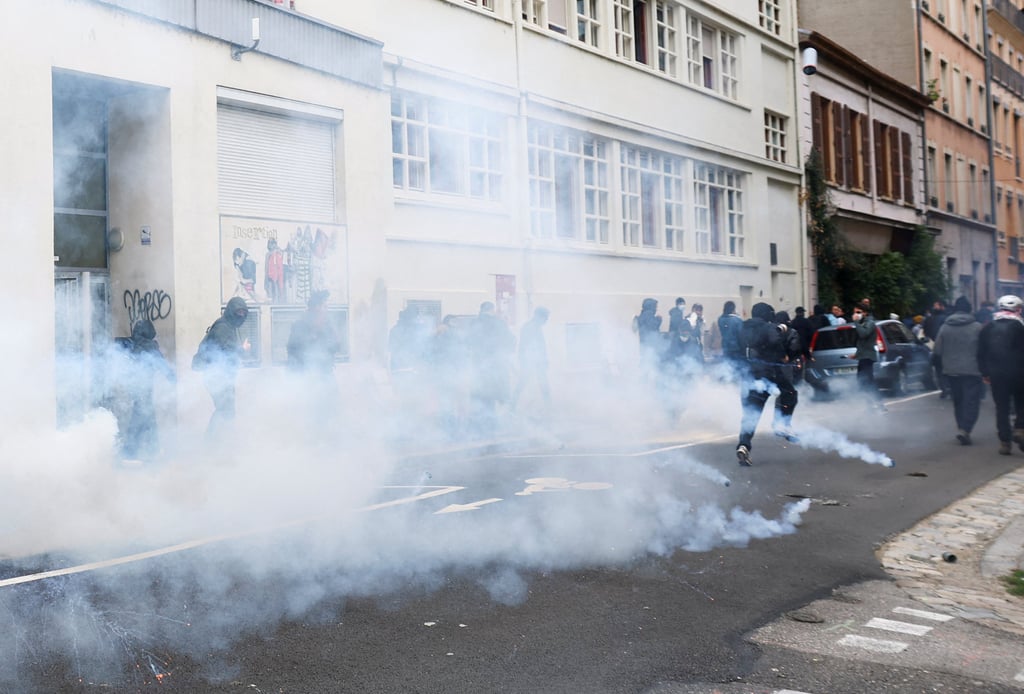
Three friends had told Manon to be careful – not of the troublemakers, but of the police.
“It’s easy to see things burning, but people too have been burning on the inside,” she said.
Tensions surrounding Saturday’s demonstrations, already high, escalated further following a shooting of a “racist nature” in the western Paris suburbs of Trappes and La Verriere on Friday, which left one person dead and five injured.
The Paris police prefecture cited the attack as a primary reason for altering the authorised protest route late Friday afternoon, ordering the march shifted away from Place de la Bastille in central Paris to Porte d’Italie on the city’s outskirts.
Trade unions accepted the change after a failed legal challenge, but criticised the government for attempting to divide the movement and create chaos. Police began clearing Place de la Bastille around noon, directing demonstrators towards Porte d’Italie, where some local residents learned only from journalists on the scene that their neighbourhood was now along the march route.
The stand-off deepened anxiety among local officials and businesses bracing for renewed unrest, with one official telling the South China Morning Post that the protest risked being “all over the place” and turning into “a mess”.
With 70,000 police and gendarmes deployed nationwide and soldiers also mobilised to protect public buildings and infrastructure, the government faced intense pressure to prevent a recurrence of the widespread violence and looting seen the previous weekend.
“A fiasco like this, two weekends in a row, I don’t know what explanation we could give the French. We really cannot afford to get this wrong,” an adviser to Interior Minister Laurent Nunez told broadcaster BFMTV on Saturday.
Across France, authorities moved to ban most demonstrations following French President Emmanuel Macron’s intervention on Thursday, in which he stated that “the general recommendation is to hold no demonstrations in the coming days”. Protests were prohibited outright in regional cities including Bordeaux, Lyon and Nice, with only a single demonstration approved for each of Paris, Lille and Marseille.
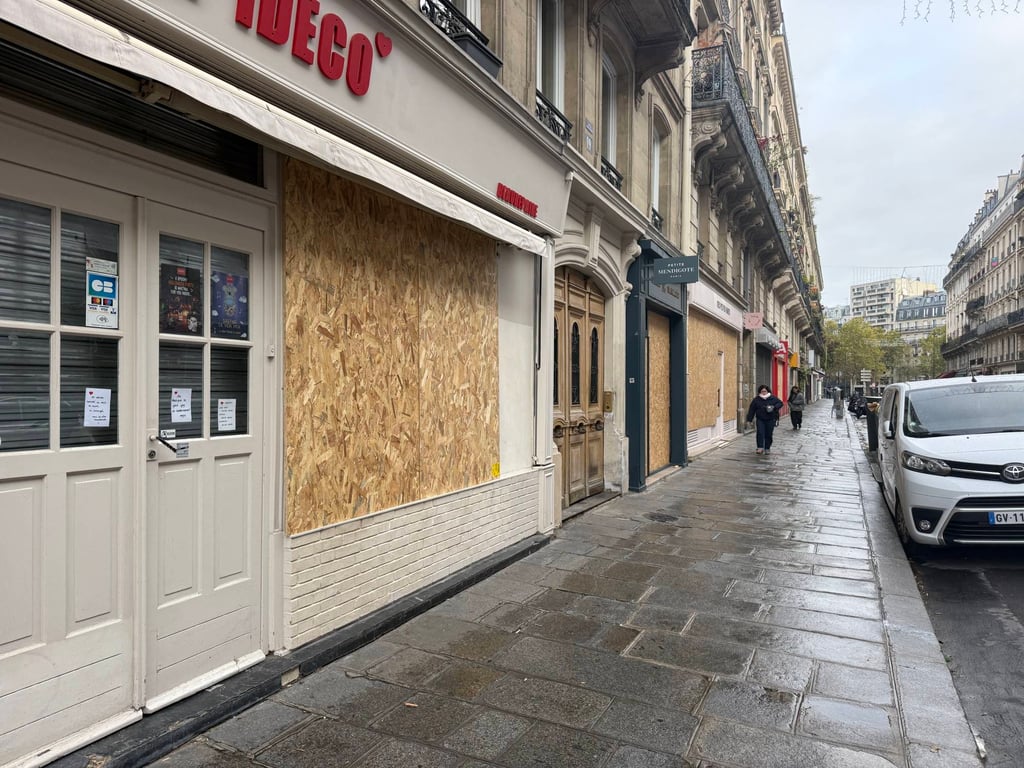
In Paris, local businesses took aggressive security precautions. Along Rue Beaurepaire and surrounding streets, storefronts were closed behind thick sheets of plywood. Burn marks on the road and paper signs reading “Fermeture pour cause de sinistre” (Closed due to unforeseen circumstances) remained visible reminders of the previous Saturday’s riots, during which a bar was torched and multiple retail outlets were ransacked. The few cafes and shops that chose to open planned to close by early afternoon.
Even luxury boutiques in the west of the French capital, located far from the designated protest route, boarded up display windows and reinforced entryways against potential roving bands of vandals. Major cultural landmarks including the Louvre and the Musee d’Orsay were also closed.
Sweeping restrictions have intensified national debate over civil liberties and the constitutionally protected right to protest as the French government tries to maintain social order.
“I want the interior minister to carry out his primary mission: guaranteeing the exercise of individual freedoms and the right to protest, and protecting people first and property second,” the green party mayor of Paris’ 11th arrondissement David Belliard told the SCMP. “That is simple and basic in a great democratic country.”
Belliard’s district encompasses both Place de la Bastille and Place de la Republique – covering some areas hardest hit by last Saturday’s riots and the exact corridor where organisers had originally planned to march.
France is the most prominent flashpoint in a wider wave of demonstrations over the cost of living, housing and government spending rippling across Europe this weekend, with rallies planned in Italy, Portugal, Spain, Belgium and Albania.
In Italy, a coalition called the “October 17 Movement” called protests across eight cities on Saturday. Prime Minister Giorgia Meloni reinforced police and military deployments in Milan, one week after violent clashes and looting hit the country’s financial and fashion capital.
KioskNews shows a cleaned-up reading view extracted from the publisher’s page — the original always lives on their site, not ours.