7 Comedy Movies From The 1970s That Have Aged Like A Fine Wine

Richard Craig is a Senior Author at Screen Rant covering film and TV. Richard has also written extensively about horror and film soundtracks, contributing a chapter to the first major academic collection on the folk horror genre, The Routledge Companion to Folk Horror. Richard is also a performing musician and holds an MA in Music and Sound Art.
Some 1970s comedies become time capsules, but others somehow actually got funnier with age. The 1970s produced a remarkable range of comedy movies, from dark romantic satires and absurdist British farces to family adventures and sophisticated social commentary. It was a decade in which filmmakers enjoyed unusual creative freedom, allowing comedy to expand far beyond traditional slapstick or straightforward romantic formulas. As a result, many of the era's best films still feel surprisingly fresh decades later.
That's not always the case with older comedies. Humor is often tied to the cultural attitudes, celebrity references, and social norms of its time. A joke that lands perfectly in one decade can feel baffling or uncomfortable in another. Yet a select group of 1970s comedies have largely avoided that problem. Their humor comes from character, storytelling, visual invention, or universal observations about human behavior rather than topical references.
Interestingly, many modern movies still draw inspiration from the decade's greatest. Filmmakers borrow from their structures, comedic rhythms, and approaches to satire. In several cases, entire subgenres can trace their DNA back to these productions. More than 40 years after their release, these comedy classics remain every bit as entertaining as they were when audiences first discovered them.
Harold And Maude (1971)

Hal Ashby's Harold and Maude sounds like an unlikely comedy on paper. The story follows Harold, a wealthy and death-obsessed young man, and Maude, a 79-year-old woman who embraces life with boundless enthusiasm. Their unconventional friendship ultimately produced one of the most charming and distinctive comedies of the decade.
A major reason Harold and Maude has aged so well is its humanity. Harold's fascination with elaborate fake suicides could easily have become a one-note joke, but Bud Cort's performance reveals a lonely young man searching for meaning. Ruth Gordon's Maude serves as the perfect counterbalance, encouraging him to experience life rather than merely observe it.
The humor emerges naturally from that relationship rather than from mocking either character. Cat Stevens' soundtrack further enhances its warmth and optimism, with one of his greatest songs becoming a major plot device throughout. While many comedies from the early 1970s feel tied to their era, Harold and Maude remains timeless because its central message about finding joy in life is as relevant today as it was in 1971. It’s an utterly charming and endlessly heartwarming movie.
The Muppet Movie (1979)

Jim Henson's The Muppet Movie is one of the rare family comedies that becomes even more enjoyable with age. Children can appreciate its colorful characters and gentle humor, while adults can recognize the extraordinary craftsmanship behind its jokes, songs, and self-aware storytelling. It depicts Kermit the Frog's journey to Hollywood, where he gradually assembles the group of performers who would become the Muppets.
Along the way, he encounters Fozzie Bear, Gonzo, Miss Piggy, and numerous celebrity cameos. Yet it’s the sincerity that makes The Muppet Movie so enduring. The Muppets never treat their absurd world as unusual. A frog can ride a bicycle across America, and everyone simply accepts it. That confidence allows humor to flourish naturally.
The screenplay is also packed with surprisingly sophisticated meta-jokes. Characters frequently acknowledge that they're in a movie without undermining the emotional stakes. Combined with songs like "Rainbow Connection," the result is a comedy that is just as magical and funny today as it was in 1979.
Monty Python’s Life Of Brian (1979)

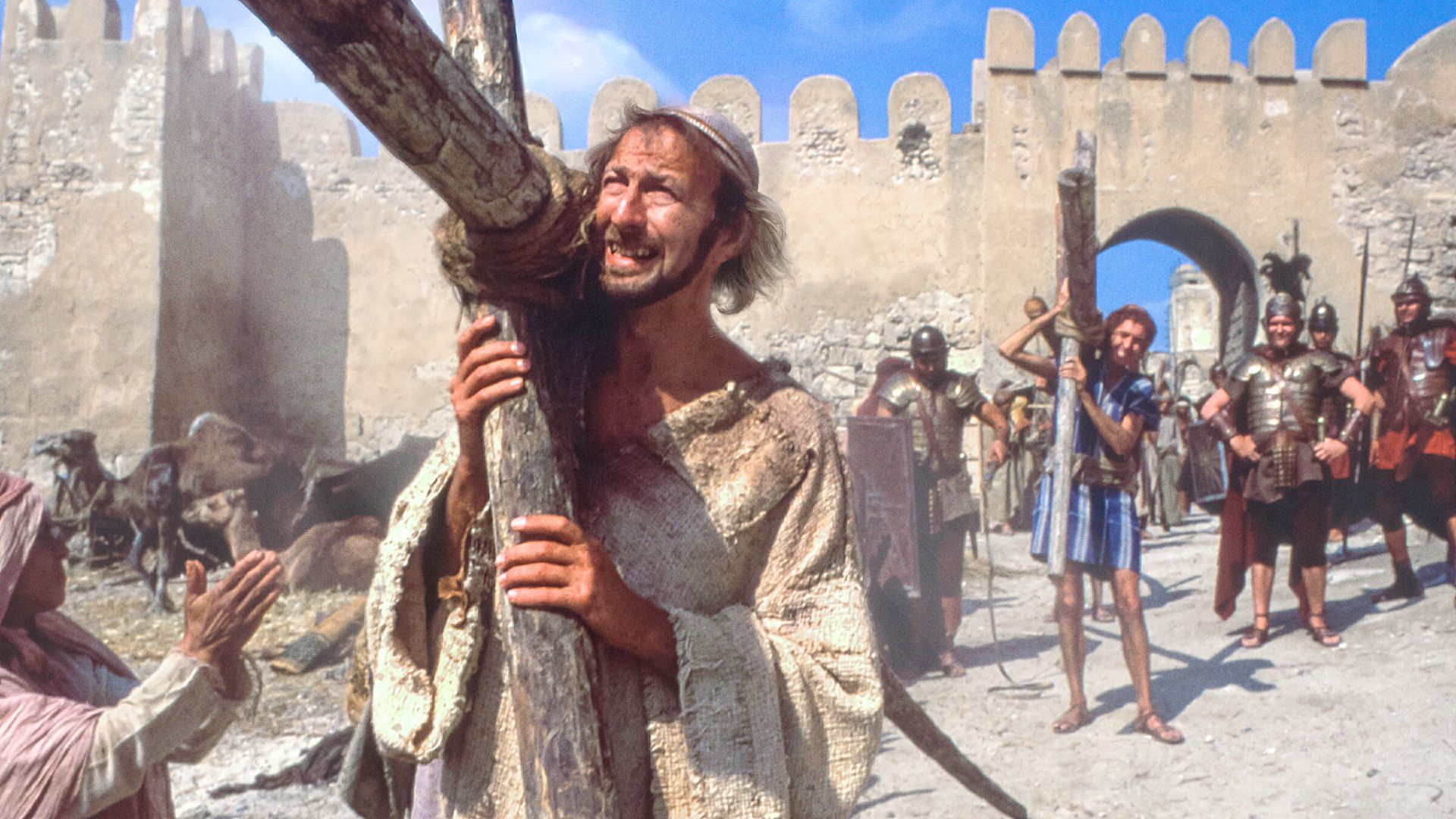
Few comedies have generated as much controversy (or proven as durable) as Monty Python's Life of Brian. Upon release, some critics incorrectly assumed it was mocking religion itself. In reality, it primarily satirizes blind obedience, political factionalism, and humanity's tendency to follow charismatic figures without question. Many of these themes still resonate and can be more easily considered without the religious clamor that surrounded it upon release.
Graham Chapman stars as Brian, an ordinary man who is repeatedly mistaken for the Messiah. The misunderstanding escalates until Brian becomes the unwilling center of a religious movement. Indeed, Life of Brian's sharpest jokes focus on the absurdity of ideological divisions.
The People's Front of Judea and the Judean People's Front spend more time arguing with one another than confronting their common enemy, creating a satire that feels increasingly relevant. Unlike many topical comedies, Life of Brian addresses patterns of human behavior that never really change. Its famous ending, accompanied by "Always Look on the Bright Side of Life," is one of the most memorable comic conclusions ever filmed.
What's Up, Doc? (1972)

Peter Bogdanovich's What's Up, Doc? serves as both a tribute to classic screwball comedies and one of the finest examples of the genre ever made. Ryan O'Neal plays musicologist Howard Bannister, whose carefully organized life is disrupted by the chaotic and unpredictable Judy Maxwell, played by Barbra Streisand.
What’s Up, Doc? thrives on escalating misunderstandings involving identical suitcases, mistaken identities, and increasingly ridiculous coincidences. Bogdanovich's direction ensures that the chaos never becomes confusing, but Streisand is the movie's true secret weapon. Her Judy possesses the relentless confidence and quick wit associated with the great screwball heroines of the 1930s and 1940s.
Streissand’s seemingly endless energy drives the narrative forward while O'Neal's exasperated reactions provide the perfect comic contrast. The legendary San Francisco chase sequence is still one of cinema's greatest physical comedy set pieces in American movie history. More than fifty years later, What’s Up, Doc? exemplifies how effective fast-paced storytelling and impeccable comic timing can be.
Being There (1979)

Hal Ashby's Being There is one of the most quietly devastating satires ever made. Peter Sellers stars as Chance, a sheltered gardener whose simplistic observations are repeatedly interpreted as profound wisdom by politicians, business leaders, and media figures. Yet, despite this premise, Being’s There’s biggest strength is its restraint.
Chance never intends to deceive anyone. He simply speaks honestly about gardening, while everyone around him projects deeper meaning onto his words. Sellers delivers one of the finest performances of his career, forging a character who is simultaneously innocent, funny, and strangely enigmatic. The supporting cast's increasingly elaborate misinterpretations generate much of the comedy.
Decades later, Being There's commentary on celebrity, media influence, and society's tendency to confuse confidence with intelligence feels even more relevant than it did in 1979. Many satires lose their edge as circumstances change. Being There has only become sharper with time.
Young Frankenstein (1974)

Mel Brooks' Young Frankenstein succeeds because it works simultaneously as a parody and a genuinely affectionate tribute to classic Universal monster movies. Gene Wilder stars as Dr. Frederick Frankenstein, who reluctantly embraces his family's scientific legacy after inheriting his grandfather's castle. Unlike many spoofs, Young Frankenstein doesn't rely entirely on mocking its source material.
Brooks painstakingly recreated the visual style of 1930s horror films, even using original laboratory equipment from the 1931 Frankenstein. However, it’s the cast that's truly extraordinary. Wilder's growing exasperation, Marty Feldman's scene-stealing Igor, Cloris Leachman's intimidating Frau Blücher, and Peter Boyle's surprisingly lovable Monster all deliver riotous laughs and genuine pathos in equal measure.
The humor comes from character interactions, visual gags, and brilliantly delivered dialogue rather than contemporary references. That timeless approach explains why scenes like "Puttin' on the Ritz" are just as funny today. More than half a century later, Young Frankenstein is still one of the greatest comedy movies ever made.
Monty Python And The Holy Grail (1975)

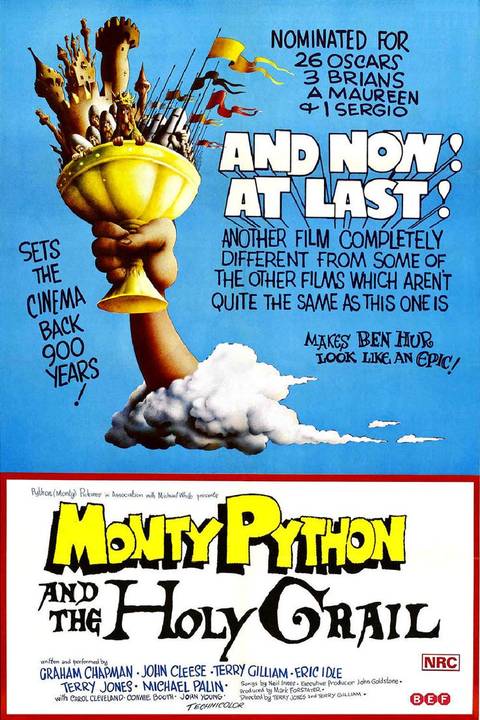
Monty Python and the Holy Grail may be the ultimate example of comedy that refuses to age. The absurdity exists entirely on its own wavelength, making it largely immune to changing trends or cultural references. It depicts King Arthur and his knights as they search for the Holy Grail, encountering everything from killer rabbits and anarcho-syndicalist peasants to knights who say "Ni."
The narrative is intentionally fragmented, allowing the Pythons to move from one bizarre scenario to another. Many of Holy Grail’s most famous jokes have become cultural touchstones. Though even viewers familiar with the punchlines can still appreciate the performances and increasingly ridiculous situations.
The production's low budget inadvertently contributes to its charm. The famous decision to use coconuts instead of horses transforms a financial limitation into one of the movie's defining jokes. The same can be said of the infamously ridiculous ending, where a large-scale battle had to be quickly downgraded due to dwindling funds. More than any other comedy from the decade, Monty Python and the Holy Grail demonstrates how creativity and absurdity can remain funny indefinitely.
- Release Date
- May 25, 1975
- Runtime
- 91 minutes
- Director
- Terry Jones, Terry Gilliam
- Writers
- Terry Jones, Graham Chapman, Terry Gilliam, Eric Idle, Michael Palin, John Cleese
KioskNews shows a cleaned-up reading view extracted from the publisher’s page — the original always lives on their site, not ours.