For Israelis, sexual atrocities of October 7 carry a long shadow
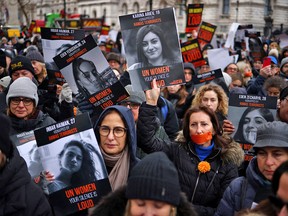
Three years after Hamas’s October 7 attacks, many Israelis continue to live with wounds that cannot always be photographed, fully described or easily discussed.
Sign In or Create an Account
For survivors of sexual violence and those who witnessed the attacks, the task is no longer simply to compile a record of what occurred; it is to document the lasting harm. That is the focus of a new study expected from the Association of Rape Crisis Centers in Israel (ARCCI) early next year.
The organization’s landmark February 2024 report – Silent Cry: Sexual Violence Crimes on October 7 – sought to assemble an early account of sexual and gender-based violence both during October 7, and after. The new research will examine the longer-term impact of trauma and the needs that remain unmet.

Columnist Jesse Kline keeps you up to date with what’s happening in Israel and the effects of antisemitism on life here in Canada. Friday mornings.
By signing up you consent to receive the above newsletter from Postmedia Network Inc.
A welcome email is on its way. If you don't see it, please check your junk folder.
The next issue of Channel Israel will soon be in your inbox.
We encountered an issue signing you up. Please try again
“We are trying to understand the impact of the sexual trauma — not only on direct victims, but also on first responders and other people,” said Orit Sulitzeanu, ARCCI’s executive director. “It is much wider than people may perceive.”
Sulitzeanu has led the independent NGO, an umbrella body for nine rape crisis centres, for more than a decade. She received the Rapport Prize in 2023 for documentation and advocacy following Oct. 7.
According to Sulitzeanu, the Canadian government has given her organization $1.5 million over three years.
The following interview with Sulitzeanu has been edited for clarity and brevity.
Q: Why does this work remain important three years later?
A: The process is very hard. You have to do it ethically when you approach survivors, relatives of survivors and first responders — everyone who was in touch with this trauma. It takes a long time.
For me, it is more important to get thorough, deep information. Some people find it very hard to talk about this issue. The first report was to understand what happened and the practices of Hamas. Now, the purpose is to understand the impact and the need.
Q: What does the public still misunderstand about the sexual violence of October 7?
A: Sexual trauma always raises the question: “Did it happen? Show me the evidence.” People ask for video clips or photographs. But that is absurd.
The survivors do not owe anybody anything. They only owe themselves the chance to recover. There was a clash between the well-being and mental health of survivors, and the demand — from foreign governments, journalists and others — for stories and evidence.
The stories belong to the survivors. Some survivors of sexual violence from Nova do not want to speak publicly. They do not want the stigma. That should be accepted and respected.
The public does not understand the scale, because it is not only direct victims, it’s survivors from captivity, Nova, the kibbutzim and the military. It is also first responders and people who handled bodies.
So what is clear, is the immense impact of the trauma on their lives. It’s not just sexual violence but what people saw. Things were severed and cut, like limbs, heads and breasts. Grenades were put in the intimate organs. It’s something that you can’t comprehend.
There are people whose lives have fallen apart. Divorce, suicide, unemployment, psychiatric hospitalization. Then there are relatives, their spouses and children, living with the consequences of post-trauma. It is hundreds of people affected.
Q: Has anything become clearer as more time has passed?
A: More stories have come out, particularly from people who were held captive, including men. At first, we were very worried about women, and did not speak enough about men. Over time, some men’s accounts of abuse emerged, too.
What has become clearest is the immense impact of trauma on people’s lives. We hear from survivors and witnesses who are in horrific mental situations and barely surviving. Human beings who saw such cruelty cannot simply return to themselves.
Q: Have Israel’s support systems caught up with the need?
A: There are many new NGOs that sprang up after October 7 to offer mental-health support and other assistance. But it is not enough.
The social-security system offers monthly payments and other support to people who cannot work, but it is not coping with the demand. Funds are limited. There are many people who cannot work, have divorced, have children, and are trying to survive.
Q: What have Israeli institutions done well — and what is still missing?
A: The health system — like therapists, hospitals, security personnel –- did sensitive work. They initially met and questioned released hostages. They were generally trauma-informed: they understood not to ask what did not need to be asked.
But three years later, what is hugely missing is a national initiative to help people navigate mental health, rehabilitation, employment and bureaucracy. If people do not have someone helping them through the system, they can hardly survive.
This will take a decade.
The forthcoming ARCCI study is intended to make that goal clearer. It’s not just what happened on October 7, but what happens afterward. It’s the effects on those who lived through it, those who witnessed it, and the systems now responsible with helping them.
Q: What do you make of the disbelief surrounding these accounts?
A: This story has become connected to bigger political arguments about Israel and Zionism. But atrocities are atrocities, whatever one’s politics. They should be examined first as human acts.
Sexual violence does not necessarily leave something a survivor can show the world. That makes it easier for people to place everything in apolitical context and say, “You are lying.” I think that is horribly sad.
Our website is the place for the latest breaking news, exclusive scoops, longreads and provocative commentary. Please bookmark nationalpost.com and sign up for our newsletters here.
Join the Conversation
This website uses cookies to personalize your content (including ads), and allows us to analyze our traffic. Read more about cookies here. By continuing to use our site, you agree to our Terms of Use and Privacy Policy.
KioskNews shows a cleaned-up reading view extracted from the publisher’s page — the original always lives on their site, not ours.