‘Hong Kong is back’ narrative built on more than hope and hype
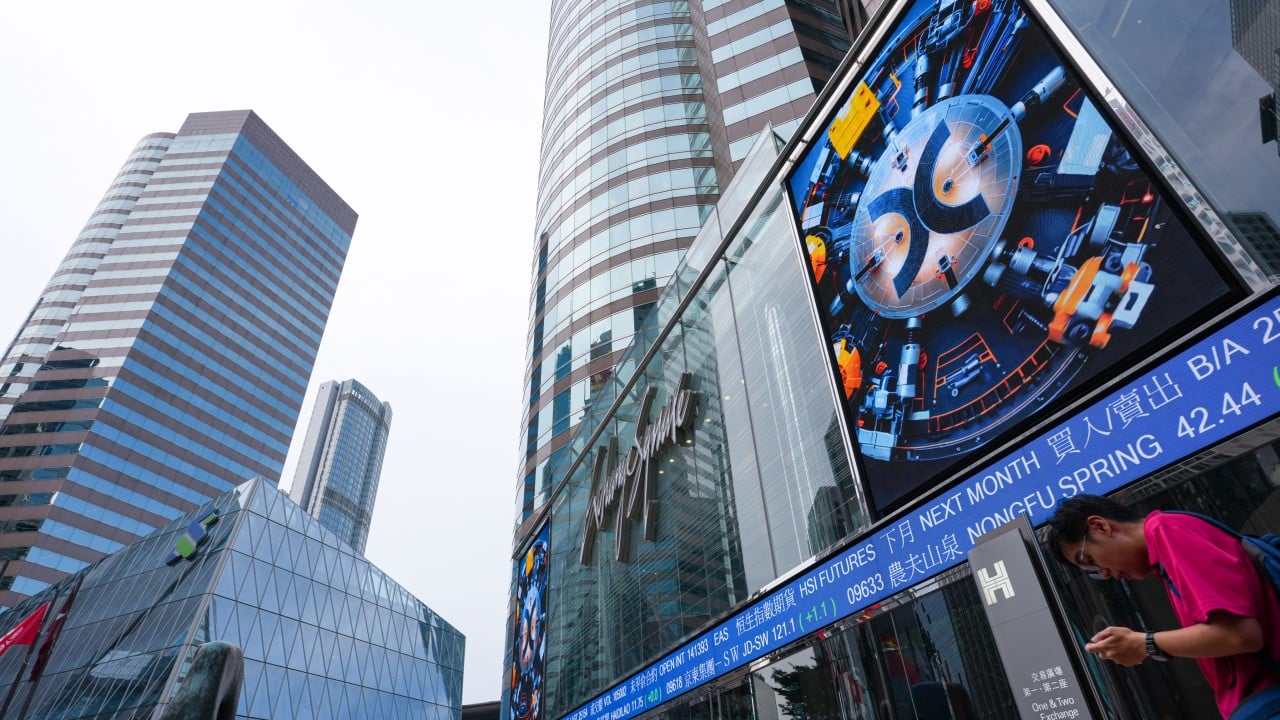
Hong Kong will be one of the fastest-growing economies in the Asia-Pacific this year. That is according to Goldman Sachs, which expects the city to grow 5.1 per cent.
Having contracted 3.7 per cent in 2022 and expanded just 2.6 per cent as recently as 2024, this is quite a feat. At the beginning of this year, the government anticipated growth of 2.5-3.5 per cent. Last week, it upgraded its forecast to 4.8 per cent.
In its latest report on Hong Kong’s economy in May, the International Monetary Fund (IMF) said the city has continued to reinforce its position as a global financial centre and superconnector between the Chinese mainland and the rest of the world.
Closer integration of Hong Kong with the mainland has provided a solid underpinning for the recovery. Chinese companies in the artificial intelligence (AI) supply chain have driven a boom in initial public offerings (IPOs), with listing proceeds reaching US$51.9 billion this year. This puts first-time share sales within striking distance of the record high set in 2010.
In addition to a strong technology-heavy IPO pipeline, measures to expand capital flow channels between Hong Kong and the mainland have spurred the revival of the city’s financial markets. These measures include this week’s launch by Hong Kong Exchanges and Clearing of the first index to track the performance of offshore yuan bonds.
The main growth driver, however, has been exports as Hong Kong capitalises on its position as a conduit for semiconductors moving in and out of China as part of the global buildout of AI infrastructure. Nearly all the city’s memory chip shipments were re-exports, with the mainland constituting more than 80 per cent of the trade, according to Bloomberg data. Total goods exports surged more than 30 per cent in annualised terms last quarter.
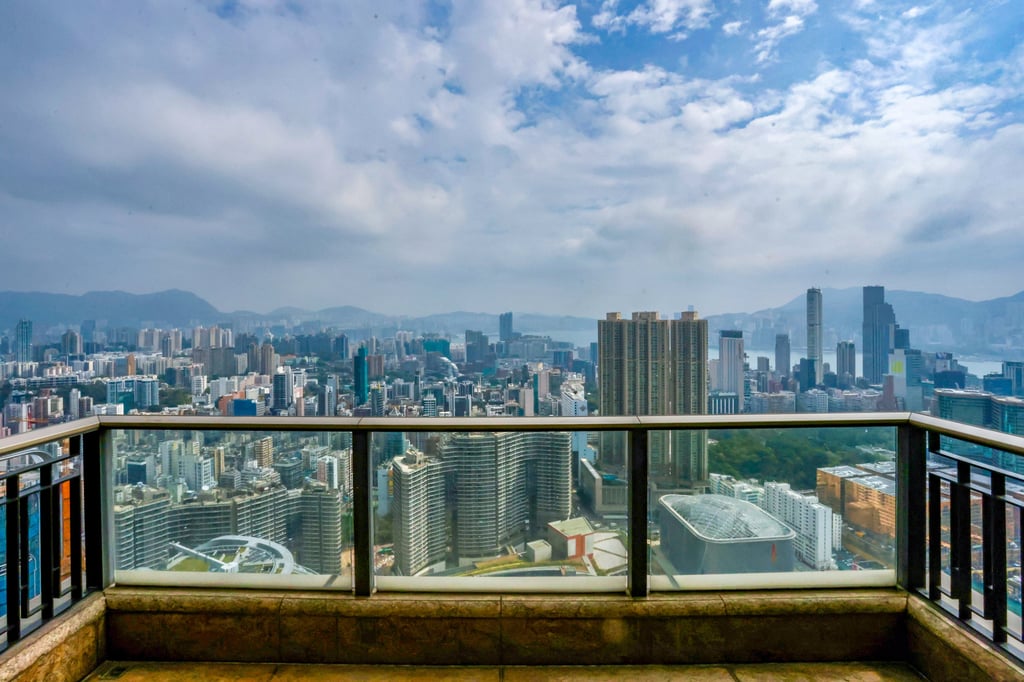
Mainland Chinese buyers have also played a key role in the recovery of the housing market. According to CBRE, mainland purchasers accounted for 72 per cent of primary market transactions in the luxury market last quarter, up from 58 per cent in the second quarter. In the “super-prime” category, which covers sales of homes worth US$10 million or more, Hong Kong was the world’s most actively traded market, according to a global ranking by Knight Frank.
However, the two other forces influencing the city’s economy – global financial conditions and the outlook for the AI buildout – have been less supportive in recent months. Stronger-than-expected inflation in the United States has revived concerns about a steeper rise in interest rates, while a succession of shocks in the tech world have fanned fears about the financing and geopolitics of the AI boom.
Last week, US Treasury bonds suffered their sharpest weekly sell-off since US President Donald Trump launched his “Liberation Day” tariffs in April last year. Bank of America believes “a worrisome broadening of inflationary pressures” will force the US Federal Reserve to increase borrowing costs three times in the next four months.
In a report on November 16, S&P Global Ratings said “higher interest rates are back, and Hong Kong’s property markets will feel the pinch.” Secondary prices in the housing market have been more or less flat since June – in part over uncertainty around the impact of measures to stem capital outflows from the mainland – while tighter financing conditions will “continue to constrain investment demand” for commercial real estate, CBRE said.
This makes the timing of the spying scandal engulfing Nvidia, as well as the Trump administration’s tighter curbs on Chinese companies’ access to advanced AI chips the crisis was bound to trigger, particularly bad. Tech hardware stocks across Asia have been under severe strain in recent months as worries about the region’s AI-fuelled boom intensify.
05:21
The rise and fall of Jensen Huang, who has resigned as Nvidia’s CEO
In a report on November 9, HSBC said Asia was acutely vulnerable to a global slowdown in AI hardware demand as “export growth beyond AI goods remains ho-hum, while investment and consumption face a multitude of headwinds across Asia”.
Even so, these threats should not obscure the bigger picture. Hong Kong’s economy and markets have been at the epicentre of global cross-currents for decades, yet the recovery in the past two years has strengthened sufficiently to allow the city to navigate headwinds without being blown off course. The “Hong Kong is back” narrative is about resilience.
Whether it is the fast pace of the economic expansion, the strong rebound in corporate earnings, the resurgence in office leasing activity led by the Central district or the increase in IPO proceeds this year to more than US$50 billion for just the third time in history, Hong Kong’s recovery is well entrenched.
While a more hawkish Fed and an increasingly uncertain outlook for the AI buildout pose risks, the city’s new-found resilience makes these threats more manageable. Having struggled to recover from a succession of domestic and external shocks, Hong Kong now faces its challenges from a position of relative strength.
KioskNews shows a cleaned-up reading view extracted from the publisher’s page — the original always lives on their site, not ours.