Singapore aims to strengthen haze law, may introduce new legislation where necessary, says minister
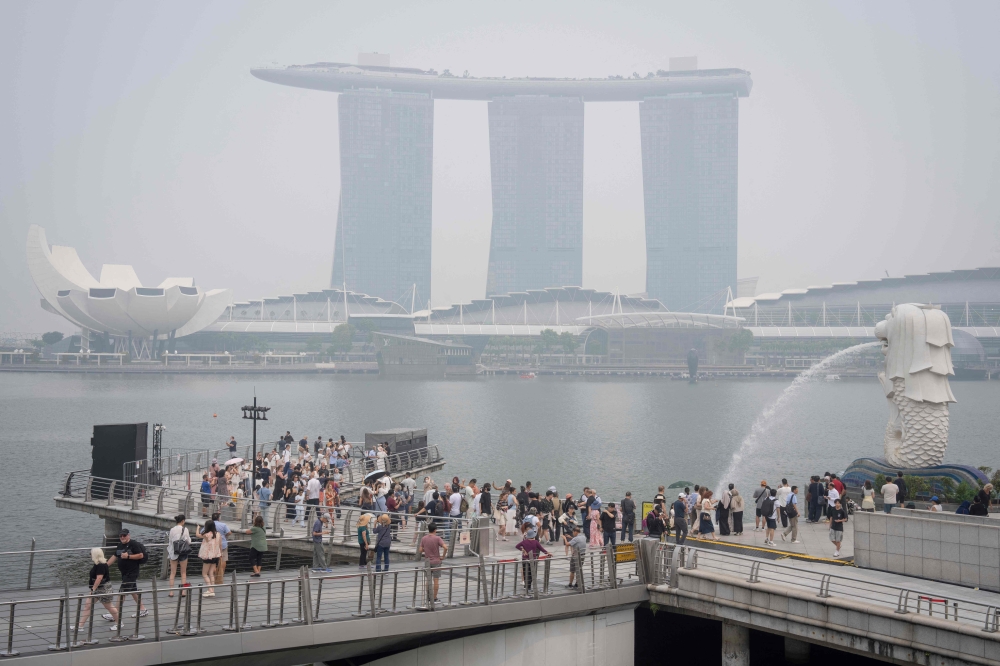

People visit Merlion Park in Singapore on October 16, 2026. Singapore is studying ways to tighten its existing anti-haze legislation and will introduce new laws where necessary, said Minister for Sustainability and the Environment Grace Fu on Tuesday. — AFP pic
First Published: Tuesday, 27 Oct 2026 5:12 PM MYT
SINGAPORE, Oct 27 — Singapore is studying ways to tighten its existing anti-haze legislation and will introduce new laws where necessary, said Minister for Sustainability and the Environment Grace Fu on Tuesday (October 27).
“The objective is to address enforcement gaps, strengthen corporate accountability, and enhance our ability to investigate and take decisive action against those responsible for transboundary haze,” she said.
“We are also prepared to use a wider range of legal, regulatory and economic measures,” said Fu at the Sustainable Procurement Forum held by the Singapore Environment Council.
Addressing the recent haze arising from forest and land fires in Indonesia, the minister stressed that companies must be responsible for the environmental impact of their operations and supply chains.
Ten Singapore-registered palm oil or forestry companies with associated land concessions in Indonesia were issued notices under Section 10 of the Transboundary Haze Pollution Act (THPA) on October 23.
The Act requires companies to provide information on their linkages with associated firms, their land concessions, as well as fire preventive measures and/or any firefighting efforts taken by them and/or their associated companies in Indonesia.
Fu noted two challenges in cross-border enforcement efforts.
One, she said it can be difficult to ensure that overseas companies co-operate with investigations, especially when they do not comply and their officers remain outside of Singapore.
“For example, we have consistently expressed openness to working with Indonesian authorities who share our common objective of holding responsible companies accountable,” she added.
“This posture, position will not and has not changed, even as we press ahead to make adjustments.”
Another difficulty lies in gathering and verifying evidence from overseas.
The minister explained: “We also need to establish the relevant corporate and operational links, including who owns or controls the land, the relationships between different companies, and what steps were taken to prevent and fight the fires.”
As Singapore authorities cannot simply enter another jurisdiction to conduct its own investigations or gather evidence, independently verifying information or documents provided by an overseas company can also pose a challenge.
Fu pointed out that the companies named under THPA have faced scrutiny in both the financial and public space.
“The increased scrutiny has already prompted companies to respond publicly and set out their positions,” she said.
“The broader point is that companies are accountable not only to regulators. Investors, financiers, customers and the wider public increasingly expect companies to demonstrate responsible environmental practices.” — AsiaOne
KioskNews shows a cleaned-up reading view extracted from the publisher’s page — the original always lives on their site, not ours.