Famed Iron Age king was actually a woman
Ancient Rome famously invaded Britain in 43 CE, under the direction of the emperor Claudius. But his campaign’s success largely hinged on insider information. Just three years’ earlier, an Iron Age tribe living in present-day southeast England known as the Atrebates ousted their ruler named Verica, who subsequently fled for Rome. Once there, Verica convinced Claudius to move forward with plans to cross the English Channel, and add Britain to the empire’s ever-growing domain. In exchange for restoring his place on the Atrebates’ throne, Verica agreed to provide Roman troops with tactical support and guidance.
In a new discussion published today in the journal Current Archaeology, researchers argue that historians have consistently gotten one key detail incorrect for at least 200 years. Based on their analysis of ancient artifacts and contextual information, the Iron Age ruler Verica was a woman, not a man.
“Verica is assumed to have been male because of the patriarchal mindset of 19th century classical historians,” study co-author and Bournemouth University archaeologist Miles Russell said in a statement. “Verica was not only critical to the special relationship between Britain and Rome in the early first century [CE] but was indisputably female.”
The consequential re-evaluation is based on three major pieces of evidence—the first simply being Verica’s name. Ending in “a” was common for women’s names in Iron Age Britain. Two of Verica’s most recognizable contemporaries, Boudica of the Iceni and Cartimandua of the Brigantes, were both female leaders of their respective tribes. Boudica is particularly famous for leading a failed revolt against the Romans in 60 CE, but Russell and his colleagues argue their revision makes Verica a much more consequential figure.
The second reason relates to Roman accounts of Claudius. Many Roman writers of the era were highly critical of the emperor, and described him as weak or inept. Critics often cited his consultations with women and the formerly enslaved as proof. Despite his success in Britain, Roman historians like Cassius Dio tied his decision to Verica, a woman.
“The story of Claudius committing to something only because a woman told him to, fits the trope of this emperor as being submissive and henpecked,” argued Russell. “In effect, Dio was saying that the campaign was undertaken solely because of the whisperings of a barbarian femme fatale.”
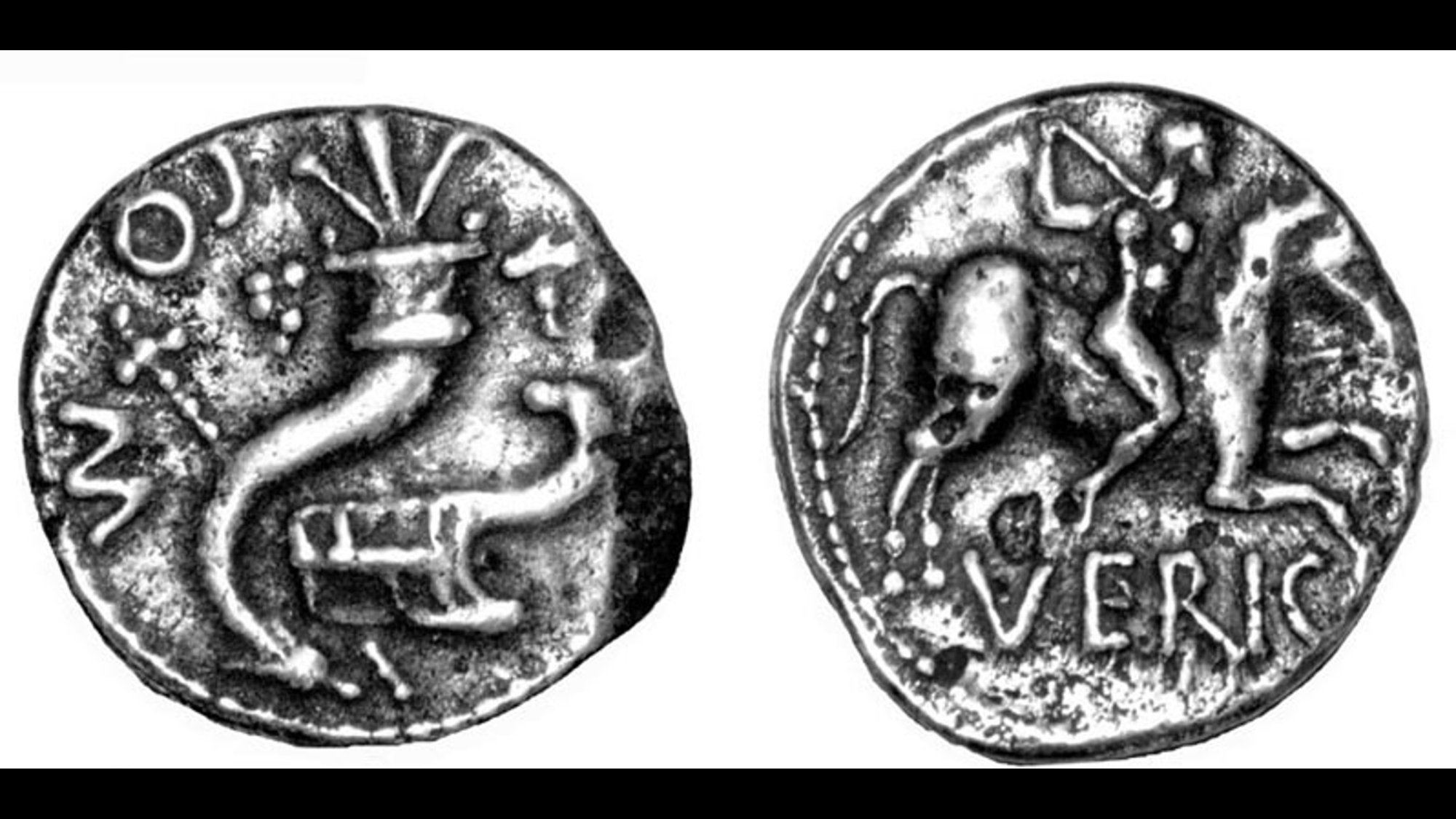
Finally, the archaeologists point to Verica’s own coinage. Once reinstated to her throne, the ruler was allowed to mint her own currency featuring the Latin title “rex” to indicate she enjoyed the emperor’s full support. Many people mistakenly assume rex is only a masculine term, when it was actually applied to any gender.
“Both male and female kings were recognised by Rome, Cleopatra of Egypt being the most famous,” Russell added.
Verica’s image on the coins also reinforces the argument. Other British Iron Age leaders also produced coins, but those portray clearly male fighters. Verica’s currency shows a slender, feminine individual on horseback with bare breasts. Russell argues that taking all of this “at face value” shows Verica was clearly a woman—and a very powerful woman at that.
“Had she not been deposed, fleeing to Claudius for military support, Rome may never have invaded Britain in the first place,” he said.
KioskNews shows a cleaned-up reading view extracted from the publisher’s page — the original always lives on their site, not ours.