As Madhya Pradesh revives public bus network after 21 years, a warning from Gadkari
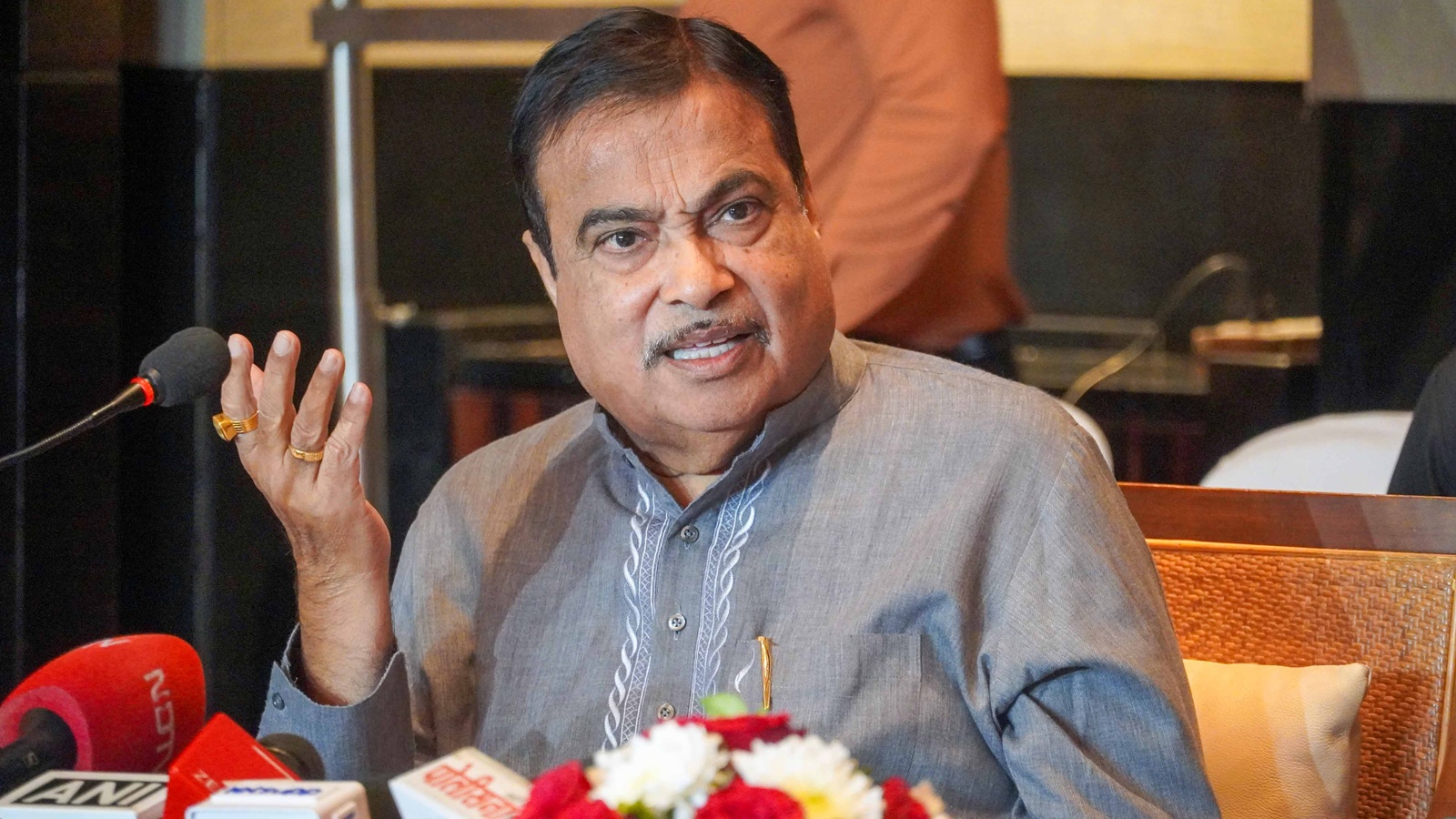
After 21 years, Madhya Pradesh on Friday formally brought back a state-backed public bus network, with Union Road Transport and Highways Minister Nitin Gadkari using the launch to push for safer buses, stricter enforcement, and a much larger shift to electric public transport.
“Manufacturers need to be clearly told to pull up their socks,” Gadkari said.
“If bus manufacturers do not meet the desired standards, they will be dealt with in the same manner by the government as we are dealing with contractors.”
His warning came against the backdrop of recent deaths involving passengers in air-conditioned sleeper buses in Noida and Rajasthan.
Gadkari, along with Chief Minister Mohan Yadav, flagged off 351 buses under the newly launched Mukhyamantri Sugam Parivahan Sewa and the Centre’s PM e-Bus Sewa at the BHEL Dussehra Ground in Bhopal.
The launch marks the return of organised public bus transport in the state after the Madhya Pradesh State Road Transport Corporation (MPSRTC) was shut down in 2005 following years of losses and mounting debt.
The first fleet comprises 120 intercity and 231 intracity buses, to be operated through a public-private partnership model.
Story continues below this ad
Indore has received the largest allocation with 145 buses, followed by Bhopal with 106 and Jabalpur with 67. Rewa has been allocated 18 intercity buses, while Dewas, Katni and Bhind will receive 10, three and two of them respectively.
The state government has set an initial target of expanding the network to about 1,500 buses in the first year, followed by additions of 2,500 to 3,000 buses annually, with a long-term target of 15,000 buses by 2031.
The revival comes 21 years after the MPSRTC was formally wound up in 2005 with accumulated liabilities of about Rs 756 crore and monthly losses of nearly Rs 5 crore.
Unlike the earlier state-run corporation, the new system will rely on private operators working under government-regulated contracts. For its part, the government has sought to make operations viable through transparent contracts, incentives, advertising and cargo-related revenue.
Story continues below this ad
Under the revised system, bus body manufacturers can no longer rely on self-certification for registration. Vehicles must obtain type-approval certification from an authorised testing agency before registration. A separate checklist is also to be prepared for every bus and uploaded to the Vahan portal, with physical and video verification forming part of the process.
Gadkari warned Regional Transport Office officials against clearing buses without completing these checks.
“Without the physical and video verification of the checklist, registration of buses will not be allowed. All RTO officers should keep this in mind,” he said.
He also warned officials against corruption in the registration process, saying officers who approve vehicles without following the prescribed procedure could face disciplinary action.
Story continues below this ad
“Many RTO officers are Gandhiwadi — they put the seals of approval promptly on seeing the Gandhi notes. Keep this in mind: if sanction is given to the wrong bus, then you (the concerned RTO officer) will lose your job,” Gadkari said.
Gadkari said 3,800 people were killed in bus-related accidents across India in 2024 and stressed that tighter standards had been introduced under the revised Bus Body Code, which came into effect on September 1, 2025.
Alongside safety, Gadkari set out a much larger ambition for electric public transport in the state. He said 972 electric buses had been sanctioned for Madhya Pradesh under the PM e-Bus Sewa, but estimated the state’s potential at around 25,000 electric buses.
The new bus network is also being built around technology. The buses are equipped with CCTV cameras, panic buttons and vehicle-location tracking systems, while passenger information systems are intended to provide real-time service information. An Intelligent Transport Management System will monitor bus movement, punctuality and operations through command-and-control centres.
Story continues below this ad
The government also plans to train drivers in modern vehicle technology, safety protocols and the operation of CNG and electric buses, besides establishing a passenger grievance-redressal mechanism.
KioskNews shows a cleaned-up reading view extracted from the publisher’s page — the original always lives on their site, not ours.