33 Years Later, Calvin And Hobbes' Greatest Comic Hasn't Aged A Day

Robert Wood is a writer and editor based out of Cheshire, England. He is the author of 'The False Elephant: and 99 Other Unreasonably Short Stories' - 100 stories, each told in exactly 100 words.
Rob got into comics via Bendis' Ultimate Spider-Man and the UK anthology 'The Mighty World of Marvel,' which was running Frank Miller's Daredevil, Classic Hulk and Contest of Champions II.
Prior to journalism, he worked in copywriting and copyedited for Oxford University Press. He is on X as @PinchTwigs and Instagram as roobwoodjourno.
Sign in to your ScreenRant account
More than three decades after it was published, Calvin and Hobbes' best comic isn't just still excellent - it might be the best reflection on childhood in comic strip history.
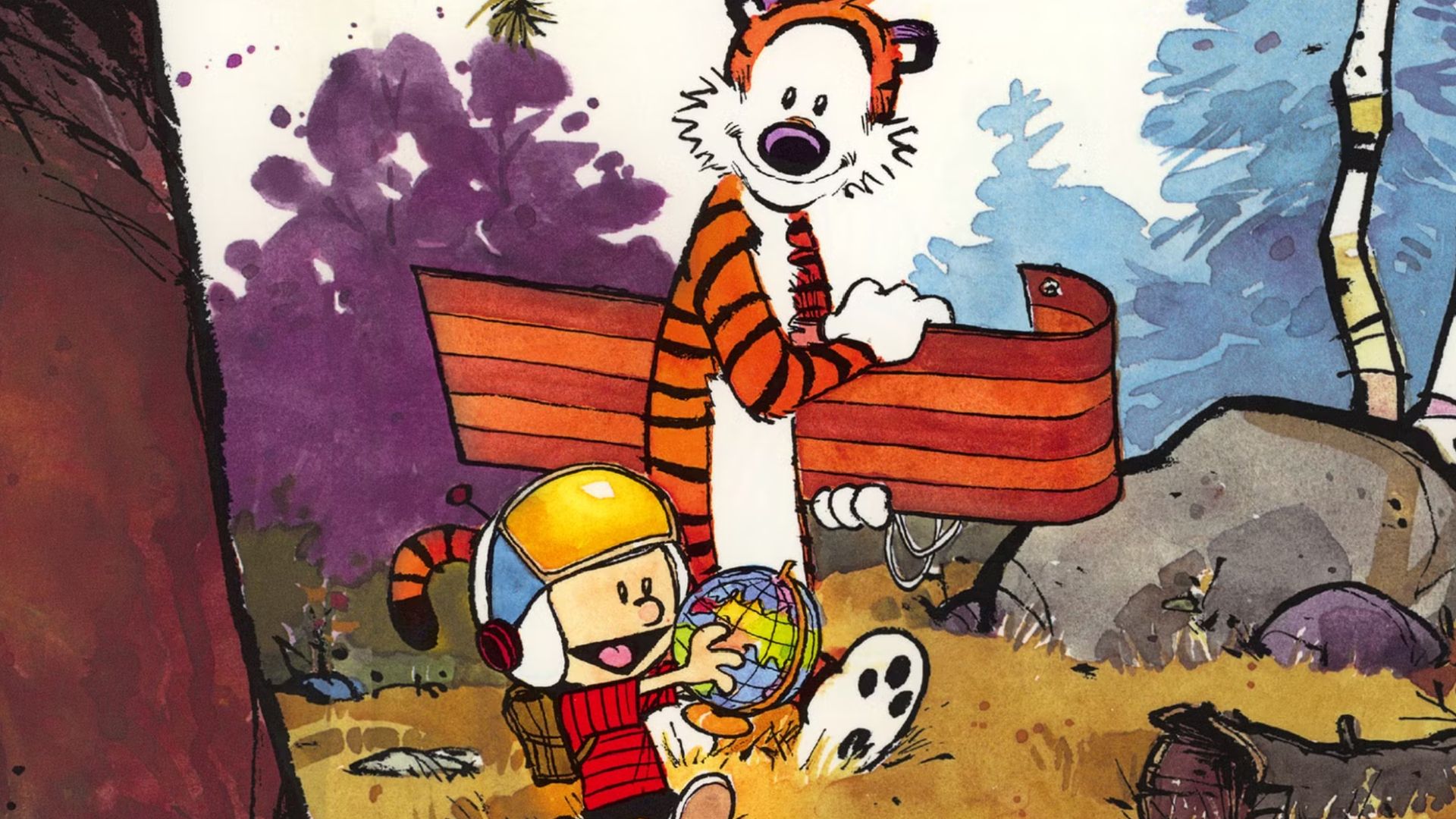
Syndicated from 1985 to 1995, Calvin and Hobbes follows six-year-old Calvin and his imaginary friend/stuffed tiger Hobbes as they reckon with the joys and complexities of childhood.

Calvin and Hobbes is celebrated both for Bill Watterson's artistic talent and his deep insight into the big questions of childhood, with Calvin trying to figure out his place in a world he can't quite understand ('helped' by Hobbes, who only really knows that he loves his best friend and enjoys being a tiger.)
Calvin and Hobbes' Dead Bird Comic Is Childhood In a Nutshell

The timeless Calvin and Hobbes strip in question was published on September 19, 1993, and sees Calvin and Hobbes discover a dead bird. Calvin reflects on the beauty of the bird and the ruthlessness of nature, admitting that his own existence feels fragile in the face of meaningless death.
The comic concludes with Calvin speculating, "I suppose it will all make sense when we grow up," with Hobbes agreeing, "No doubt." Despite seemingly concluding their concerns, the final panel shows the two sitting by a tree, watching the birds in the sky and clearly still contemplating some deep thoughts.
What Makes This Calvin and Hobbes Strip So Good

Watterson's artistic instincts shine through in the strip, from the realistic depiction of the bird anchoring Calvin and Hobbes' speculations in real loss, to the expansive, borderless final panel that communicates a span of time spent in thought.
At the same time, the initial bird panel encompasses both rows of Calvin and Hobbes' reactions, while the bird itself is cut off in the panels showing the characters - the bird's body, and the fact of death, remain an immutable truth, visually constant even as Calvin and Hobbes try and fail to understand it.
Watterson's writing utilizes pitch perfect 'dramatic irony' - a situation where the audience understands something that the characters don't. Calvin and Hobbes assume that grown-ups have figured out the big questions and disturbing issues that kids struggle with, but the adult readership know that isn't true.
Watterson doesn't just accurately communicate a common childhood experience of reckoning with death, he takes readers back in time by invoking their own lack of understanding, implying that no matter how many years pass, we're all reduced to six-year-olds by life's big unanswered questions.
Calvin and Hobbes Knows Death Is a Part of Childhood
The 'Dead Bird' comic wasn't some one-off 'special episode'-style anomaly. Calvin and Hobbes addressed death multiple times throughout its run, with Calvin and Hobbes often philosophizing about the complexities of mortality.
In some cases - like Calvin and Hobbes playing war - it's clear the strip has a message for the reader. But in others, like 'Dead Bird' and the sequence where Calvin and his parents try to care for an injured raccoon, Watterson faithfully recreates the explosive moments of philosophy that characterize childhood, as kids start to ask big questions and reckon with a world that's a lot bigger than just them and their parents.
Watterson does an amazing job of making Hobbes the perfect sounding board - someone who cares deeply about Calvin and has his own personality, but doesn't dole out answers. Calvin and Hobbes contemplate big ideas like death together, and the lack of answers allows their questions to linger with the reader. Indeed, this particular Calvin and Hobbes comic has been lingering for thirty-three years, and it's no less potent in 2026 than in 1993.
- Writer
- Bill Watterson
- Colorist
- Bill Watterson
- Publisher
- Andrews McMeel Publishing
KioskNews shows a cleaned-up reading view extracted from the publisher’s page — the original always lives on their site, not ours.