Commentary: Why do Trump and Xi keep meeting if the hard issues remain unresolved?
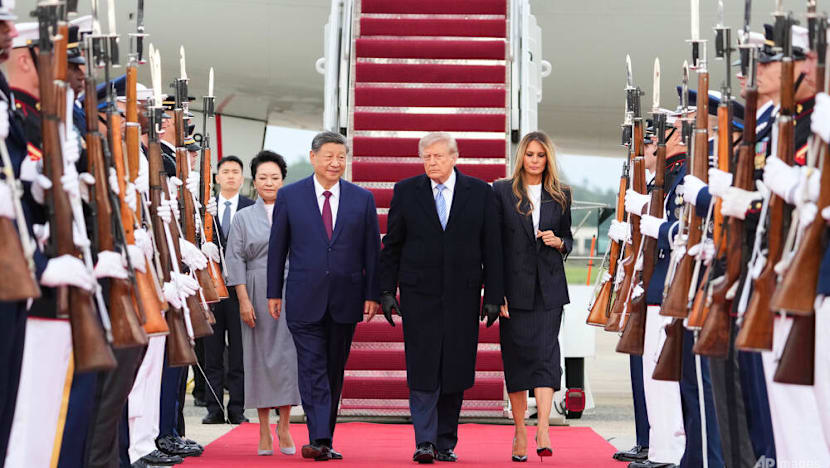
Presidents Donald Trump and Xi Jinping's personal ties are doing real work, more than the modest outcomes suggest, says former SCMP editor-in-chief Wang Xiangwei.
New: You can now listen to articles.

This audio is generated by an AI tool.
01 Oct 2026 06:00AM
BOSTON: How long will the bonhomie last? That is the question US-China watchers on both sides are asking after the Washington summit last week between Presidents Donald Trump and Xi Jinping.
Most dismissed the summit as heavy on symbolism and light on substance. The two leaders agreed to extend the trade truce by just two months and to start a dialogue on AI, while kicking the can down the road on harder issues such as China's support for Iran, Taiwan and wider trade tensions.
Mr Trump is happy with the visit. He hailed a great friendship, making the extra effort to meet Mr Xi at the airport, the first time since 1962 that a US president has done so for a visiting leader other than a pope.
Mr Xi, in turn, praised the host for "many special arrangements ... all prepared with meticulous care and consideration", and said the talks added "new substance" to the "constructive China-US relationship of strategic stability".
But there is more to this summit than the thin results it produced.
THE PERSONAL RELATIONSHIP IS DOING REAL DIPLOMATIC WORK
First, symbolism is substance, when so much rests on Mr Trump and Mr Xi’s relationship.
Critics seem to forget how relations have changed since last year’s dramatic economic confrontation. In April 2025, tariffs on each other's goods shot up to 145 per cent, and trade between the world’s two biggest economies all but stopped for a time.
The two leaders agreed to a truce less than a year ago in Busan, South Korea. That truce rests on trust between two men, so the pageantry and warm tone matter. They help build the personal chemistry needed to keep ties steady over the next two years.
Many US analysts dismissed the warmth as shallow, partly because Mr Xi seems reserved while Mr Trump gushes. But Chinese leaders are trained to act this way, so the weight of Mr Xi’s words – that he and Trump "respect each other" and have "built personal rapport" – should not be misread.
UNPRECEDENTED LEVEL OF ENGAGEMENT
Second, the leaders have raised their diplomacy to a new level.
Mr Trump went to Beijing in May, and Mr Xi came to Washington in September. They will meet again at APEC in Shenzhen in November and at the G20 in Miami in December. That is four meetings in one year, unprecedented in the history of bilateral ties.
Some analysts say the summit was not well prepared. The two sides had different hopes, not least on how long to extend the trade truce, and a rumored delegation of Chinese business leaders never showed up.
Yet the calendar now works in the leaders' favour. Every deadline has a meeting in front of it. The truce now runs to Jan 10, 2027, and both the Shenzhen and Miami meetings fall before it ends.
Both leaders also noted that China and the US were allies in World War II. It signals that the two can work together again when their interests align.
Third, the repeated engagements and pomp confer status. It confirms the rise of the "G2," an idea Mr Trump revived at Busan last October. Beijing has not embraced the label in public, but it has long sought to be treated as a great power that Washington deals with on equal terms.
LIMITS OF PERSONAL DIPLOMACY
But even personal diplomacy has its limit.
China's readout said Mr Xi urged Washington to oppose Taiwan independence. The White House statement did not mention the island. Afterward, US Ambassador to China David Perdue said there is "no change" in Taiwan policy.
Many analysts will call that a stalemate. But don’t miss the context: Not long ago, the talk in Washington was that Beijing could move on Taiwan by 2027. But now that Mr Xi pressed his case and Washington held its line, neither side made a fuss.
The harder test will come when it comes to US arms sales to Taiwan which Beijing sees as crossing a red line. Mr Trump has held back a US$14 billion package since May, calling it a "very good negotiating chip" with Beijing, which treats Taiwan's defence as something to trade.
If Mr Trump eventually clears the sale, ties will likely spiral down.
To be sure, ties driven by leaders have pitfalls, above all Mr Trump's unpredictability. US politics may turn more volatile after the November midterms, when Democrats are widely expected to win back the House.
But at least the two men still have two more meetings this year to bargain with.
If the Washington summit showed anything, it is that leader diplomacy can help keep ties steady. The test comes when something forces them off it.
Wang Xiangwei is a former Editor-In-Chief of South China Morning Post. He is now senior visiting scholar at the Harvard Kennedy School.
KioskNews shows a cleaned-up reading view extracted from the publisher’s page — the original always lives on their site, not ours.