How Heated Rivalry helped save this Hamilton restaurant

Our cookbook of the week is Done Right by Teo Paul.
Sign In or Create an Account
Jump to the recipes: steak haché tabac-style with sauce au poivre, Grey Owl endive salad with mustard vinaigrette and fresh dill, and pan-fried pickerel on toast with harissa gribiche.
It’s a Sunday afternoon, and Le Tambour in Hamilton, Ont., is humming. There are nods to a Canadian TV success story — Tall, Dark and Hollander and “Russians Don’t Blush” — on the drink menu, and two guests ask a server to take a photo of them in the booth where Shane Hollander (Hudson Williams) and Rose Landry (Sophie Nélisse) shared fries in an episode of Heated Rivalry.
It wasn’t always this way, says restaurateur and chef Teo Paul. After opening strong in 2023, the French bistro “hit the skids,” threatening all he had built. “The amount of money you can lose when things are going bad is life-changing. It’s very stressful.”
Then, in 2025, the soon-to-be sensation Heated Rivalry shot some scenes at Le Tambour. By early February 2026, the show had reached more than 10 million viewers in the United States alone. “They nailed it,” says Paul. “People started showing up from all over the world.”
Paul always believed in the food, the space and the vibe at Le Tambour, with its horseshoe-shaped bar and open-fire grill. But now it’s further reaching — thanks to Heated Rivalry fans adding it to their self-guided tours of Hamilton.
“I’m not a religious person, but I have a lot of faith in the universe. You create something, and you try to fill it with love, and something is going to see that. Something will respond,” says Paul. “You cook for somebody, and you just hold that intention in your heart. You’ll win it.”
Restaurants were always Paul’s happy place. Growing up in Toronto, his family was the most together during meals out. “We brought our best selves, but at home, everyone retreated a little bit.”
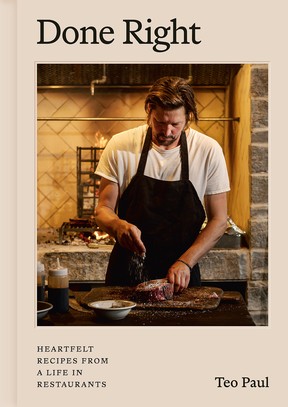
Paul opened his first restaurant, Union, in Toronto in 2009, followed by Côte de Boeuf in 2013, Heart’s in Ontario’s Grey County in 2021, Le Tambour two years later, and Brasserie Côte in Toronto this March.
Writing his cookbook debut, Done Right (Appetite by Random House, 2026), Paul saw his journey as a restaurateur and chef in a new light. “As I wrote it down, it seemed so simple, but you don’t see it when you’re in it. Then you take a step out, and you’re like, ‘Oh, OK, that’s why you do it.’ It’s just creating this home life,” says Paul.
Over time, “creating these spaces that people can come and find some joy in, I (realized), I can do this. This is what I want. This is what I love.”
The recipes in Done Right chart Paul’s path as a chef, from his time cooking in Paris restaurants — and Parisians’ apartments, taking the metro during rush hour with sweetbreads in tow — to leaving his imposter syndrome behind in Piedmont, Italy, before opening Union.
“What I wanted to try to get people to understand through the story is that you just have to put yourself out there. Cooking is a powerful thing for people because there’s a transference of magic or love — or call it whatever — but you’re offering something to someone. They get to sit down and enjoy it, and just being present for those times when you’re doing it.”
The book’s title comes from the motto Paul established at Union: “simple done right.”
“Keep it simple and do it right. That’s all we’ve got to do,” says Paul. “Let the food speak. Get to the heart of it, and people appreciate it a lot more.”
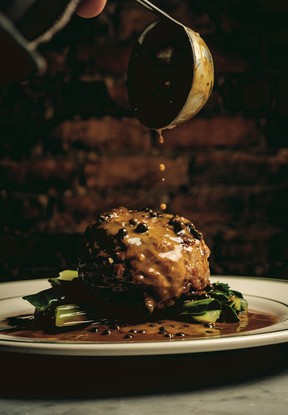
Serves: 4
Sauce au Poivre:
1 tbsp canola oil or duck fat
1 onion, finely diced
1/2 cup drained green peppercorns
1 cup port
1 tbsp Better Than Bouillon chicken or beef base
1 cup heavy (35 per cent) cream, plus more as needed
1 tbsp Dijon mustard
Steak Haché:
2 lb (900 g) lean ground beef
1 tbsp Dijon mustard
1 tbsp soy sauce
1 tsp pure maple syrup
Salt and ground black pepper
1 tbsp duck fat
Make the sauce: Heat a saucepan over medium heat. Add the oil, then sweat the onion and green peppercorns until the onions are translucent, about 3 minutes. Add the port and cook off the alcohol smell for a minute or two.
In the meantime, mix the bouillon with 1 cup water to make the stock. Add that to the pan and stir until the sauce comes together. Whisk the cream and mustard into the sauce for depth and character. Cook until the sauce is reduced by about one-third. Remove from the heat.
Make the steak haché: In a large bowl, mix the beef, mustard, soy sauce, maple syrup and a generous pinch of both salt and pepper until just combined. Form into four patties and season again with salt and pepper.
In a skillet over medium heat, warm the duck fat. Sear the patties for 5 minutes, then flip and cook for another 5 to 7 minutes for medium-rare. Transfer the haché to a plate.
Pour the sauce into the skillet and bring to a simmer. Taste and adjust the seasoning. If it’s too salty, add an additional 1/4 cup cream.
Plate the steak haché with the sauce spooned over top.

Serves: 6
Mustard Vinaigrette:
1/2 shallot, finely diced
3 tbsp olive or canola oil
1 tbsp Dijon mustard
1 tsp red wine vinegar or white balsamic vinegar
1/2 tsp honey (skip this if you’re using white balsamic vinegar)
Squeeze of lemon juice
Salt and ground black pepper
Salad:
2 heads endive, roughly chopped
1 head radicchio, roughly chopped
1 bunch radishes with tops, radishes quartered and greens roughly chopped
1 Honeycrisp apple or Bartlett pear, sliced
1/4 cup chopped fresh dill
1/2 cup pecan or walnut halves, toasted (see Tabac Hack)
7 oz (200 g) Grey Owl goat cheese or Château de Bourgogne (a cow’s milk triple-cream cheese)
Make the vinaigrette: In a shallow bowl, combine the shallot, oil, mustard, vinegar and honey (if using). Whisk until emulsified. Add a squeeze of lemon juice and whisk again. Season with salt and pepper to taste.
Make the salad: In a large bowl, combine the endive, radicchio, radishes, radish greens, apple and dill. Add the vinaigrette to coat lightly and toss well.
Plate the salad and finish with the pecans and Grey Owl over top.
Tabac Hack: To toast pecan or walnut halves, spread them on a parchment-lined baking sheet and toast in a 400F (200C) oven for 6 minutes. Spread them out on a plate to cool.

Serves: 4
Harissa Gribiche:
5 eggs
1 shallot, finely diced
1/2 cup chopped bread-and-butter pickles or dill pickles
2 tbsp aioli or mayonnaise
1 tsp Dijon mustard
3 tbsp harissa, plus more to serve
Salt and ground black pepper
Pan-Fried Pickerel:
1 tbsp duck fat or olive oil, for toasting
4 slices quality bread
1 cup tempura batter mix (I prefer Nissin brand)
1/4 cup soda water
2 ice cubes
4 skin-on pickerel fillets (about 5 1/2 oz/160 g each), each cut into 3 pieces (see note)
2 cups canola oil
Slaw:
1/2 head green cabbage, grated
2 carrots, peeled and grated
Juice of 1 lemon
1 garlic clove, grated
1 tsp salt
1/2 bunch fresh cilantro, chopped
4 lemon wedges
Make the gribiche: Bring a pot of water to a gentle boil. Gently lower the eggs into the boiling water. Cook for 8 minutes. Leave them in the water and set aside, off the heat, for 5 minutes. Remove the eggs from the water and peel.
Finely chop the eggs and place in a small bowl. Add the shallots, pickles, aioli and mustard, then stir in the harissa. Mix gently and season with salt and pepper to taste.
Pan-fry the pickerel: Heat a large pan over medium heat. Add the duck fat and, once it’s hot, add the bread in a single layer. Fry for 2 to 3 minutes per side, until golden and crisp. Remove from the pan and set aside.
Place the tempura batter mix in a large bowl. Pour in the soda water and whisk until a medium-thick batter forms. Add a few ice cubes (the colder the batter, the lighter the tempura will be) and whisk. We want a slightly thin batter. As the ice cubes melt, you may need to add a little more mix to keep the right consistency, because it will continue to thin out.
Pat the fish dry with paper towel, then dip the fish in the tempura batter.
Add the canola oil to the pan and heat it over medium heat. Working in batches, place the fish in the oil. Cook for 2 minutes, until golden and crisp, then carefully flip and cook for another 2 minutes. Transfer the fish to a plate and repeat with the remaining fish.
Make the slaw: Place the cabbage and carrots in a large bowl. In a separate small bowl, whisk together the lemon juice and garlic until the garlic disintegrates into the juice. Pour the dressing over the vegetables and toss to combine. Add the salt and cilantro, then toss again to mix well.
Place a toasted bread slice on each plate and spoon about 1 tbsp of the gribiche on top. Lay the pickerel on top of the gribiche. Squeeze a lemon wedge over each fillet. Serve with the slaw on the side.
Note: If you can’t find pickerel, use another white fish that holds together well, such as cod or red snapper.
Recipes and images excerpted from Done Right by Teo Paul. Copyright ©2026 Teo Paul. Photography by Daniel Neuhaus. Published by Appetite by Random House®, a division of Penguin Random House Canada Limited. Reproduced by arrangement with the Publisher. All rights reserved.
Join the Conversation
This website uses cookies to personalize your content (including ads), and allows us to analyze our traffic. Read more about cookies here. By continuing to use our site, you agree to our Terms of Use and Privacy Policy.
KioskNews shows a cleaned-up reading view extracted from the publisher’s page — the original always lives on their site, not ours.