Saviour or stop gap? Malaysia’s South Korean jets arrive to relieve ageing fighters
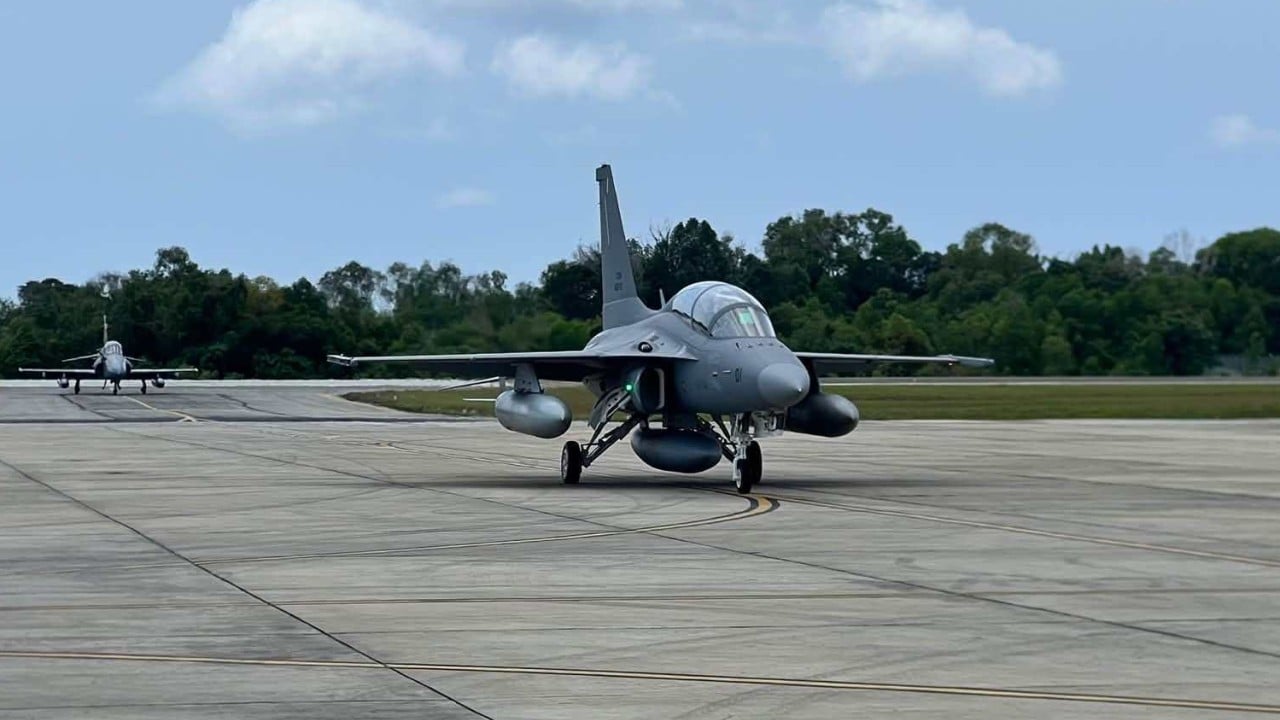
Malaysia received its first South Korean-made light combat jet on Friday under a nearly 4 billion ringgit (US$990 million) procurement, in what analysts describe as welcome relief for an ageing air force still years away from replacing its frontline fighters.
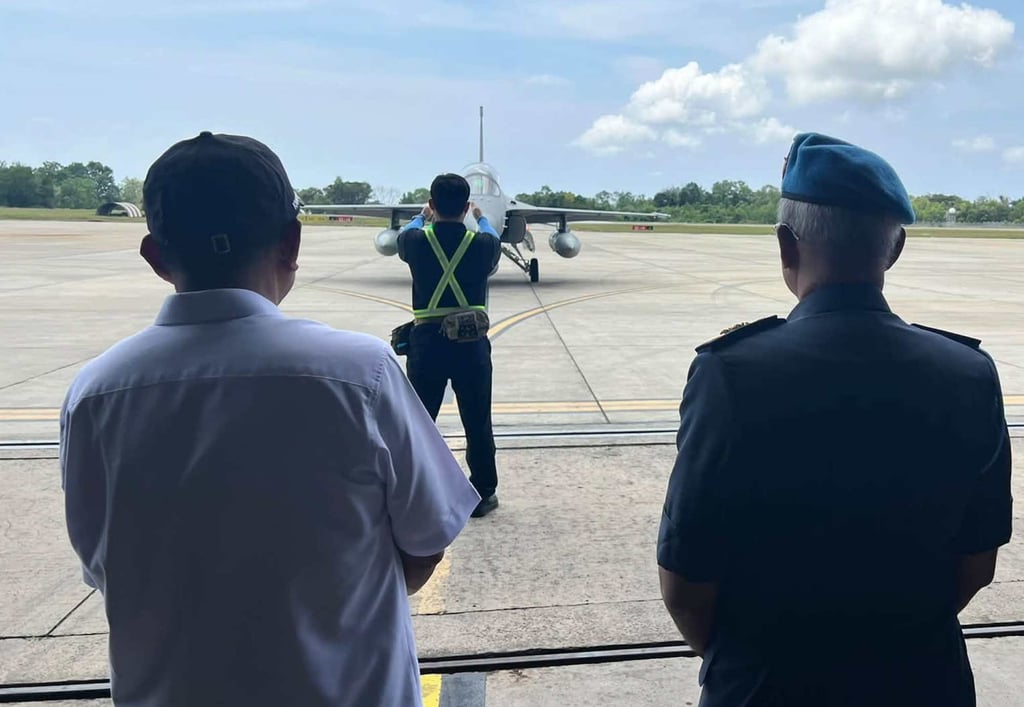
The FA-50M Block 20 jet arrived at the air force base in Labuan, off Borneo, with a second expected in Kuantan on the peninsula’s east coast next Monday. They are the first of 18 aircraft ordered from Korea Aerospace Industries under a deal formalised in May 2023.
The remaining aircraft are scheduled to arrive in stages through March 2028 – beginning the first fleet renewal in 19 years since the delivery of Russian-built Sukhoi Su-30MKMs in 2007.
Defence Minister Mohamed Khaled Nordin said on Friday that the acquisition would enhance Malaysia’s capabilities “particularly in carrying out its air defence responsibilities”.
“The procurement is particularly important as the existing Hawk aircraft are scheduled to be decommissioned in 2028,” he said, according to state news agency Bernama.
During Monday’s budget debate, the minister also outlined plans to deploy three Turkish-made Anka-S surveillance drones at Labuan and establish a squadron to operate and support them to improve intelligence gathering over the South China Sea.
The FA-50Ms will replace ageing British-built Hawks and be used to train future fighter pilots, taking on some duties performed by the Sukhois and American-made F/A-18D Hornets. The South Korean-built jets feature advanced radar for tracking targets and a targeting pod to guide precision strikes.
Patrol pressure
Malaysia’s maritime interests in the South China Sea span two geographically separated regions – including the Borneo states of Sabah and Sarawak, where offshore oil and gas operations have drawn objections from Beijing.
Beijing claims much of the South China Sea, overlapping with maritime claims by Malaysia, the Philippines, Vietnam, Brunei and Taiwan. China maintains that its activities in the disputed waters are lawful, while Malaysia considers the waters where it conducts energy exploration to fall within its own maritime jurisdiction.
Prime Minister Anwar Ibrahim has insisted that Malaysian exploration will continue despite Chinese protests, while remaining open to negotiations.
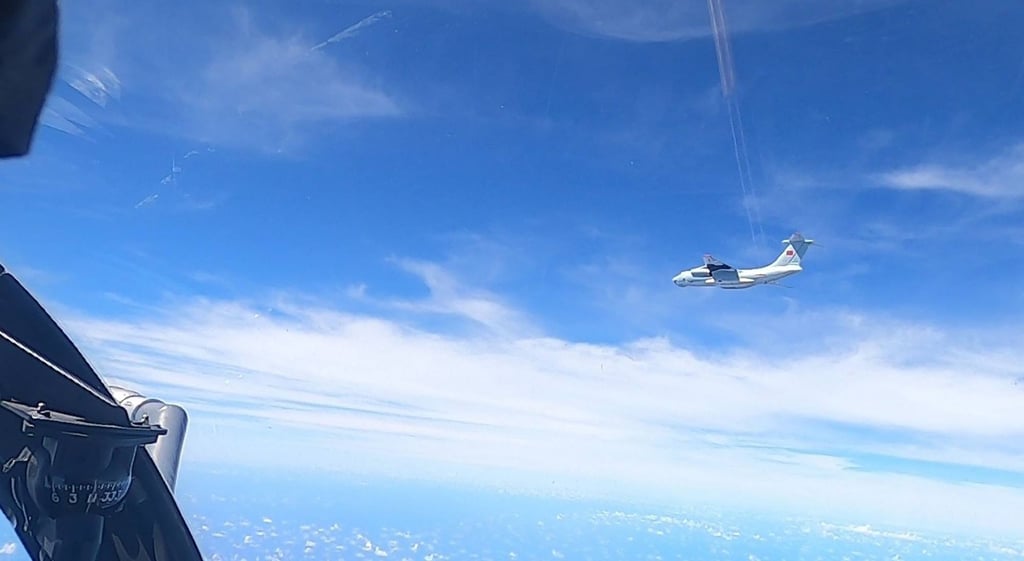
The competing positions came into focus in May 2021, when Malaysia scrambled Hawks from Labuan after detecting 16 Chinese military transport aircraft approaching Sarawak. Malaysia said the planes had entered its airspace while China maintained they were on routine training, had not entered another country’s territorial airspace and were exercising their right to overflight under international law.
Collin Koh, a senior fellow at Singapore’s S. Rajaratnam School of International Studies, said the FA-50M would give Malaysia a more capable aircraft for such encounters. “While the aircraft might be a lightweight jet, it remains useful for projection of presence.”
The Philippines uses the same family of jets for its South China Sea patrols. Manila ordered another 12 FA-50s from Seoul last year in a deal worth about US$700 million, adding to a regional market for Korean aircraft that includes Indonesia and Thailand.
However, compared to larger multirole fighters, the new jets had limitations in their sensors, weapons payload and range, Koh said.
“It’s at best an interim, stop gap measure before the [air force] introduces next-generation fighter jets that would augment and eventually replace the existing Su-30MKM and F/A-18D,” he said. “The most feasible approach would be to try to extend the service lifespan and continue to modernise the Sukhois and Hornets for as long as possible.”
The air force also needed “a fundamental relook at its procurement policy that accounts fully for a long-term, sustainable service of the assets”, including maintenance and repairs, he said.
Replacement dilemma
Malaysia abandoned an attempt to acquire second-hand Kuwaiti Hornets earlier this year over delivery timing and uncertainty about long-term maintenance and support.
Khaled said in July that the government was considering bringing its replacement fighter procurement forward into the 2026–2030 development plan – subject to funding. The Hornets and Sukhois would need to be retired by around 2035, the minister said.
A Hornet crash at Kuantan in August last year also put the fleet under scrutiny, although investigators attributed the accident to a bird strike.
Kuala Lumpur-based defence analyst Zaki Salleh said the FA-50Ms could reduce the older fighters’ workload by taking on patrol, pilot training and suitable strike missions, saving operating costs and strain on their airframes.
“The arrival of the first two aircraft does not mean they can be immediately deployed for actual operational missions,” he said. Pilots and ground crews still needed to be trained, and aircraft systems had to be integrated into the air defence network before regular operations.
The toughest balance will be ensuring training at Kuantan did not compromise readiness to respond from Labuan, or vice versa, according to Zaki. He said maintenance providers would be crucial to “minimising the time aircraft spend in hangars undergoing maintenance and maximising their operational availability”.
Malaysia’s CAP55 air force development blueprint envisages 36 light combat aircraft, twice the current order, to meet its training and operational needs.
Hoo Chiew Ping, a senior fellow at the East Asian International Relations Caucus, said the Korean purchase was significant because “securing budgets for high-end, advanced multi-role combat aircraft remains exceedingly difficult”.
Since a renewed industrial cooperation agreement in 2025, Malaysia’s defence relationship with Seoul has been expanding beyond aircraft sales, she said. “Training of technical experts is provided along with the sales of FA-50M, and the delivery is on time. These further solidify South Korea’s position as a credible defence partner of Malaysia.”
The successful delivery was encouraging Malaysian interest in South Korea’s KF-21 fighter, Hoo added. Turkey has also offered cooperation on its Kaan programme, although Malaysia has yet to announce its choice of replacement aircraft.
“If structured properly, a well-managed technology transfer and co-production contract for the KF-21 would not only elevate Malaysia’s combat capabilities beyond the legacy Hornet, but also ensure smooth interoperability with the US during the joint military exercises,” she said.
KioskNews shows a cleaned-up reading view extracted from the publisher’s page — the original always lives on their site, not ours.