The tech world believes in second chances, but does Oliver Curtis deserve a third?
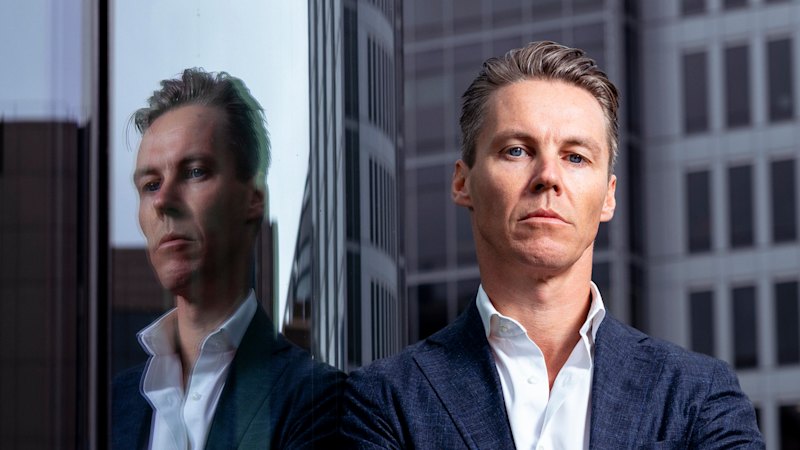
Walking the streets of Singapore, where he lives, Firmus chief executive Oliver Curtis did his best to sound unbothered by the collapse last week of his company’s attempt to list on the ASX at a valuation of nearly $44 billion.
“What happened over the last 48 hours makes no difference to my business,” Curtis said with a straight face over the weekend. He is, in a word, wrong.
As it stands, Firmus is basically a bag of agreements. It has two data centres in operation, but its prospects rest on deals to buy AI chips from Nvidia on the one hand, and to sell the resulting computing power to OpenAI and Meta on the other.
Those agreements, which have not been made public, have numerous caveats but the most important thing to making them a reality is money. Chips are not cheap.
Had the Firmus listing gone ahead as planned, the float would have raised $US5 billion ($7.1 billion). Curtis and his colleagues would have had billions to spend on AI chips, cooling technology from the division of the air-conditioning company it bought on the outskirts of Canberra, and infrastructure for its data centres from former NRL player Wes Maas’ industrial firm.
Instead, that money has stayed in other people’s pockets. That means fewer chips and a smaller, or at the very least a slower, Firmus.
The company isn’t dead. It has billions in debt financing locked in from global investment giant Blackstone. And the guarantee from Meta to buy computing power from its planned data centre in Indonesia will help as well. Firmus plans to raise more money from existing investors and potentially go public overseas.
But the unbothered Curtis still told the reporter from The Australian, who had confronted him on the street in Singapore, that the failed listing amounted to a “great loss for Australia”. Australia had lost the chance to have local retail investors aid the future of a local AI champion.
He stopped just short of claiming to be the victim of the so-called tall poppy syndrome, like so many before him. And one man’s egalitarian society, founded on mateship and an aversion to the English class system, is of course another’s poppy-lopping dystopia.
Still, the investor Adir Shiffman correctly identified that there was a personal element to the way Firmus had been perceived.
“I think what has really hurt this, as much as anything else, is the level of schadenfreude that is spreading across the business community at [Curtis] having failed,” Shiffman said on the Contrarians podcast. “I would not underestimate that as a factor in this failure.”
As if to validate his argument, Shiffman then sunk the boot in. “There’s this bubble of arrogance that surrounds [Curtis],” he said.
Certainly, Curtis fits some people’s model of a dislikeable Sydneysider. On camera in Singapore, Curtis’ shirt was unbuttoned almost to the navel. He has the wealthy upbringing, handsome face and good hair of many a successful executive – along with an insider trading conviction from the 2010s. The attempt to float Firmus shows he does not lack confidence.
It’s all to make a certain kind of person have kittens. But let’s keep in mind, there’s no shortage of divisive chief executives. Andrew Forrest is a wildly successful miner and charitable benefactor to some; a blowhard and hypocrite on Indigenous advancement to others.
Atlassian’s Mike Cannon-Brookes, Visy’s Anthony Pratt, Harvey Norman’s Gerry Harvey all have their fans and detractors. But in general, unless a founder’s reputation plumbs the depths of WiseTech’s Richard White (and his company is still worth $11.5 billion), corporate success is not largely a product of personal reputation.
Firmus’ float was mainly the victim of investors wary of its high price, the number of shares that could be sold quickly and the fact that there are lots of other less risky options for those seeking a way into the AI trade. For investors with a high risk tolerance, Elon Musk’s SpaceX, for example, is seeking $US40 billion to fund data centres in space.
In 2008-09, SpaceX came back from the brink of bankruptcy, according to Musk, to eventually revolutionise rocketry.
It’s the kind of second chance story that the technology industry loves. Curtis got his second chance when he left prison in 2017 and co-founded Firmus two years later.

KioskNews shows a cleaned-up reading view extracted from the publisher’s page — the original always lives on their site, not ours.