Column | Why economic impact must be assessed before passing legal decisions
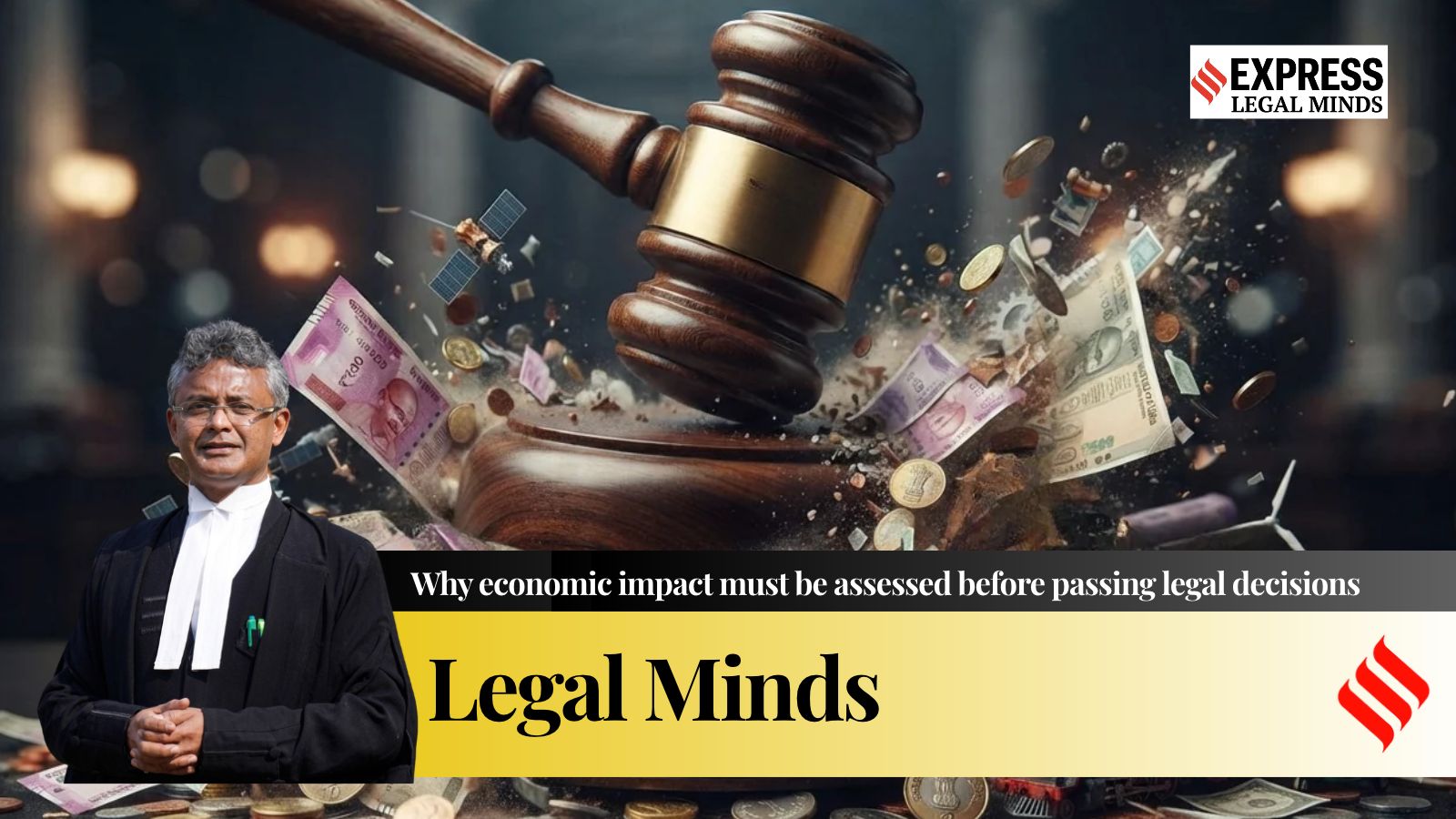
In the last decade, the Supreme Court of India brought major economic arrangements to an abrupt end at least on three occasions: 122 telecom licences in 2012; 214 coal blocks in 2014 and the right to build overhead transmission lines across roughly 80,000 sq km of desert in 2021. Each of these orders was legally sound, and in each case, the court had good reason to act as the allocations were arbitrary, the licences unconstitutional, and the habitat under threat. However, none of the three carried any accounting of what the cancellation itself would cost.
The losses from the coal cancellation are now estimated to have surpassed the losses the scam itself caused. The telecom licences were cancelled over a notional loss figure that has since been widely questioned. But the damage to the industry lasted, and some companies could never recover. The transmission-line order took a different turn. The court reversed its own order three years later, on economic and technical grounds that it had not considered the first time around. The fourth one, a nationwide liquor ban discussed later in this article, shows what changes when that assessment is finally done, even belatedly.
This does not imply that the underlying judgments were wrong on the law. It is an observation about what came after the law was correctly applied, and about how little that aftermath was weighed before the event.
Meaning of ‘constitutional economics’
Constitutional economics, as a discipline, was developed by American economist James M Buchanan. It is a branch of economics that studies how the rules of an economic and political system should be chosen, rather than how people behave within those rules once they exist. The field asks how a constitution should be built for the markets and government to operate in sync.
The key question, therefore, is whether the court weighs the economic consequences of its order before cancelling or banning a major economic arrangement. The Supreme Court has answered that question once, in principle. But in the cases where the stakes were highest, it has failed to apply it.
Existing statutory framework
Article 142(1) of the Constitution empowers the Supreme Court to pass any order “necessary for doing complete justice”. This power is broad enough to accommodate phased or conditional remedies and is not limited to blanket cancellations. The Code of Civil Procedure, 1908, gives courts discretionary power to summon expert witnesses whenever the court considers it necessary. An amendment to the Specific Relief Act, 1963 empowers the courts to seek expert opinion and compel expert attendance as evidence. The Bharatiya Sakshya Adhiniyam, 2023, and the Arbitration and Conciliation Act, 1996, contain similar provisions.
In fact, the Supreme Court has appointed expert committees on cases, including IPL betting and match-fixing, road safety, hydropower projects in the Himalayas, and the 2020-21 farmers’ protests, seeking expert assistance whenever the issue fell outside its expertise. The court has the authority, but it does not routinely assess the economic consequences of an order before passing it.
3 anchor cases
2G Spectrum: In Centre for Public Interest Litigation v Union of India, the court cancelled all 122 telecom licences granted in 2008, holding the first-come-first-served allocation policy unconstitutional. The CAG Report had estimated the loss at up to Rs 1.76 lakh crore. This estimate has since been widely criticised for being based on flawed economic and technical assumptions. The licensees and foreign investors were forced to pay a steep price. Unitech Wireless fell from Rs 547 per share in January 2008 to Rs 6.6 by December 2017. Telenor lost over Rs 14,000 crore in equity and guarantees, while Sistema of Russia and Khaitan Holdings Mauritius invoked their respective bilateral investment treaties against India, with the latter claiming more than USD 1 billion.
The effects of this judgment pushed the government towards high reserve prices in later auctions. Former telecom executives called it an “extortion masquerading as auction,” since bidders were paying twice for capacity already in use.
India’s telecom sector now carries a debt of roughly Rs 7 lakh crore, attributable to the pricing distortions the said judgment caused. In 2017, a special court acquitted all the accused in the 2G spectrum case, concluding that the prosecution had failed to prove the alleged “scam”. Yet in 2022, the Supreme Court denied Loop Telecom the refund claim of Rs 1,454 crore, holding it in pari delicto (in equal fault) with the officials responsible for the policy. The criminal case may have ended in acquittal, but the economic effects of the 2012 order have endured.
Coal allocation: In Manohar Lal Sharma v Principal Secretary, the Supreme Court held that 218 coal block allocations made between 1993 and 2011 were arbitrary and illegal, and by a subsequent order cancelled 214 of them (retaining four exempted blocks tied to NTPC, SAIL and Sasan Power).
The CAG’s original notional loss figure for the allocation scam was roughly Rs 1.86 trillion. The cancellation’s own cost is now estimated at roughly Rs 4.4 trillion in lost cess, royalty and tax revenue, a Rs 1.75 trillion rise in bad bank loans, Rs 54,400 crore in extra coal imports, a Rs 4,270 crore hit to the current account, and nearly a million jobs. The cancellation may have cost the economy more than the scam itself. However, this aspect did not receive any scrutiny. The court accepted the central government’s statement that it was “fully prepared to deal with the impact” of cancellation, without independently examining the claim.
The consequences were neither short-lived nor limited to the allottees. The market responded immediately: the BSE Metal Index fell by 9%, shares of Jindal Steel & Power declined by 34%, and the State Bank of India disclosed potential losses on Rs 4,000 crore lent to six affected power companies.
The effects were felt even by entities with no role in the original allocations. Andhra Bank, which had merely financed some of the affected companies, saw its share price fall by nearly 12% in a single trading session amid concerns about its exposure to the cancelled blocks.
The decline erased Rs 686 crore from the bank’s market value in one day. By June 2017, non-performing assets in the power sector had reached Rs 37,941 crore, with nearly 24,000 MW of captive thermal capacity under financial stress, contributing to the wider banking crisis. Production from the 89 reallocated blocks remained below pre-cancellation levels, while weak bidder interest forced the cancellation of a fourth auction round in 2016. Meanwhile, India’s coal imports rose from 217.78 million tonnes in 2014-15 to 235.24 million tonnes in 2018-19, contrary to the expectation that cancellation would strengthen domestic supply.
The Great Indian Bustard: In M K Ranjitsinh v Union of India, the court in April 2021 restricted overhead transmission lines across nearly 99,000 sq km of Great Indian Bustard habitat in Rajasthan and Gujarat, mandating new and existing low-voltage lines to be placed underground and leaving the undergrounding of existing high-voltage lines to a committee’s feasibility assessment. The Ministry of New and Renewable Energy estimated that undergrounding the lines would cost about Rs 1.5 trillion, similar to estimates from solar developers. Industry estimates initially placed nearly 20 GW of renewable capacity at risk; later court filings suggested that the restriction could affect around 60 GW of capacity and investments worth Rs 1.5 lakh crore. In March 2024, the Supreme Court substantially modified its earlier directions, holding that a blanket restriction was neither technically feasible nor an effective means of conservation, and referred the issue to an expert committee for a more targeted assessment.
The litigation did not end there. On December 19, 2025, the court adopted a narrower Revised Priority Areas, approximately 14,000 sq km in Rajasthan and 740 sq km in Gujarat. By then, four years of uncertainty had delayed Green Energy Corridor approvals and placed transmission projects across the wider region at risk of becoming stranded assets.
In 2021, commentators advocating ex-ante economic assessment regarded the undergrounding direction as an instance of the court appropriately balancing competing interests. The court’s reconsideration three years later showed that the original directions had not been informed by a sufficiently detailed assessment of technical feasibility and economic impact. This case most clearly illustrates the institutional gap addressed in this article.
Fourth case study: Highway liquor ban
In State of Tamil Nadu v K Balu, the Supreme Court on 15.12.2016 prohibited the sale of liquor within 500 metres of national and state highways across the country. The distance was later reduced to 220 metres for towns with a population under 20,000, the court clarified the order further and stated that it would now cover hotels, bars and restaurants too. Unlike the other cases, this involved a nationwide prohibition whose effects were independently measured.
NITI Aayog’s four-state study found Uttar Pradesh, Haryana and Rajasthan absorbed the shock almost entirely, adjusting fees and quotas to keep revenue intact. Since Delhi did not deploy this system, the revenue fell by Rs 62 crore (about 1.5% of its annual collections), even though only 97 of its 1,733 licensed outlets were affected. The real cost fell on retailers, hotels and restaurants: sampled hotels and restaurants reported revenue losses of 20-50% alongside significant job cuts.
Industry estimates placed the nationwide impact at Rs 10,000-15,000 crore and roughly 1 lakh jobs lost, while NITI Aayog’s CEO put potential tourism-sector losses as high as 10 lakh jobs. Despite all this, the study found no decline in drunk-driving accidents attributable to the order, and on the Rajasthan highway stretch examined, drunk-driving challans nearly tripled the following year once the municipal exemption took effect.
The exception: Shivshakti Sugars
Shivshakti Sugars Ltd v Shree Renuka Sugar Ltd can be cited as the only instance where the Supreme Court recognised the need to consider the economic impact of its own decision. The dispute at hand was narrow: whether the appellant’s sugar factory could retain its licence to operate within a reserved area under the sugarcane control order. The court considered the investments, loans, jobs and electricity generation connected with the factory. These included an investment of about Rs 300 crore, loans of Rs 237 crore, direct employment for 377 people, indirect employment for over 7,000 people, and the supply of 37 MW of electricity to the grid.
The court treated them as facts a decision could not ignore. Declining to shut the factory down, the court held that it “needs to avoid that particular outcome which has a potential to create an adverse effect on employment, growth of infrastructure or economy or the revenue of the State,” and that “it is in this context that economic analysis of the impact of the decision becomes imperative.”
The bench observed that where two interpretations of a provision are open to the court, it should incline toward the one that “subserves the economic interest of the nation.” Even the judgment admitted this is not normal practice and that Indian courts had used economic analysis only on an ad hoc basis. It further called for treating law and economics as a lasting practice, not an exception. That admission, more than the outcome in Shivshakti, is the clearest evidence on record that ad hoc treatment was already understood, by the court itself, to be the norm rather than the exception, precisely the pattern that coal, 2G spectrum and the bustard matters went on to confirm.
The principle, though, has never been applied at the scale, or to the category of case, in which the coal, spectrum and transmission-line orders arose. A licensing dispute between two sugar companies, however carefully reasoned, is simply not the same order of magnitude as the cancellation of a natural-resource allocation regime affecting an entire sector.
Objections and the gap that remains
There are two main objections to the idea that courts should assess economic impact before passing a judgment.
The first is that courts may not be equipped to do this well. Judges are trained in law, not economics. If a court has to weigh economic impact, it has to choose between competing economic models, because there is rarely one right answer. Courts might pick a model that later proves wrong. And there is no real way to judge between rival economic arguments made by opposing lawyers, since that is not their training. Legal scholars have raised precisely this concern while reviewing the Shivshakti judgment.
The second objection is more structural and holds that courts should weigh legality only, not economic consequences. On this view, a court’s job is to decide whether the government acted within its powers. What happens after that – the economic and administrative fallout – is for the government to handle, not the court. The deeper problem is that courts have read Article 14 (right to equality) too broadly, and entertained public interest litigation too easily. Senior advocates have made this argument too.
Both objections require equal consideration. The first one assumes that courts must either rely on a perfect economic model or conduct no economic assessment at all. However, before passing an order, an expert committee can collect basic information, such as procurement records, surveys and traffic-police data, the way NITI Aayog’s own study did afterwards for the highway liquor ban. The second objection is answered by the coal and 2G spectrum cases.
The court did not merely declare the allocations illegal but went one step ahead to show how the fallout should be handled, when companies had to shut down, what penalties they owed, and how new auctions would run. Once the court shapes the remedy in this way, it must consider the economic consequences of its order.
The cost that follows
Each of the four orders causes losses to its own sector, but senior counsels who have appeared in these matters indicate a deeper cost: the perception among Indian and foreign investors that regulatory rights in India can be cancelled without warning or any transition period. Foreign investors paid a price that Indian parties never did. Treaty protection gave Telenor, Sistema and Khaitan Holdings Mauritius the right to seek compensation through international arbitration. The burden to answer in the international forums falls on the government rather than the judiciary, and it is a cost that no domestic damages assessment can capture.
However, a credit-rating assessment opined that, despite the short-term disruption, the coal cancellations would lead to a more transparent auction-based system and improve the investment climate in the medium term. Both effects are plausible, and both are true in part. No mechanism exists to weigh these effects before an order is made and can be only done post the order. That gap is what this article is about.
A proposal left unimplemented
A study of five Supreme Court and National Green Tribunal decisions supported by NITI Aayog recommended a formal system for assessing the economic impact of proposed orders. It suggested a panel of court-appointed experts in economics, environmental science and sociology, using the court’s powers under Article 142(1) and existing evidence rules. It also proposed a dedicated unit to study the economic effects of judgments after they are passed.
A separate study of the highway liquor ban reached a similar conclusion using survey and traffic-police data and recommended that courts appoint expert committees to ascertain the economic impact of orders in cases involving major economic issues. Neither this recommendation nor the earlier proposal has become standard practice.
Indian law already provides an efficacious remedy, although it has not been applied in such cases. Sometimes a company pays a tax which it did not owe, but refunding it directly would not be fair if the company already passed that cost on to its customers. This problem was solved with the Consumer Welfare Fund, upheld in Mafatlal Industries Ltd v Union of India. Instead of refunding the company or cancelling the whole arrangement, the money goes into a fund used for public benefit. The American doctrine of cy pres (as near as possible) follows a similar logic, penalise the wrongdoing, redirect the proceeds and allow lawful economic activity to continue. Applied to coal or 2G spectrum case, this could have meant imposing penalties based on the benefit received by each allottee, rather than cancelling every allocation without considering the allottee’s role in the wrongdoing.
A brief comparative note
No country has been able to solve this problem fully, but the comparative record offers useful perspectives. The German Federal Constitutional Court’s 2020 PSPP judgment held that courts must openly weigh the economic effects of an order, its effects on public debt, savings, pensions, real estate prices and struggling businesses kept artificially alive, before deciding if it is proportionate. And if a court skips that step, the decision itself is constitutionally defective.
The United States took a different route. Its courts draw on the law-and-economics tradition and on prospective overruling. This doctrine was first used in Great Northern Railway Co v Sunburst Oil & Refining Co and later adopted in India in Golak Nath, it lets a court apply a new ruling only to future cases, leaving past transactions undisturbed.
In United Kingdom, the courts only strike down complex economic and social policy if it is “manifestly without reasonable foundation”, since these are decisions to be made by elected governments, not courts.
France follows a similar approach through legislation rather than the courts. Since 2009, government bills introduced in the National Assembly must explain their expected economic, financial, social and environmental effects. However, scholars have found that meaningful economic analysis is often missing from these studies. Merely requiring impact assessment does not ensure that it is properly carried out.
Switzerland goes in the opposite direction. Under Article 190 of its Federal Constitution, the courts must apply federal laws even when there is a conflict with the Constitution. Big economic decisions get settled by referendum instead.
Compared to all of these, India’s Supreme Court stands apart. It holds full power to cancel, without Germany’s required economic test, without France’s paperwork requirement, and without the UK’s built-in deference to economic policy.
How India’s judiciary can be more economically responsible
The four cases discussed in this article point to the same solutions. These changes fall within the court’s existing powers and require no amendment to the law.
Proposed Judicial Action: First, the court could set up a panel of economists and sector experts to assess the economic impact in cases. It has the power to do this under Article 142(1), the Civil Procedure Code, 1908, the Specific Relief Act, 1963, and the Bharatiya Sakshya Adhiniyam, 2023. Before cancelling any arrangement involving significant investment, employment or public revenue, the court could first seek the panel’s opinion. NITI Aayog-supported research has already proposed a similar mechanism. The court has also appointed expert committees in matters concerning road safety, hydropower projects and match-fixing. The use of such committees is therefore not new.
Second, when an allocation or licence is found to be unconstitutional, the court could impose penalties based on each party’s role and actual gain, instead of cancelling every arrangement regardless of fault. This would follow the approach of the Consumer Welfare Fund and the doctrine of cy pres.
Third, the court could be required to weigh the economic evidence and explain how it shaped the judgment, as Germany’s PSPP standard requires. A vague government assurance should not suffice.
Fourth, the court could regularly review the effects of major orders, as proposed by NITI Aayog research. This would allow an order like the 2021 transmission-line direction to be reconsidered on the basis of tracked outcomes, rather than through an urgent application years later after substantial costs have already been incurred.
Steps Towards Implementation: These measures do not require new legislation. The court could create the panel under Article 145 by amending the Supreme Court Rules. A practice direction could also be introduced, as was done for e-filing and video hearings. Parliament could alternatively enact a law requiring impact assessments for major judicial orders. However, such a law may raise separation of powers concerns because the government would be regulating how courts decide cases. For this reason, implementation by the court itself is the more practical option.
Challenges to Implementation: The Supreme Court already faces a large backlog. Requiring an additional assessment before every major order may cause delay, including in cases requiring urgent relief, as the Bustard case shows.
There is also no existing budget or staff for a permanent expert panel. The NITI Aayog and CUTS studies were individual research projects, not continuing bodies. A permanent panel would require funding, staff and safeguards to exist.
The selection and neutrality of experts may also be disputed. Expert evidence could become another contest between specialists appointed by opposing parties, as often happens in arbitration and tribunal proceedings.
Finally, no litigant has asked the court to make prior economic assessment a regular requirement, and the government has shown no interest in doing so. Cases like coal and 2G arrived amid public anger demanding swift action. In such cases, delaying a decision to conduct an economic study may appear too lenient.
These difficulties do not make the proposal unworkable. They show that any serious reform must address the practical and political barriers to its implementation.
Conclusion
These four orders point to the same problem: courts usually assess economic costs only after passing an order. Of the four, only the highway liquor ban was studied in detail, and even that happened belatedly. Indian law already gives courts the power to seek expert assistance before deciding a case, and the Supreme Court has recognised the need to do so. But this practice has been ad hoc so far. Until it becomes routine, the court may continue to recognise the economic cost of its orders only after the damage has occurred.
Sajan Poovayya is a Senior Advocate practicing in the Supreme Court and a former chair of FICCI, Karnataka State Council.
Written by eminent law professionals, the Legal Minds Column aims to break down complex statutory frameworks into insights, both for members of the fraternity and the general public.
For feedback and pitches, write to us at expresslegal@indianexpress.com
KioskNews shows a cleaned-up reading view extracted from the publisher’s page — the original always lives on their site, not ours.