Russia sending fishing trawlers to spy on Britain’s undersea cables
Russia is sending fishing trawlers to track and spy on the UK’s critical network of undersea cables, a new analysis has suggested.
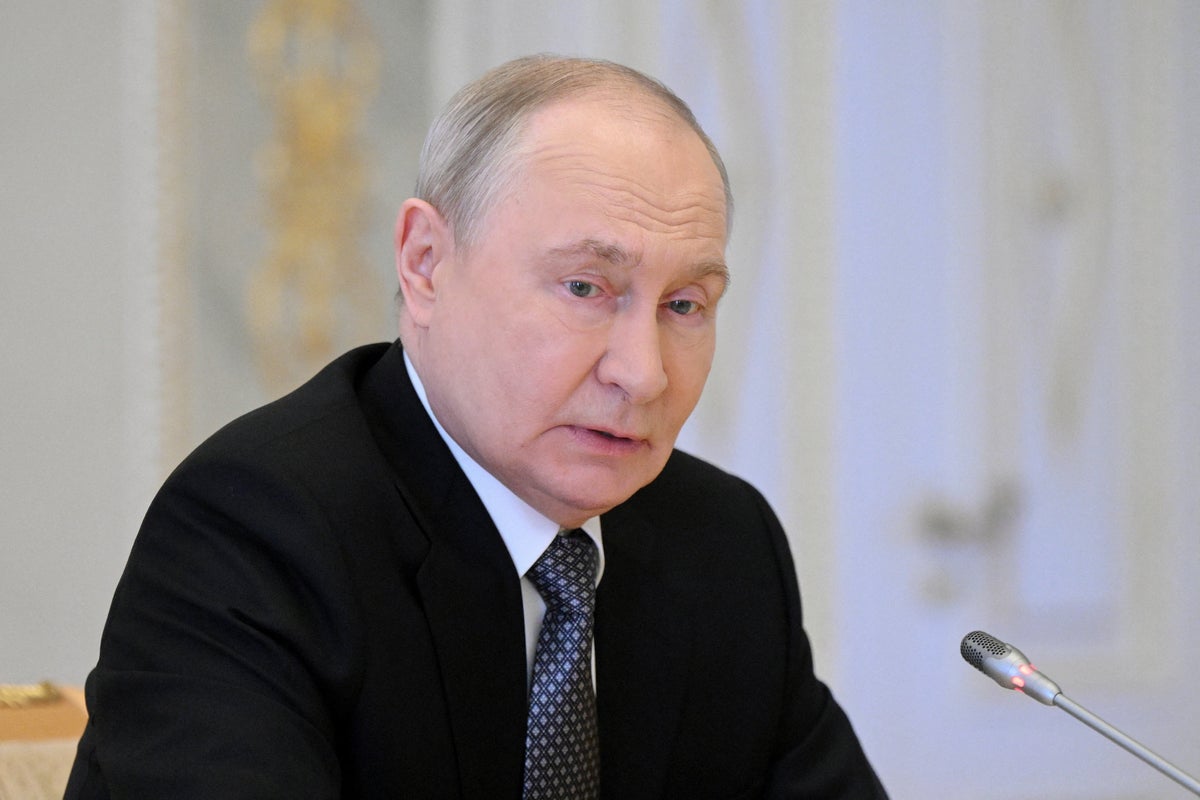
Ministers said Vladimir Putin is using “commercial proxies” as part of his espionage strategy to map the exact locations of the cables, which link the UK with the US and Europe, in case of conflict. Any sabotage to the network risks huge disruption to banks, hospitals, mobile phone networks, and other vital services.
An analysis published on Thursday by The Telegraph found more than 500 incidents of Russian trawlers loitering over the lines, or following them for miles, have been recorded.
It comes as the government prepares to crack down on those who damage cables, proposing lengthy jail terms and unlimited fines as punishment.
A Nato source told the newspaper: “We’re absolutely aware of what Russian civilian fishing ships are up to and where ... Some of these ships have never seen a single fish on their deck.”
Data obtained from Global Fishing Watch, a vessel tracking platform, showed the Russian trawlers tracking consistently tracking cables over a period of four-and-a-half years.
There are growing warnings Putin is escalating efforts to exploit Britain’s undersea network and wreak havoc on critical services they provide. In September, a joint operation by Britain, Norway, and the United States confronted Russian submersibles training to use a secret weapon to disable critical undersea cables.
The covert exercise was carried out in Arctic waters by Moscow's secretive GUGI directorate before Nato allies intercepted the vessels and forced them to leave.
Earlier this year the defence secretary also issued a stark warning to Putin after Russian attack and spy submarines were found operating in the North Atlantic.
Currently the penalty for interfering with communications cables carries fines of just £1,000, unless prosecutors can prove the action was on behalf of a foreign power, which can be punished with a prison sentence.

But in a white paper which will reportedly be unveiled on Thursday, the government will suggest the laws should be strengthened to hit saboteurs with jail terms.
Speaking at the Royal United Services Institute (RUSI) in May, former digital economy minister Liz Lloyd said: “The UK already has strong protections in place for our subsea cables, but in a more uncertain world we cannot stand still.
“As hostile activity by Russia and others grows, protecting these cables matters more than ever for our economy, security and daily lives. That is why we plan to go further with tougher penalties for reckless damage, stronger security obligations and new powers to respond quickly when incidents happen.”
Baroness Lloyd said the UK’s message to Putin was simple: “We can see what you are doing and any interference will have serious consequences.”
A Ministry of Defence spokesperson it is “clear-eyed” about the threat Russia poses, and added the government is investing a further £330m to “strengthen the protection of critical undersea infrastructure”.
KioskNews shows a cleaned-up reading view extracted from the publisher’s page — the original always lives on their site, not ours.