5 Thriller Books To Read Before Kicking the Bucket

Dyah (pronounced Dee-yah) is a Senior Author at Collider, responsible for both writing and transcription duties. She joined the website in 2022 as a Resource Writer before stepping into her current role in April 2023. As a Senior Author, she writes Features and Lists covering TV, music, and movies, making her a true Jill of all trades. In addition to her writing, Dyah also serves as an interview transcriber, primarily for events such as San Diego Comic-Con, the Toronto International Film Festival, and the Sundance Film Festival.
Dyah graduated from Satya Wacana Christian University in October 2019 with a Bachelor's degree in English Literature, concentrating on Creative Writing. On March 2026, Dyah graduated with Master's degree in English Literature Studies, with a thesis on intersectionality in postcolonial-feminist studies in Asian literary works.
Born and raised between Indonesia and Singapore, Dyah is no stranger to different cultures. She now resides in the small town of Kendal with her husband and four cats, where she spends her free time cooking or cycling.
Sign in to your Collider account
Thriller books come in all shapes and sizes, but certain novels are worth the read—especially when you still have time on Earth. Over the decades, the thriller genre has been redefined and reimagined countless times, usually reflecting the era's fears and anxieties. But the trait of a must-read thriller is that, between the suspense of the main conflict in the novel, the writer makes plenty of room for social commentary on life's ironies.
Plot twists can keep you glued to the book, but the messages these books deliver about things society finds "hush-hush" to talk about are the substance that lingers in readers' minds for years. These messages are also the reasons why some of these books become popular media adaptations in the future. From a poor marriage deteriorating in the public eye to a "blasphemous" murder case in the Louvre, here are thriller books to read before kicking the bucket.
'The Da Vinci Code' (2003)
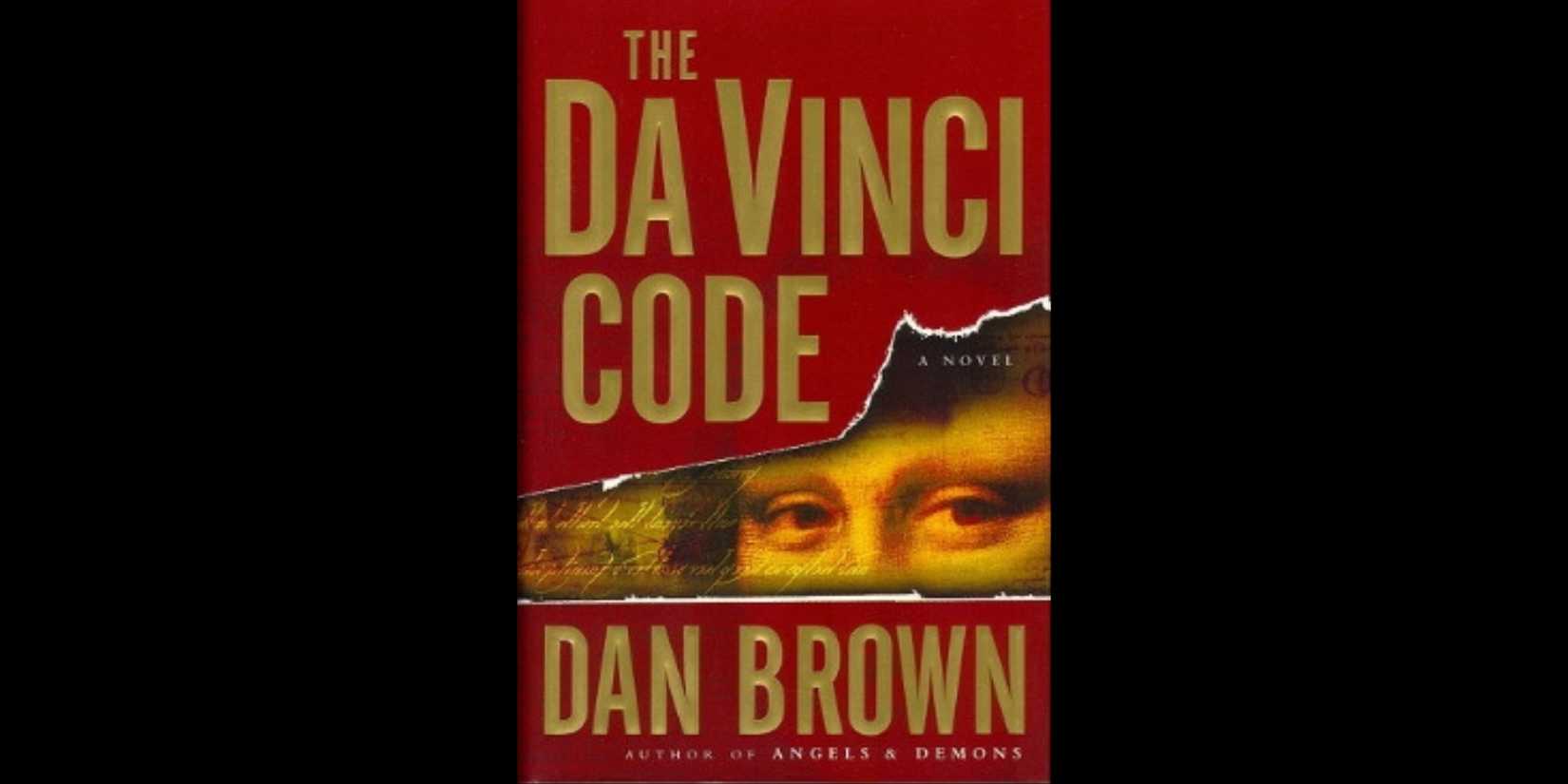
Leonardo da Vinci's Mona Lisa is one of the most famous and mysterious works of art in the world, making it a fitting starting point for Dan Brown's seminal thriller, The Da Vinci Code. When Louvre curator Jacques Saunière is murdered, Harvard professor Robert Langdon is drawn into a dangerous mystery involving cryptic symbols, famous artworks, and the Holy Grail. Suspected of the crime, Langdon must work with cryptographer Sophie Neveu to uncover the truth and clear his name.
There's an old saying that history is written by the victors, and Brown takes this idea one step further (and some may say controversially) by questioning established historical narratives—including religious ones, even when believers widely accept them as truth. While some readers might consider The Da Vinci Code blasphemous, it is also a meticulously constructed thriller that draws on art, ancient languages, and millennium-old events to piece together clues behind the murder. Readers don't necessarily turn to The Da Vinci Code for historical accuracy. Instead, they read it for the way Brown transforms these already complex subjects into an intricate, deeply personal puzzle. Ultimately, the novel leaves readers with a reminder to question what they think they know, especially when it comes to long-established beliefs and documented accounts.
'Yellowface' (2023)

There are many roads to success, but some people yearn for it so much that they're willing to steal another person's identity to get there. R. F. Kuang's Yellowface is a plagiarist's nightmare come to life, and it all begins with struggling novelist June Hayward. As her writing career fades from the spotlight, her fellow writer and acquaintance, Athena Liu, a Chinese-American author, is getting the recognition June desperately wants. When Athena unexpectedly dies, June makes the audacious decision to "acquire" Athena's unfinished manuscript and claim it as her own, publishing it under the name Juniper Song.
Plagiarism and identity theft are just part of the audacity of Yellowface, but as the title makes clear, the book explores a white person stealing the rewards and recognition of people of color. Even more astonishingly, June justifies her actions, especially since Athena is dead and her work would otherwise remain untouched. But when Athena seemingly comes back from the "dead," that's when the real adrenaline kicks in. Yellowface is an ingenious psychological thriller that follows June as she goes to extreme lengths to gain recognition while criticizing those who exploit someone else's work, cultural background, and lived experiences. It's not just the ugly side of ambition that the novel exposes, but of humanity in general.
'Death on the Nile' (1937)

Nothing is deadlier than a jealous ex-lover. Agatha Christie's Death on the Nile follows Hercule Poirot, who happens to be vacationing in Egypt when a honeymoon cruise takes a deadly turn. Wealthy heiress Linnet Ridgeway has married Simon Doyle, her former friend Jacqueline de Bellefort's fiancé, but Jacqueline isn't about to let the newlyweds enjoy their honeymoon in peace. What starts as a messy love triangle soon turns into a murder investigation, leaving Poirot to figure out who aboard the ship has a reason to kill. Against Egypt's breathtaking scenery, the dream vacation quickly turns into a nightmare.
There's something irresistibly scandalous about rich people's drama, especially when it involves a love triangle gone wrong. Romance might not sound like the most "serious" theme for a thriller, but Christie leans into the detective work to keep the story from feeling like a clichéd romance gone wrong. At times, Death on the Nile feels like The White Lotus with a body count, as a group of wealthy passengers bring their grudges, jealousy, and secrets aboard a luxury steamer. With everyone stuck on a boat, the atmosphere gets almost claustrophobic. Everyone has something to hide, and Christie keeps shifting suspicion from one passenger to another until Poirot finally pieces everything together.
Collider Exclusive · Horror Survival Quiz Which Horror Villain Do You Have the Best Chance of Surviving? Jason Voorhees · Michael Myers · Freddy Krueger · Pennywise · Chucky
Five killers. Five completely different ways to die — if you're not smart enough, fast enough, or self-aware enough to avoid it. Only one of them is the villain your particular set of instincts gives you a fighting chance against. Eight questions will figure out which one.
🏕️Jason
🔪Michael
💤Freddy
🎈Pennywise
🪆Chucky
01
Something feels wrong. You can't explain it — you just know. What do you do? First instincts are the difference between the survivor and the first act casualty.
02
Where are you most likely to find yourself when things go wrong? Setting is everything in horror. Where you are determines which rules apply.
03
What is your most reliable survival asset? Every survivor has a quality the villain didn't account for. What's yours?
04
What kind of fear is hardest for you to fight through? Knowing your weakness is the first step to not dying because of it.
05
You're with a group when things start going wrong. What's your role? Horror movies are brutally clear about who survives group situations and who doesn't.
06
What's the horror movie mistake you're most likely to make? Honest self-assessment is a survival skill. Denial is not.
07
What's your best weapon against something that can't be stopped by conventional means? Every horror villain has a weakness. The survivors are always the ones who find it.
08
It's the final scene. You're the last one standing. How did you make it? The final survivor always has a reason. What's yours?
Your Survival Odds Have Been Calculated Your Best Chance Is Against…
Your instincts, your strengths, and your particular way of thinking under pressure point to one villain you actually have a fighting chance against. Everyone else — good luck.
Jason Voorhees
Jason is relentless, but he is also predictable — and that is the gap you would exploit.
- He moves in straight lines toward his target. He doesn't strategise, doesn't adapt, doesn't outsmart. He simply pursues.
- Your ability to keep moving, use the environment, and resist the panic that freezes most victims gives you a genuine edge.
- The Crystal Lake survivors were always the ones who stopped running in circles and started thinking about terrain, water, and distance.
- You think like that. Which means Jason, for all his indestructibility, would face someone who simply refused to be where he expected.
Michael Myers
Michael watches before he moves. He is patient, methodical, and almost impossible to detect — until it's too late for anyone who isn't paying close enough attention.
- But you are paying attention. You notice the shape in the window, the car parked slightly wrong, the silence where there should be sound.
- Michael's power lies in the invisibility of ordinary suburbia — the fact that nothing ever looks wrong until it already is.
- Your spatial awareness and instinct to map every room, every exit, and every shadow before you need them is precisely the quality Laurie Strode had.
- You are not a victim waiting to happen. You are someone who already suspects something is wrong — and acts on it.
Freddy Krueger
Freddy wins by getting inside your head — using your own fears, your own memories, your own subconscious as weapons against you. That strategy requires a target who can be destabilised.
- You are harder to destabilise than most. You've faced uncomfortable truths about yourself and you haven't looked away.
- The survivors on Elm Street were always the ones who understood what was happening and chose to face it rather than flee from it.
- Freddy's greatest weakness is that his power evaporates in the presence of someone who refuses to give him the fear he feeds on.
- Your psychological resilience — the ability to stay grounded when reality itself becomes unreliable — is exactly the quality that keeps you alive here.
Pennywise
Pennywise is ancient, shapeshifting, and feeds on terror — but it has one critical vulnerability: it cannot function against someone who genuinely stops being afraid of it.
- The Losers Club didn't survive because they were braver than everyone else. They survived because they faced their fears together, and faced them honestly.
- You ask the questions others avoid. You look directly at what frightens you rather than turning away.
- That directness — the refusal to let fear fester in the dark — is Pennywise's worst nightmare.
- It chose the wrong target when it chose you. You are exactly the kind of person whose fear tastes like nothing at all.
Chucky
Chucky's greatest advantage is that nobody takes him seriously until it's already too late. He exploits the gap between how something looks and what it actually is.
- You don't have that gap. You take threats seriously regardless of how they present — and you never make the mistake of underestimating something because of its size or appearance.
- Chucky relies on surprise, on the delay between recognition and response. You close that delay faster than almost anyone.
- Your instinct to treat every unfamiliar thing with appropriate scepticism — rather than dismissing it because it seems absurd — is the exact quality that keeps you breathing.
- Against Chucky, not laughing is already winning. You are very good at not laughing.
'My Sister, the Serial Killer' (2018)

Family loyalty gets tested in Oyinkan Braithwaite's My Sister, the Serial Killer. Questionable siblings are one thing, but a murderous younger sister is a step too far. Set in Lagos, the story follows Korede, a nurse who regularly finds herself cleaning up the messes left behind by Ayoola, her sister with a deadly dating habit. Ayoola claims her third victim was killed in self-defense, but her growing body count is getting harder to ignore. Things get even messier when Ayoola starts seeing Tade, a handsome doctor whom Korede secretly has feelings for herself.
Despite all the gore and the sisters' twisted detachment from the murders, My Sister, the Serial Killer is a surprisingly funny read. Ayoola barely seems to take her actions seriously, treating each murder as if it were just another dating disaster. Korede, meanwhile, deals with the aftermath like it's an annoying chore she needs to get out of the way. That's hardly the reaction most people would have to a growing pile of bodies, but the book also explores just how far a sisterly bond can be tested. For now, the two are like peas in a pod, tied together by their disturbing reality. But when Ayoola's latest romance threatens Korede's own happiness, she may finally have to stop covering for her sister.
'The Silence of the Lambs' (1988)
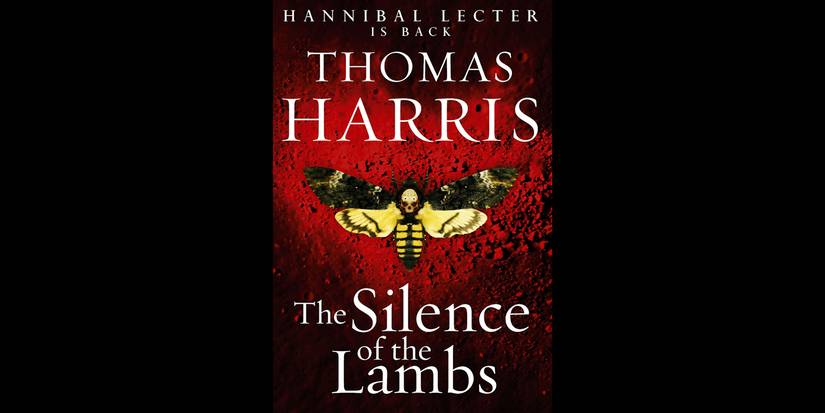
Before Jonathan Demme adapted it for the silver screen, The Silence of the Lambs by Thomas Harris put readers in a moral conflict between right and wrong. FBI trainee Clarice Starling is tasked with investigating Buffalo Bill, a serial killer who kidnaps and murders women, leaving behind disturbing clues. To catch him, she must seek help from Hannibal Lecter, a brilliant psychiatrist and cannibalistic murderer held in a high-security institution. Lecter agrees to help, provided Starling shares personal details about her life and childhood. With time running out and another victim missing, Starling has little choice but to play along.
There's a disconnect between how Lecter looks and how he speaks, making him one of the most memorable villains in literature. Despite being restrained in a straitjacket, he speaks eloquently and politely—even more so than the male colleagues who casually make misogynistic remarks about Starling's career. While detective thrillers often center on male perspectives, Starling's experiences as a woman shape how she understands Lecter and his victims, spots evidence, and interprets the killer's behavior. The Silence of the Lambs also comments on systemic negligence and sexism, showing how dismissing women's experiences can hinder an investigation. Lecter's intelligence makes him a valuable source of information, but his willingness to help Starling hardly makes him innocent of his own horrific crimes.
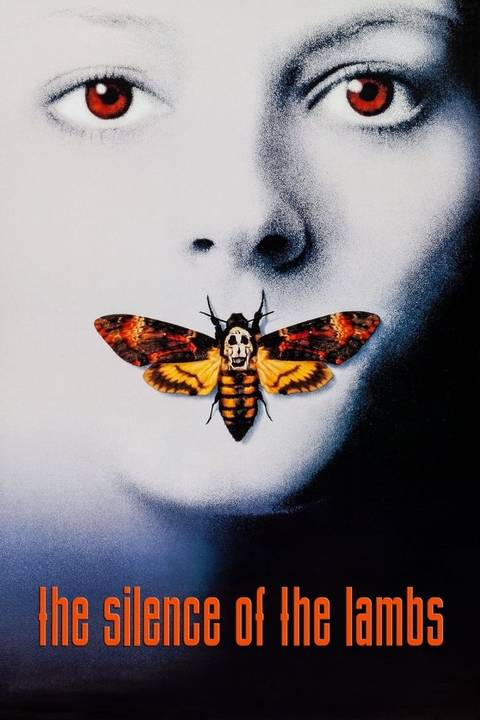
The Silence of the Lambs
- Release Date
- February 14, 1991
- Runtime
- 119 minutes
- Director
- Jonathan Demme
- Writers
- Ted Tally, Thomas Harris
-

Clarice Starling
-

Dr. Hannibal Lecter
- Producers
- Edward Saxon, Kenneth Utt
- Main Genre
- Thriller
- Executive Producer(s)
- Gary Goetzman
KioskNews shows a cleaned-up reading view extracted from the publisher’s page — the original always lives on their site, not ours.